Amenawon Monica Okoh is the founder of the womenswear label Mhenase Touch. Her graduate work focuses on sharply cut jackets, controlled volume, and silhouettes built to hold their shape on the body.
The designs are built with intention, favouring restraint over excess, allowing cut, fabric, and fit to do the work rather than relying on overt narrative or styling. At London Fashion Week 2024/2025 and the University of Salford’s RAK Exhibition in Marrakesh, the garments were placed alongside a range of international works. In those settings, cut, silhouette, and movement carried the collection without reliance on explanation or framing.
The collection is shaped by a steady and considered approach to design. Ideas of comfort, identity, and human connection sit quietly beneath the surface, embedded in the cut, fabric, and construction of the garments. Soft yet structured forms recur throughout the work, balancing strength with ease and allowing the garments to feel protective without becoming heavy.
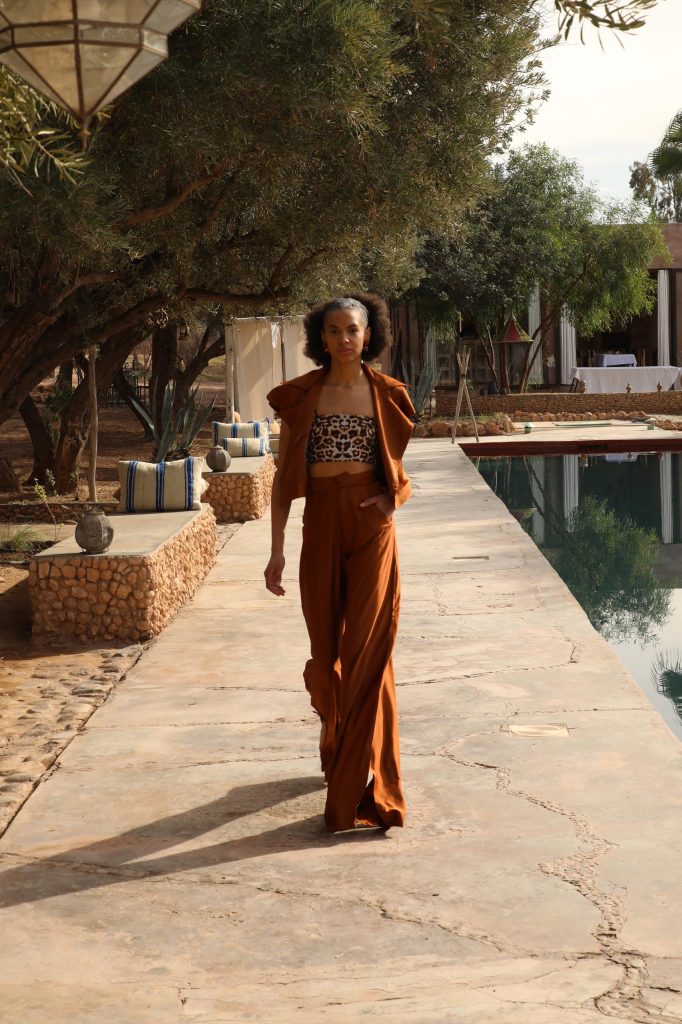
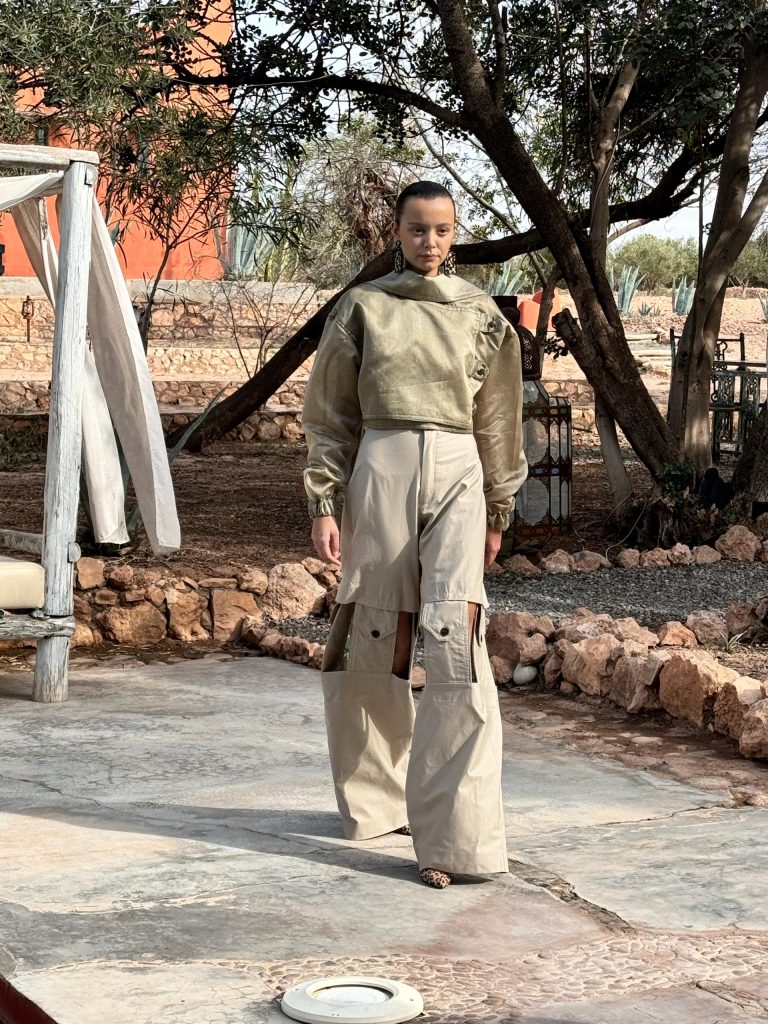
Colour is used with restraint across the collection. Warm browns, sand, stone, and muted neutrals set the tone, creating a palette that feels calm and settled, rather than relying on colour for immediate impact. The safari tones are subtle but intentional, drawing from African landscapes and ways of seeing without becoming overt references. Instead of leaning on prints or motifs, the connection comes through in mood, colour choice, fabric weight, and the overall feel of the garments.
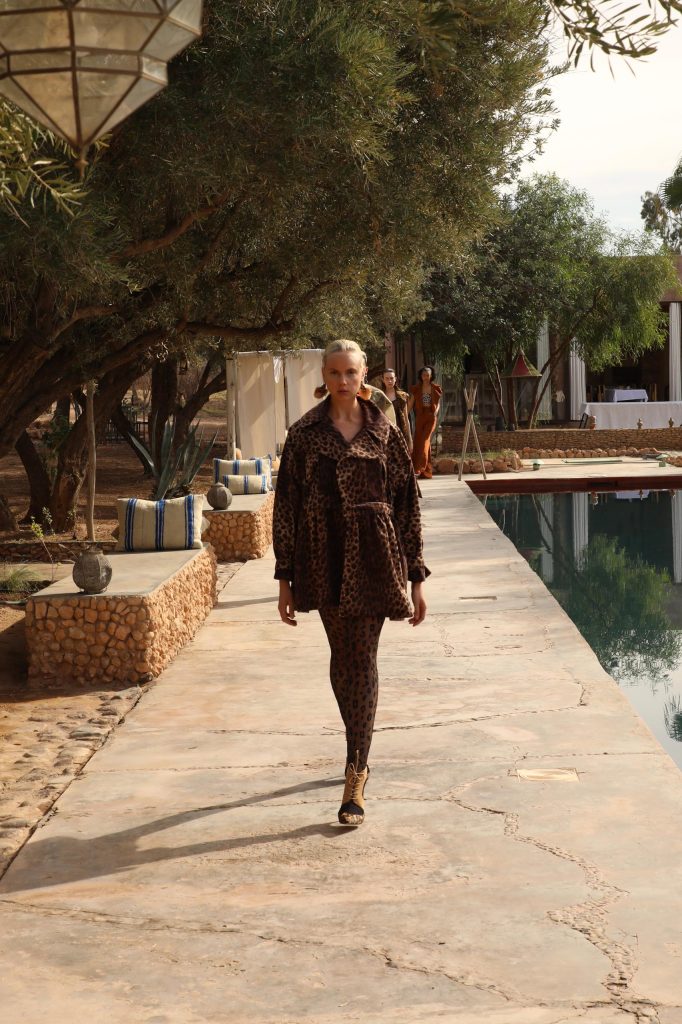
In Marrakesh, this approach became particularly clear. The collection did not try to compete visually against the city’s terracotta walls, deep reds, and layered textures. Its quieter palette allowed cut, movement, and detail to come forward, making the garments easier to read in a visually dense setting.
The strength of Okoh’s work sits in how the garments are made. Fabrics are layered, folded, and shaped with intention, creating pieces that hold form without feeling stiff. Pleats are used to build structure rather than decoration, and surface treatments stay subtle, adding texture without pulling focus from the silhouette. On the body, the garments move easily. They skim rather than cling, keeping their shape through cut and balance instead of tightness. Small details like hand finished hems, shifts in texture, and careful fabric pairings feel purposeful and quiet. Nothing is added for effect. The finish supports the overall line of each look, keeping the focus on how the clothes sit, move, and feel when worn.
At the same time, the work is strongest when its structure stays light on its feet. In a few looks, some of the sculptural elements carry more weight than they need to, softening the sharpness of the overall line. Certain pleats and folds could be pushed further, with clearer definition to match the precision seen elsewhere in the collection.
The calm mood of the work is supported by its earthy palette and fabric choices, but there is room to open this up. Introducing materials with contrasting weight or density could give Okoh greater control over volume and shape, sharpening silhouettes where they currently ease off. These are subtle adjustments but refining them would bring more clarity to an already controlled and thoughtful body of work.
What stands out in Mhenase Touch is how personal reference is kept understated. Cultural influence is present but is not spelled out or relied on for effect. Instead, it comes through in the feel of the clothes, the choice of colour, the weight of the fabrics, and the way the silhouettes sit on the body. Nothing feels symbolic for the sake of it.
Taken together, the collection reflects a practice that values editing and restraint. Ideas are allowed to unfold at their own pace, with control and wearability taking precedence over declaration. The result is work that feels considered, grounded, and open to further refinement.