

By Josephine Agbonkhese
Accra’s fashion conversation has matured. The industry is no longer chasing applause for “potential” or novelty. The new benchmark is operational: consistent product, a disciplined point of view, and a value chain that can scale without diluting craft. If you still treat Ghana as an afterthought on the African fashion map, you are behind.

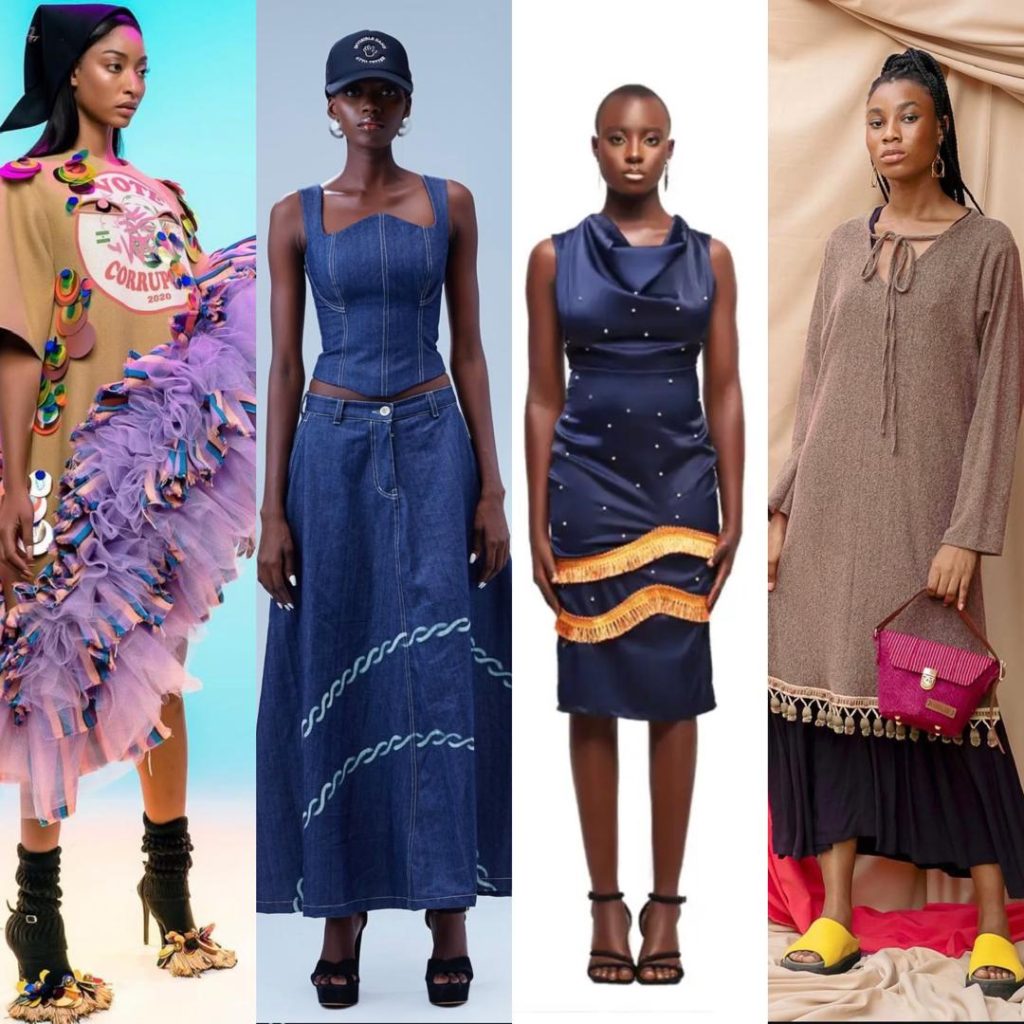
These four brands are the ones to watch in 2025 because they are building real brand equity, not just moments. They respect heritage, they understand modern customer behaviour, and they are increasingly clear on route to market.
Here are the names that deserve your attention.
Larry Jay: Ethical craft with a commercial spine
Larry Jay is the rare case of a brand that understands how to turn values into product. Founder Larry Jafaru Mohammed started with accessories in 2012, shifted into clothing in 2016, and formally debuted ready-to-wear after that early groundwork.
What makes Larry Jay a 2025 watch is not simply “sustainability” as a slogan. The brand’s practice is specific: local sourcing, collaboration with artisans, and upcycling or repurposing materials into clean silhouettes that feel current without chasing hype That matters because customers have moved on from vague promises.
They want proof in the seams, the dye work, and the finishing.
The collections also read as strategy. From Nomad to more recent drops, Larry Jay is building a recognisable architecture: unisex dressing, restrained palettes when needed, and a consistent narrative around movement, culture, and community.
In 2025, expect Larry Jay’s leverage to come from two places: tighter international distribution and a stronger position in the conversation around secondhand waste and textile reuse, particularly given Ghana’s visibility in that debate.
Patience Oduro: OpulenCe and the business of heritage-forward “afro-luxury”
Patience Oduro’s OpulenCe is built on an old truth the industry sometimes forgets: craft is not a “trend,” it is the foundation. The brand is anchored in storytelling, cultural preservation, and community empowerment, with a clear point of reference in Ghana’s 1970s cultural landscape and a hands-on approach to artisanal technique. Oduro is not operating in a vacuum either.
Her professional track record includes design contributions to collections for respected names such as Christie Brown, Sabirah, Boyedoe, Tiffany Ambre, Odio Mimonet, and others, which shows range, technical discipline, and the ability to deliver inside different creative systems.
This is not a label trying to be everything to everyone. OpulenCe is staking out a premium lane through hand-painted textiles, intricate prints, and a workshop mindset that prioritises longevity over disposable fashion cycles. The proposition is clear: culturally grounded luxury that respects process and doesn’t dilute the hand of the maker.
Why watch OpulenCe in 2025? Because the brand is building a coherent luxury framework that is heritage-led but not nostalgia-only. It uses heritage as a design system, then pushes new applications through silhouette, surface design, and storytelling. Done consistently, that combination travels internationally, and OpulenCe is clearly structured to compete at that level.
Atto Tetteh: Streetwear discipline with Ghanaian textile intelligence
Atto Tetteh sits at a useful intersection: streetwear energy, menswear structure, and Ghanaian textile fluency. The brand has been positioned as sleek menswear that can also read unisex, with an emphasis on reinventing African patterns for a modern, cosmopolitan customer.
Crucially, this is not costume. Atto Tetteh’s strength is in translating kente and fugu references into pieces that look at home in Accra, London, or New York, without losing cultural specificity.
From an industry perspective, the signal in 2025 is the same one buyers care about everywhere: repeatable product quality. Industrie Africa has highlighted Atto Tetteh in the context of elevated streetwear that prioritises traditional fabrics, dye techniques, and motifs, with sustainability positioned as process rather than marketing gloss.
If the brand continues to tighten tailoring, standardise sizing, and keep material choices intentional, Atto Tetteh is well-placed to scale from “brand you admire” to “brand you actually buy repeatedly.”
Papa Oppong: Fantasy, craft, and a modern release model
Papa Oppong is a Ghana-born designer, illustrator, and artist with a brand that is explicitly built on “craft, fantasy, and heritage,” and that clarity is a competitive advantage.
In 2024, the CFDA profiled Oppong’s growing business trajectory, including the launch of a collection titled Prologue, described as a capsule of 11 styles and positioned as a soft reboot.
The interview also notes it as his first ready-to-wear collection available for sale to consumers and his first wholesale experience. That is not small talk. Wholesale readiness is one of the hardest operational steps for emerging labels, and it changes how the market takes you seriously.
Oppong’s brand story is equally anchored in craft preservation and Ghanaian cultural memory, drawing on folktales and an explicit commitment to honouring artisans behind the scenes.
He also takes sustainability beyond aesthetics. In a 2024 InStyle feature, Oppong describes a strict pre-order approach aimed at minimising waste and avoiding excess inventory, grounded in firsthand familiarity with secondhand clothing accumulation in Accra.
In 2025, Papa Oppong is one to watch because he is treating fashion like a structured publishing model, with releases designed to be sequential and legible to the customer. That is smart brand management, and the industry rewards that kind of clarity.
These brands are not interesting because they are “new.” They are interesting because they are building durable systems: material integrity, cultural authorship, and business decisions that make sense. Ghana has always had the craft. What is changing now is the level of commercial discipline behind the creativity.
In 2025, keep your eye on who tightens production, improves distribution, and protects their point of view. Larry Jay, OpulenCe by Patience Oduro, Atto Tetteh, and Papa Oppong are already moving in that direction.