

By Jemi Ekunkunbor
Dr. Samuel Ogbuku is the Managing Director of the Niger Delta Development Commission (NDDC), appointed in 2023 for a second term by the President Bola Tinubu-led administration to drive development in the oil-rich region.

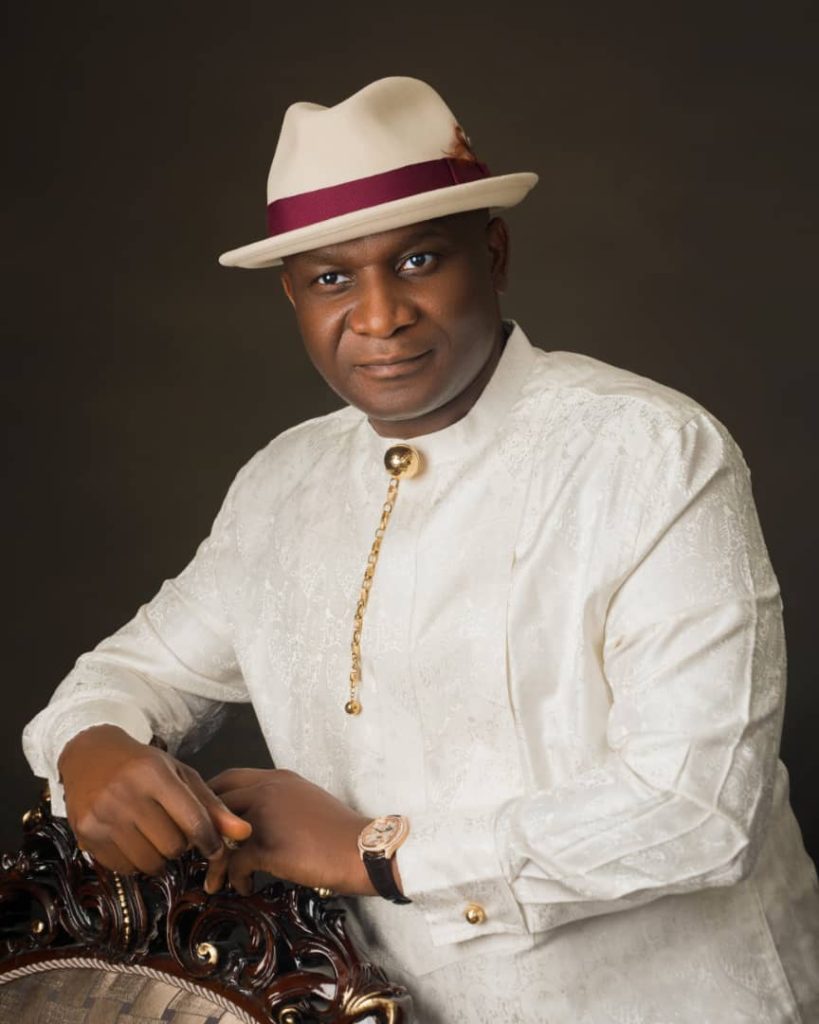
Armed with academic qualifications in Political and Administrative Studies, Sociology, Industrial Relations & Personnel Management, and Development Studies, alongside leadership experience in public service and agriculture, the former Chief of Staff to Governor Timipre Sylva hit the ground running. His projects span infrastructure, health, agriculture, and environmental remediation.
Two years on, he has reformed the Commission’s operations to be performance-driven, engaging communities, youths, governments, traditional rulers, and international partners to deliver tangible results. With a leadership style blending transformational, participatory, and results-driven approaches—anchored on transparency and stakeholder engagement—Ogbuku, who calls himself a servant leader, has digitised procurement and adopted modern best practices, positioning the NDDC as a model of effective public service.
His achievements include constructing or rehabilitating over 5,141 kilometres of roads, 42 bridges, 87 jetties, and landmark projects such as the Ogbia-Nembe Road and Ibeno Bridge. In healthcare, he has established 142 health centres and facilitated free surgeries for over 20,000 patients. True to his mantra, “It’s a new dawn,” his initiatives are reshaping the Niger Delta.
Beyond the Commission, Ogbuku is celebrated as the Deputy Paramount Ruler of Ayakoro Town in Bayelsa and a respected community bridge-builder. Now recognised as one of the standout public servants in the current administration, he remains committed to sustainable progress in the region.
In two days, the Port Harcourt-born leader turns 50. In this conversation with Allure, he reflects on his milestone birthday and his development-focused stewardship at the NDDC.
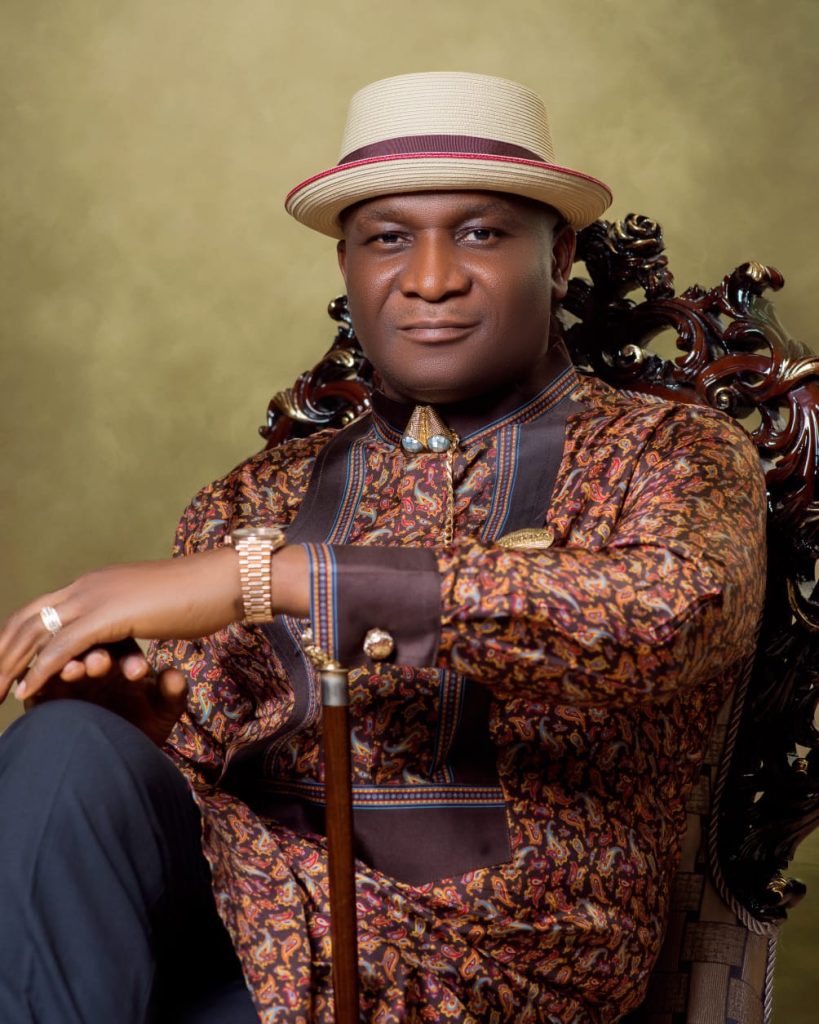
In two days you will be marking the landmark age of 50. How does this milestone make you feel?
I feel blessed for the gift of life and the gift of good health. Life is not complete without good health. So, I want to thank God for giving me the gift of life, the gift of good health as well as the gift of having wonderful family, friends and community members around me in addition to the privilege of serving the Niger Delta people.
Wisdom is often associated with advancing age. As you turn 50, what do you most look forward to?
Well, the most important thing at every point in time–achieving a new milestone in age, is prayer that God grants wisdom, maturity to handle things properly. Because society expects something different, an improvement of you.
So, getting to 50 means one has attained the golden age; the age where mistakes are no more accepted, where you are seen as a role model, to mentor younger ones and for them to look up to you.
So, at this point, I take on every challenge and the full responsibility of reaching the age of 50. And I can assure you that I’m really prepared to express myself as a 50-year-old man.
What philosophy guides you in life?
Love. With love, there will be no crisis and society will be peaceful. Love is the antidote to hatred and hatred is what breeds crisis in the society. The Bible even says love your neighbour as you love yourself and your neighbour in this case is your community. Your neighbour is your state. Your neighbour is your country. So, if all of us happen to love ourselves, we’re going to have a peaceful and prosperous society.
You appear well suited for your role as MD of the NDDC, not only because of your expertise in community development but also due to your first-hand knowledge of the terrain. What was it like growing up in the mangrove community of Ayakoro?
I didn’t really grow up in Ayakoro per se. I was born in Port Harcourt. But my dad took us home to Ayakoro for Christmas. Those trips home for Christmas holidays made me see the level of underdevelopment in that area, and that inspired me with one thing at the back of my mind: that the Lord should give me an opportunity to change the lives of the people in that community. And I thank God for the privilege that the Lord has given to me, for hearing that prayer as a child, and today I’m doing that.
Now, what would you identify as the greatest challenge you faced growing up in your community and how did that affect your daily life and social interactions?

Well, as mentioned earlier, I only visited the community during Christmas holidays, and always under my parents’ guidance. As kids visiting the village, we wanted adventure—to eat the kind of food the people ate—because the life you lived in the township and the life children lived in the village were not the same.
But the greatest challenge was the lack of social amenities in the community. Because each time we were in the village, we didn’t enjoy water, we didn’t enjoy electricity, we didn’t enjoy walking on good roads. So those were the major challenges we faced.
Today, I thank God for giving us the opportunity to change that narrative. I believe if you go to Ayakoro today, it is not the Ayakoro we experienced when we were kids.
With your background in mind, what legacy project did you prioritise upon assuming office?
Well, the truth is that all legacy projects are priority projects, because government funds have been sunk into most of these uncompleted works. Legacy projects refer to abandoned projects started by previous administrations in the NDDC, and Mr. President has directed us to ensure their completion. If there is one that appeals most to me—one that gladdens my heart—it is the Okitipupa electrification project. With its completion, the entire Ondo South Senatorial District now has electricity.
Imagine a state divided into three, with one part never having electricity for 15 years. We changed the narrative—today, people in that part of the state enjoy 24-hour power supply. I’m thankful to Mr. President for making that happen, and I think that appeals to me.
The lack of roads in Riverine areas has hindered development, particularly access to quality health care. How far has the Commission progressed in constructing bridges to link communities?
Well, the Commissiin is already constructing lots of bridges. Just last year, we commissioned the eastern Ibuno Link Bridge in Akwa Ibom State.
We have constructed so many bridges as a Commission, even before I came in.
We also commissioned the Ogbia Nembe Road that has about seven bridges and 50 culverts, all on swamp. These are bridges that actually are landmark projects in the Niger Delta. The NDDC is currently undertaking the construction of the Kaa-Ataba Bridge, which is 1.2 kilometers long. It is another huge project and we intend completing it by the end of this year.
So, I think we have actually made that difference, to bridge that gap.
The NDDC is currently in the process of completing a specialist hospital in Ikom and Rivers State in the Niger Delta. How comprehensive will the healthcare services provided by this facility be?
Well, for us to have gone into the completion of these hospitals shows that we have actually done our feasibility studies. And we realised that in the past, the NDDC had constructed hospitals; most of them were never used. You must also understand that primary health care is not also our responsibility. We build and provide the facilities. And most times, it is left for the state governments to provide the staffing and the running of these hospitals. What has happened to some of them in the past is not encouraging for us to just build hospitals and hand them over to state governments. So what we are doing right now, we are trying to ensure that we equip these hospitals. We are building the one in Port Harcourt and one in Ikom—the specialist hospital, at least with state-of-the-art equipment so that they will really be specialist hospitals where we can actually receive referrals from different parts of the country. The whole idea is to ensure that, yes, we also create medical tourism in the region. So with this, we are trying to partner with the private sector to ensure that it is private-sector-driven. And let them be the ones to run it so that at least whatever facilities we have put in those hospitals will serve the purpose.
The primary mandate of the NDDC is to drive the development of the Niger Delta region. Twenty-five years on, how soon do you think the region will begin to reflect its status as an oil-producing area?
The truth is that we have our challenges. Nigeria is older than 25 years. So, NDDC in the last 25 years have made mistakes and learned from its mistakes, just like any other agency or organisation in Nigeria. So, in 25 years, we have actually made milestone achievements.
These are projects adopted across the regions in various communities. So, yes, we are an oil-rich region, but for us to pride ourselves as an oil-rich region will not be the responsibility of NDDC only. It has to take collaboration between NDDC, state governments and all the IOCs to do that.
That is why in the new NDDC, we are building partnerships and collaboration in our development. So infusing partnerships and collaboration in the things we do is to ensure that we accelerate this image of being the oil-rich region. So, we must all come together and prioritise the kind of projects we want to do.
That is why even the upgrading of the Ogbia-Nembe road which is 27 kilometres long with nine bridges and 50 culverts, was built by NDDC and SPDC. Probably one party alone would not have been able to achieve that so quickly.
We have also approached Chevron and other state government to also construct the Wari-Eskravos road and bridge, which is going to be about 67 kilometres long with several bridges. NDDC alone cannot shoulder it. This kind of partnership is what is going to change that narrative. So, I’m also using this opportunity to call on state governments and also the IOCs that just the way we are willing to partner, let all of us come together to achieve more for the people of the region.
The activities of oil exploration and production companies have significantly impacted the ecology and socio-economic life of the region. What measure has the office taken to address this issue?
The truth is that, yes, we understand environmental degradation is very high in the Niger Delta due to crude oil exploration. But apart from that, we also have to address the burden on the ozone layer, climate change, and related issues—they are all impacting us. For us in the NDDC, the only way to mitigate this is to invest in renewable energy. Renewable energy is one area we are investing in massively to help regenerate our environment. In addition, we are looking at afforestation of our mangroves so they can come back to life and provide the benefits the people of the Niger Delta deserve.
So, we have invested so much in the operational life of the Niger Delta, which is providing solar lights for communities in the Niger Delta. We’re also looking at partnering with other agencies to build solar mini-grids that will also give electrification to various communities in the Niger Delta. So we’re really looking at renewable energy as a way of supporting the regeneration of our environment.
Youth restiveness remains a recurring challenge in the Niger Delta. How is the commission engaging with young people to ensure they take ownership of projects in their communities?
The truth is that for some time now, Niger Delta has not faced youth restiveness. Niger Delta is one of the most peaceful areas in the country right now. But in terms of ensuring that the youth are integrated into development, one aspect of our policy is to ensure that we make our people not to be spectators to development, but to let them be participants in development.
Since we came on board, we came up with different policies that have actually included our youths in our programs and activities.
So, some of those youths who used to hang around are today, contractors and they are doing very well. Some of them are constructing numbers of kilometers of roads.
Some of them are part of their potential operational life of the Niger Delta scheme, where they have also carried out one or two projects. And that is why today you can see the peace we have around the Commission and around the region, because almost everybody is included one way or the other. So for those who do not have that capacity, we have also carried out training programs that are sustainable, not the type that you just do a seminar for one day, give them starter packs and they go and sell them.
So, how do we get these people? We get them through the database which we have built. We came in, we came up with the Project HOPE, which we used to build a database for youth and women in the region.
The idea of building that database is to ensure that, yes, we get youth in every program that we are doing in areas of their competence, and not just picking people and training them in areas where they don’t have interest. With these ones, you know that whatever training you give them, you are assured that they are going to use them. And that is what we have done differently, which has actually changed the narrative. Even in agriculture, we are training youths to go into farming so they can be self-sustained. If we keep training them without providing sustainable opportunities, they will inevitably return to the streets.
Funds are scarce, so the little we have should be invested in areas where they can be properly utilised. To ensure this is sustained, we have now midwifed the Niger Delta Chamber of Commerce.
The Niger Delta Chamber of Commerce is also to support small and medium-scale enterprises. But in this case, it must be a registered member of the Chamber of Commerce. So, we support the Chamber of Commerce to reach out to their members. That is also doing very well right now.
Of the transformative projects you have undertaken so far, which one gives you the greatest sense of pride?
On the transformative projects we have enbacked on, the one that gives me the greatest sense of pride is we trying to strengthen the institution in NDDC.
Because we brought in KPMG to design our corporate governance structure, which will include our SOPs and our Code of Conduct. And that document is ready. It has been passed by the board.
I think we are only just crossing some t’s and dotting some i’s, as we are also subjecting it to the scrutiny of the anti-graft agencies for their input. We will begin implementation any time from now. This will ensure regulation of every staff member, management, and the board, guiding us both internally and externally. Even external parties who want to do business with the NDDC will know what is obtainable and what is not.
So, with that, it will protect the institution—NDDC. Even after us, anyone who comes in will be guided by these rules. This was what was lacking. It also brings compliance, which now gives confidence to agencies and development partners to do business with the NDDC. Many of them have seen this today, and most are now eager to partner with us.
The Warri–Sapele–Benin road has deteriorated into a death trap, posing serious challenges to commuters. How can the commission collaborate with the government and relevant agencies to address this problem?
It is sad that this is happening, but it does not mean the Federal Government of Nigeria is not doing anything about it. Construction work is ongoing there, and any road under construction is expected to have such situations. So, whatever intervention you make will be temporary. The NDDC has moved in to see how we can also support the Ministry of Works in addressing those failed areas. Right now, our contractors are on site, but the continuous heavy downpour remains a major challenge. Once the rains stop, the contractors will go full blast to ensure the road is passable.
What role do the governors of the Niger Delta region play in supporting the work of the Commission?
The role they play is collaboration, but what we have always preached is partnership. That is why we even subject our budget to a Partnership Sustainable Development Conference, where we invite the state government, the IOCs, youth leaders, community leaders, traditional rulers, and civil society organisations—all as partners—to come together and ensure we produce a document that represents our collective interest. What we need is collaboration.
When your work is done in NDDC, how would you like to be remembered?
Well, I think the only thing I want to be remembered for is that I worked with a team that collectively changed the narrative of the NDDC and brought back hope to the people of the Niger Delta.