

The marriage rites of the Igbo people of Nigeria are a colourful and intricate tapestry. Still, no single ritual is as iconic, symbolic, or central to the union as the Igba Nkwu or “Wine-Carrying” ceremony.
This final and most spectacular stage in the marriage process is not just a party; it is the public, legally binding, and emotional validation of the union between two individuals and the merging of two families and communities.
Often referred to simply as the traditional wedding, the Igba Nkwu is where the groom publicly receives his bride—and it all happens with a cup of palm wine.

The Significance of the Igba Nkwu Ritual
The Igba Nkwu is held at the bride’s father’s compound, typically in her hometown, and is a grand feast involving both immediate and extended families, friends, and well-wishers. Before this day, the groom’s family would have completed the preceding stages: the Iku Aka (knocking on the door/inquiry), the consultation with the Umunna (extended family), marriage list sorting, and the Ime Ego (negotiation and payment of the bride price).
The Wine-Carrying ceremony marks the moment the bride formally and publicly acknowledges her chosen husband. The use of palm wine (nkwu) is highly symbolic—palm wine is a vital traditional beverage in Igbo culture, representing joy, celebration, and hospitality. In the marriage ceremony, it serves as the sacred vessel of acceptance.
The Dramatic Search for the Groom
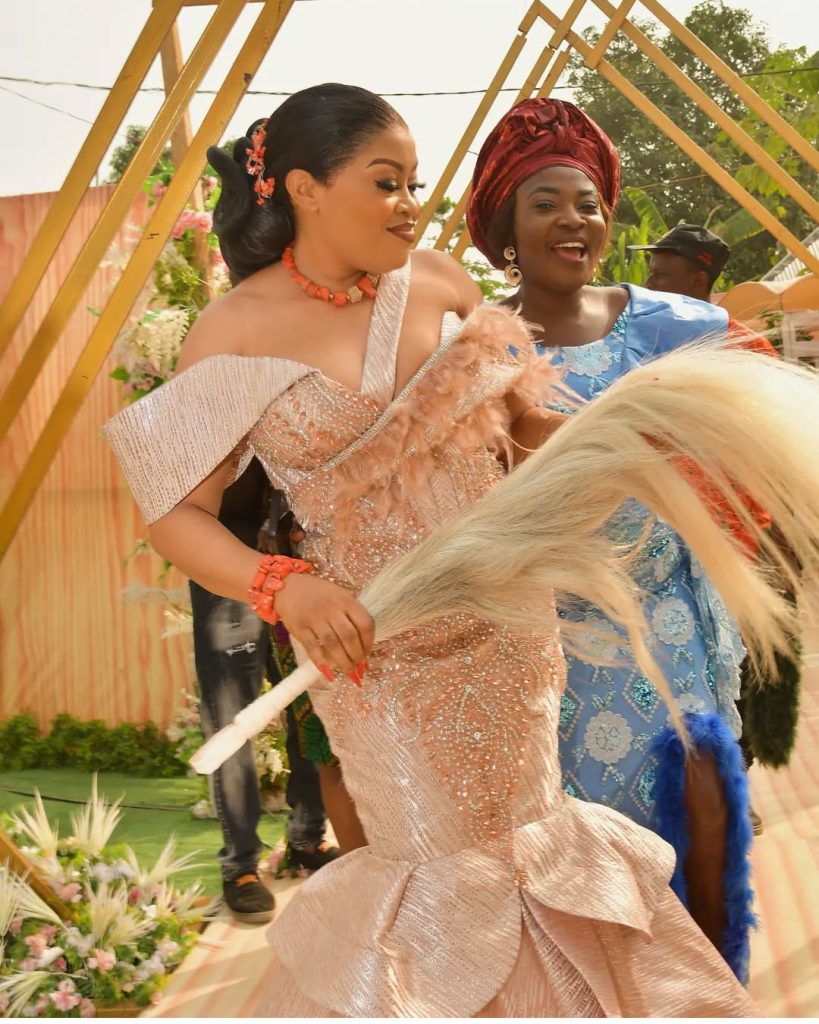
The festivities reach their climax when the bride, dressed in resplendent traditional attire, kneels before her father or the most senior male elder representing him. Her father, after offering blessings and counsel, presents her with a cup—traditionally a carved wooden cup—filled with palm wine. He charges her to seek out her husband among the throng of guests and present the wine only to the man she has chosen. This simple act signifies the father’s blessing and the official release of his daughter into her new life.
With music blaring and her maiden entourage gaily attired in a uniform (aso-ebi) by her side, the bride begins her quest. She dances through the crowd, cup in hand, amid cheers, playful distractions, and good-natured teasing from male guests who try to intercept her and claim the wine. This playful element underscores the community’s involvement, making the moment of discovery even more significant.
The groom, often dressed in the distinctive Isi Agu (lion head) fabric and a traditional cap, is strategically hidden among his family and friends. When the bride finally locates him, she kneels before him and offers him the cup of wine. The groom’s acceptance and public act of drinking the wine seal the marriage in the eyes of the community and tradition. He typically puts money into the empty cup before handing it back to his bride—a gesture of appreciation and commitment.
Holding hands, the couple then dances back to the bride’s parents (and the extended family elders) to receive their final communal blessings as husband and wife. The community erupts in ululations, cheers, and celebration, confirming the union.
A Symbol of Shared Values
The Igba Nkwu is more than an exhibition of culture—it is a profound affirmation of Igbo values.
It gives the bride a central, active role. Her search and decision are the final arbiters of the traditional marriage’s validity. She publicly identifies her choice, affirming her consent.
The ritual is also witnessed by a large portion of the community, which becomes a guarantor of the union. Marriage in Igboland is a contract between families, and the communal feast serves as the ratification.
When the bride kneels to offer the wine, it is a gesture of respect and a symbol of her readiness to honour her husband. Once the wine is drunk, the bride has officially moved from her father’s household to her husband’s, ready for her Idu Uno (the ceremony of escorting the bride to her new home by members of her family bearing lots of gifts) at a later date.
What Happens If You Don’t?
If a man does not marry a woman traditionally in Igboland, any child born from the relationship legally and traditionally belongs to the woman’s family. They may choose to give the child the father’s name or another family name. In the past, this could also affect the man’s ability to be recognised as the father in certain traditional contexts. However, a modern court marriage under the Marriage Act is still legally recognised, and the children are considered his.
Options for Those Abroad
Igbos living abroad and unable to return home for their traditional marriage rites have the option of delegating a trusted family member to act on their behalf. This allows key ceremonies, such as the bride price payment and the Igba Nkwu to be performed in their absence. Some also choose to conduct virtual ceremonies, though these may not fully satisfy all cultural requirements.
Nevertheless, such arrangements allow the marriage to be recognised within the community and ensure the participation of elders and families, which is a crucial part of the tradition.
A Celebration of Love and Legacy
Unarguably, the Igba Nkwu remains an unshakable cultural pillar, a reminder that at the heart of every successful marriage lies love, community support, and the sanctity of tradition. It is a heritage worth preserving, a festival of love, and the true legal and spiritual commencement of an Igbo family.