

Samuel Udeji is a visionary leader and entrepreneur whose work reflects a strong commitment to sustainable development and economic advancement. With a career marked by influential leadership roles, he has championed innovative solutions to some of the most pressing environmental and economic issues of our time.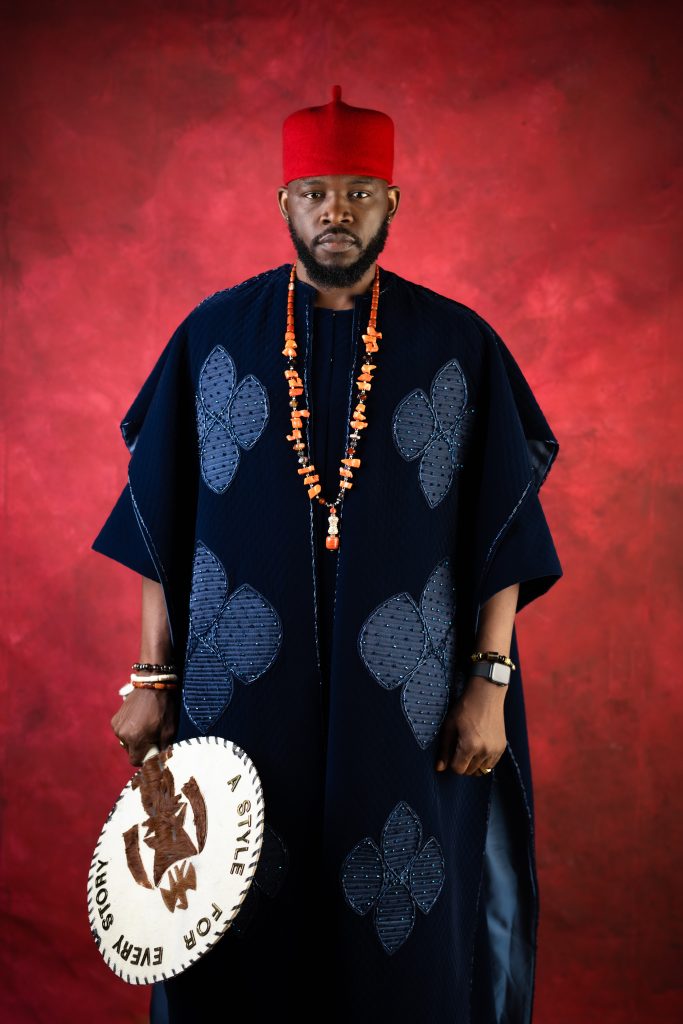

He currently serves as the Chief Executive Officer and Founder of AmDiddy Ltd., a fashion brand dedicated to promoting African outfits and redefining classic menswear. According to Udeji, AmDiddy represents a blend of timeless elegance, originality, simplicity, and futuristic sophistication, articulated through meticulous craftsmanship and refined style.
In this exclusive interview with Vanguard Allure, the Economics graduate of the Obafemi Awolowo University, Ile-Ife, discusses his entrepreneurial journey and shares his strategic vision for elevating Nigeria’s fashion industry on the global stage.
The Amdiddy Experience was your first major show. What was the vision behind it, and what did it mean for you to finally stage your own fashion show?
AmDiddy Experience is my Legacy, to challenge what people believe is not achievable. At the core of it is: “Bring technology to allow you experience how my brain as a creative works, giving detailed information about and why some of the looks were made from Idea conception to finish. AmDiddy Experience is not just a gathering of fashion enthusiasts, but a ground-breaking journey that redefines the runway—a celebration where style meets innovation, heritage embraces the future, and creativity knows no limits.
Tell us about the collection you showcased, what story were you trying to tell us?
At the heart of AmDiddy Experience is the AmDiddy Originals – a curated collection of the most iconic pieces that have shaped the AmDiddy Brand. This is not a revival but a reimagination. A celebration of legacy reintroduced with purpose, precision and power. We also have the “The Future Royalty” – Here we reimagined the timeless symbols of African Royalty – the story, the fabrics, the regalia, the dignity, and the authority and fuse them with bold, futuristic design. They are not just for cover to the body, but crowns the spirit. Each piece tells a story of kings and queens whose echo still shapes us, while daring to ask: “What will royalty look like in the future.”
The Nigerian fashion industry has seen a surge in recognition globally. From your perspective, where are we getting it right, and where do we still need to do more work?
Nigerians are undoubtedly the most blessed, creative and industrious people in the world. There is a revolution in the Fashion Industry and Nigerian creatives and fashion houses are at the forefront of that. At the core of this, is: We are beginning to appreciate the rich cultural heritage and resource we are blessed with, and now transforming into the outfit/designs, styled not just for local consumption but for international market. However, we still have a long way to go in terms of improved finishing, sizing, standardization and how to leverage on technology.
You have a degree in Economics, what inspired your interest in fashion and entrepreneurship?
Yes, studying Economics trained me to see systems, supply, demand, resources, and value. But somewhere along the way, I realised that there was an emotional economy too; what people wear, how they feel when they wear it, the stories woven in cloth, and the identity sewn into seams. So, fashion became a way to combine the analytical with the poetic. Entrepreneurship offered the freedom to design not just garments, but impact; it helped to build a bridge between heritage and future, culture and commerce. So, I use the economist’s lens for strategy and the designer’s heart for creation. One tells me how to scale, and the other tells me what’s worth scaling.
Were there any specific role models or mentors who influenced your path?
Yes, first in my home, in the markets, among tailors and artisans. People who turned scraps into art, who listened to fabric like it had stories. Outside the industry, I will say: Mike Adenuga – Humble and calm, his work ethics and dedication is unmatched. Within the industry, a few names come to mind: Mai Atafo (the most open minded and humble entrepreneur), Ugo Monye, Yomi Casual and Uche Nnaji. One thing they have in common is Creativity, dedication and longevity.
What inspired you to start AmDiddy, and what was the initial vision behind it?
Someone needed to rewrite the story often told in the Nigeria Fashion industry about the level of trust so as to redefine African creativity and luxury through bold self-expression, innovation, and cultural pride. The desire was also to bridge the gap between traditional African heritage and contemporary global style—to show that African fashion and design can stand proudly on the world stage. AmDiddy was designed to be a movement, not just a fashion label—one that empowers young Africans to embrace their identity, celebrate their roots, and express themselves confidently through art, design, and technology. At its core, AmDiddy Ltd was inspired by cultural legacy, innovation ane technology, empowerment and global vision.
What inspired the name — AmDiddy?
The name AmDiddy is personal and family-rooted. AmDiddy is a family brand, the “AM” is my wife and “Diddy” is my pet name. When love and identity come together, family is formed and greater part of any family is legacy. So, AmDiddy is not just a name or brand, its Legacy.
AmDiddy is famous for its timeless African pieces; how do you strike a balance between cultural identity and global appeal?
For me, striking the balance between cultural identity and global appeal is at the heart of everything we do. We believe that timeless elegance and African originality are not mutually exclusive but rather deeply complementary. Our approach is to honour and celebrate authentic African heritage through design, craftsmanship, and storytelling, while ensuring that our designs resonate with universal values of style, quality, and sophistication. By blending carefully curated traditional designs and techniques with modern aesthetics, we create pieces that speak to both local pride and global trends. This balance allows us to connect emotionally with our Nigerian (African) roots and simultaneously invite a worldwide audience to appreciate and embrace the beauty and richness of our cultural heritage.
How did your background as an economist influence your approach to building a fashion brand like AmDiddy?
Core to creativity and economics is human behaviour—what defines their choices. Economics taught me to look beyond just the creative side and consider the bigger picture — understanding markets, consumer behaviour, and sustainable growth. It helped me to develop a strategic mindset, focusing on efficient resource allocation, pricing strategies, and scaling the brand thoughtfully. Additionally, economics gave me insights into global trade and supply chains, which are crucial for ensuring quality, while keeping costs manageable. This analytical foundation complements the creative vision, allowing me to build AmDiddy not just as a fashion brand, but as a sustainable business that can thrive in a competitive global market.
Your brand’s mission statement is “To create a style for every story.” Can you elaborate on what this means to you and how you incorporate storytelling into your designs?
“A style for every Story” is not just a slogan but the heart and soul of AmDiddy. As humans, we are uniquely different, each individual with their own story. At AmDiddy, it is our desire to ensure that each of these distinct stories has a unique design, carefully created from idea conception to sketch and choice of fabrics.
It’s about honouring individuality while staying rooted in authenticity. When someone wears AmDiddy, we want them to feel seen – like their story matters, and like they are part of something bigger. That is the power of fashion when it’s done with purpose.
How do you stay true to your brand’s core values, such as freedom of expression and authenticity, while also appealing to a diverse range of customers?
We design with choices. Some pieces are bold manifestos, others are quiet companions. We show the work behind the clothes, like where the fabric came from, who stitched it, and offer options so people can pick what fits their life and their identity. Authenticity is a hard filter: if it’s not genuine, it doesn’t go out the door.
What role do you think fashion plays in self-expression and confidence?
Huge. Self-confidence starts from appearance; fashion and style is key. When you wear something that fits your story, your smile, posture, attitude and steps change. Our job is to design pieces that define and boost individual confidence.
How do you aim to empower your customers through your designs?
At AmDiddy, empowerment is woven into every stitch. Our goal is to help people feel confidence, seen and unapologetically themselves. We design with intention, blending Nigeria cultural heritage with timeless elegance. Our piece are not just designs; they are created to step you into power. For us, it’s more than fashion. It’s about identity, pride and presence. From boardroom, to street and to special event, we want our customers to feel elevated in style. So ultimately, we aim to create pieces that remind our customers that they are worthy, stylish, and limitless — and that their heritage is a strength, not something to fit into trends, but something to lead with.
How do you incorporate sustainable practices into your fashion brand, AmDiddy?
We start with local sourcing and work with makers close to home, that reduces long shipment chains and supports local economies. Publicly, we’ve said 60–70% of our fabrics come from Nigeria and that we source leather locally. Beyond that, we’re working on better production plan, and less wasteful cutting; these are ongoing efforts rather than finished proclamations.
What initiatives have you implemented to reduce environmental impact?
Keeping our environment safe is the key component to why us being alive and at AmDiddy, we understand this. The industry faces challenges of fast fashion imports, waste management, and limited infrastructure for recycling or ethical production. Yet, there is a strong heritage of handwoven, handmade and natural fabrics such as Aso-Oke, akwete, raffia and attire, which support sustainability. About 70% of the fabrics used for this show are made in Nigeria because they are eco-friendly.
Can you share some examples of eco-friendly materials or production methods you’re currently exploring or implementing in your designs?
Certainly. We are experimenting with organic cotton blends, local hand-s
pun fabrics, natural dyes for certain collections. Also investigating zero-waste pattern-cutting methods: designing pieces in ways that reduce off-cut waste. And working with craftspeople who use non-toxic mordants and traditional dyeing practices rather than harsh chemical ones.
How do you balance the creative aspect of fashion with the need for sustainability and environmental responsibility?
By seeing sustainability as creativity’s partner, not its limit. Sometimes, constraints breed creativity. If I have less waste, I must design smarter; if I use a traditional technique, I might have to adapt my silhouette. In fact, some of the most striking, memorable pieces are often those born from constraints, they force innovation. So, sustainability becomes part of the design brief, not a sidebar.
What do you think are the biggest challenges facing sustainable fashion in Africa today?
A few stand out: infrastructure (stable power, access to consistent, ethical materials), cost (sustainable inputs often cost more), awareness (some customers still equate sustainability with expense rather than investment), skill gaps in traditional craftsmanship being undervalued, and supply chain transparency. Also, import/export barriers and inconsistent policy frameworks make scaling difficult. But these challenges are surmountable and brands like ours must lead with integrity and collaboration.
What role do you think entrepreneurs play in driving positive change and economic growth, and how do you see yourself contributing to this effort?
Entrepreneurs are often the frontline of culture and innovation. They create jobs, preserve traditions, shift perceptions. In Nigeria, fashion is not just clothes, it is identity, export, and soft-power. I want AmDiddy to be a platform that trains and pays artisans, sources locally, and proves that Nigerian luxury can be both authentic and exportable. That’s how you shift perception and GDP together.
What has been the most defining moment in your career so far?
Unity of Nigeria’s rich cultural heritage on stage on AmDiddy Experience. Staging The AmDiddy Experience, bringing craft, storytelling and technology onto one stage and showing our work to a broader audience. That night felt like a folding of every thread we’d been working on into one statement. Launching the women’s line, wearing local fabrics in a way that felt unapologetically Nigerian and yet forward-looking. Also, early days, when someone trusted me with a commission, when the first piece sold and was worn publicly, moments you think: this is possible.
What was growing up like for you? Can you share a memorable experience from your childhood or early career that shaped your perspective on fashion and business?
Everything I am today is to the credit of how my mum brought us up—Vision, believe and consistency.
What do you believe is the key to achieving a healthy work-life balance, and how do you prioritise self-care?
I try to be intentional. There are days I switch off sketchbook, emails, phones and turn on family time, silence, travel, music, these reset me. Also, delegating matters, I trust my team with certain tasks so I’m not consumed by every detail. Self-care for me is both rest and creation, sometimes rest looks like reading, at other times, it looks like working on a passion piece that has no deadline.
How do you stay inspired and motivated?
By remembering why I started. By seeing someone wear AmDiddy and light up. By new challenges, learning a new technique, working with a craftsman I’ve never worked with, experimenting with colour or form. Also, by community, feedback from artisans, customers, and critics. Sometimes even failure motivates me, when things don’t go right, I learn and get better.
What activities or hobbies do you enjoy outside of work?
Travel to absorb textures and colour, sketching with no deadline, music and quiet time with family, finally watching football.
What advice would you give to young entrepreneurs or fashion enthusiasts looking to make a positive impact in their industry?
Be patient and honour craft. Start with what you believe in; don’t chase trends more than truth. Respect your roots, but educate yourself in global standards. Build a team you trust; invest in craft, invest in story. Be patient, reputation isn’t built overnight. Let failure be part of the journey; some of your best design intuition comes from what didn’t work.