

By Yemisi Suleiman
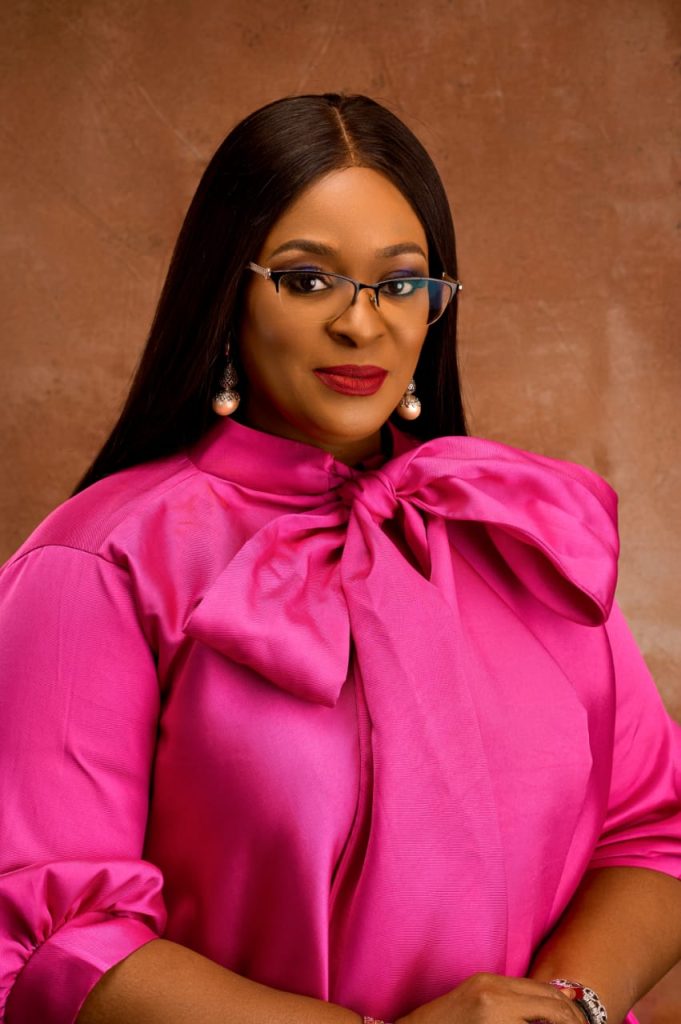
With over three decades in legal practice, Chinyere Okorocha has built a formidable reputation in Intellectual Property law and sector-focused legal strategy, rising to become Partner, Intellectual Property Partner, and Sector Head of Health and Pharmaceuticals at one of Nigeria’s foremost commercial law firms.
She pioneered a sector-based advisory model that has strengthened the firm’s competitive edge and earned her recognition from respected global legal directories. Yet, beyond the titles and accolades, she speaks most passionately about women — their growth, their struggles and their potential.
In commemoration of this year’s International Women’s Day, Vanguard Allure places Chinyere Okorocha on its cover, not only for her professional excellence, but for her unwavering commitment to empowering other women. As author of Heels & Ladders – a career acceleration handbook for female professionals, she has made it her life’s work to ensure that success is not a lonely climb.
From navigating motherhood and career in the early years, to breaking ceilings in the legal profession and mentoring the next generation, Chinyere’s story is one of clarity, courage and conviction. For her, it’s a timely reminder that when women rise, they must hold the ladder for others.

It is another International Women’s Day. How much progress would you say women have made so far in bridging the gap between men and women? And where do you think the gap is most visible?
International Women’s Day has almost become International Women’s Month, because one day is not enough for us. Women have rightly appropriated the entire month.
The day started because of the stereotypical biases that traditionally held women back in society, many of them cultural. Over the years, we have advocated for equality, equity, and equal opportunities. When you look through history, there have been real advancements. Women can now vote. We can hold positions of authority. In Nigeria today, many bank MDs are women. Globally, we have a woman leading the World Trade Organization — Ngozi Okonjo-Iweala. Some African countries have had female heads of state. That is progress.
However, there are still gaps. One major gap is the misunderstanding of equity. Equity means meeting women at their point of need, not treating women exactly like men. If you give a man, a woman, and a child the same large bicycle, that is equality. The man can ride it easily. The woman may struggle to balance. The child will fall. Equity means giving each person the right size bicycle.
Women are not men. I am a woman. I am not trying to be a man. I do not want to look, dress, or speak like a man. I am intelligent. I have contributions to make. Meet me at my point of need. Do not schedule political meetings at 2 a.m. when I have a family. Do not fix board meetings on weekends when I am expected to care for my children.
Give women equal access to loans. If you look at the statistics, very few women-led SMEs can even access funding. The standard for women to attract investment is often higher than for men. These are some of the visible gaps we still need to address.
The 2026 International Women’s Day theme is “Rights, Justice, Actions for All Women and Girls.” What does this mean to you personally and professionally?
To me, it means equal rights and equal opportunities for both men and women, while recognis1ing the uniqueness of women. I often describe women using the acronym FILE: Foresight, Intuition, Lateral thinking, and Empathy. These qualities make women exceptional professionals, leaders, and, I dare say, even heads of state.
“Rights” and “justice” mean we must move beyond rhetoric. We should use the mechanisms of the law to protect women and girls where they have been marginalised or victimised. Sexual harassment, discrimination, and abuse must be addressed through legal channels. We must not shy away from enforcement.
“Action” means institutionalising change. Build crèches in large organisations so nursing mothers can bring their babies to work. Introduce flexible and hybrid work policies so women can work from home when necessary. Let us implement policies that reflect reality. Let us not just talk—let us act.
‘Give to Gain’ — what does that mean to you?
It means giving of yourself, your intellect, your time, and your resources. It is not just about money.
Writing my book was my way of giving back 34 years of experience. I have traveled to over 40 countries and interacted with women globally. Women face similar challenges everywhere. I decided to distill my lessons, including my mistakes, into a book so others can learn from them.
It also means mentorship. I used to mentor people one-on-one, but I realized I could not reach enough people that way. So I started the Career Acceleration Mentorship Course and leveraged social media to scale its reach.
If you have achieved some level of success, you owe it to the next generation to make the road easier. The “gain” comes naturally. Recognition, appointments, and opportunities follow.
For example, I served as Chairperson of the Nigerian Bar Association Women Forum. That role allowed me to interact with women lawyers nationwide and push the female agenda forward. When you give consistently, the gain comes in ways you did not plan for.

Women have been calling for increased representation in government. Do you think this will accelerate progress?
I struggle with the idea of a quota system. I believe appointments should be merit-based. Ideally, positions should go to the most qualified person, regardless of gender.
However, we are not yet at that ideal stage. So while I dislike quotas, I accept them as a starting point. We must begin somewhere.
Consider the legal profession. There are over 700 Senior Advocates of Nigeria (SANs). Only 26 are women. That gap is enormous. When this is raised, people say women are not applying. Then we must ask: why are women not positioned to apply?
In universities, women often graduate with top results. Early in their careers, they perform exceptionally. But once marriage and motherhood begin, many drop off—not due to lack of competence, but structural challenges.
We need policies that meet women at their point of need. For now, we can accept quotas, but we must move toward true meritocracy where the best CV, the best experience, and the best competence win.
What inspired your book, Heels and Ladders ?
Heels and Ladders is a career acceleration handbook for female professionals. The heels represent the woman; the ladder represents the career ladder.
Imagine climbing a ladder in heels. It requires planning, balance, and support. Sometimes, you need another woman at the top to pull you up. And when you reach the top, do not throw away the ladder. Hold it for the next woman.
The book was inspired by my 34-year legal career. I faced discrimination. I navigated work-life balance. I once wrote about taking my breast pump to London for a conference when my baby was four months old. I expressed milk daily and discarded it just to maintain breastfeeding upon my return. That determination defined my journey.
The book has 14 chapters. It acknowledges that the glass ceiling is real. But it also outlines practical steps women can take to overcome obstacles and reach the heights they desire.
Are there recurring career pitfalls women face?
Yes. One major challenge is juggling marriage, motherhood, and career. In some homes, women are asked to stop working after marriage. It still happens frequently.
Women often have to work twice as hard as men to prove themselves. Ambition in men is praised; in women, it is criticised. Women are labeled “too aggressive” or “too forward.”
Another issue is negotiation. Many women accept what they are given. Men negotiate, even when underqualified. Women often over-prepare before stepping forward.
Imposter syndrome is also real. Even accomplished women doubt themselves. Overcoming it requires intentional mental conditioning and acknowledging your achievements.
As Teenager What informed your career choice?
Two things influenced me. My father was a lawyer, so I grew up around law books. Secondly, I did not like mathematics. Law suited me because it did not require science or maths.
Initially, it was not passion-driven. But I grew to love it—especially intellectual property law, which protects creations of the mind such as trademarks and patents. I enjoy defending clients’ rights and safeguarding their brands.
You pioneered a sector-based advisory model at your firm. What leadership lessons did that teach you?
Vision, courage, and innovation.
At Jackson, Etti & Edu, we adopted a sector-based approach, combining legal expertise with industry knowledge across five sectors: health and pharmaceuticals, financial services, energy and infrastructure, FMCG, and technology/media. Leading that initiative required collaboration and strategic thinking.
Versatility has also defined my career. I have led fundraising efforts, organised international conferences, and raised significant funds for professional bodies. Excellence must follow you wherever you go.
What milestones are you most proud of?
Becoming Chairperson of the Nigerian Bar Association Women Forum was a major milestone. Leading thousands of women lawyers nationwide was deeply fulfilling.
Launching my mentorship club, developing a six-week career course, and publishing my book are also significant achievements.
And most challenging moments?
A challenging moment was losing a major client due to administrative delays beyond my control. I had to take responsibility and learn from it. Leadership requires ownership, even in difficult situations.
How did you personally navigate work-life balance?
As a young lawyer, I was very clear that I wanted to be a female professional. I believe clarity is everything—that is why the first chapter of my book is titled “It All Starts With Clarity.” I knew I wanted a strong career, and I also knew I would get married and have children. My husband was very supportive, but when I had my first child, the real test began. Balancing motherhood with ambition was not easy, especially when I was offered an opportunity to attend a conference in the UK just four months after giving birth.
At that point, I had just returned from maternity leave and was still breastfeeding. I had to choose between staying home with my baby or taking a career-defining opportunity. I did not want my job to suffer because I was a mother, and I did not want my child to suffer because I was a working woman. So, I made a plan. My mother moved in to help care for the baby, my husband bought a generator to ensure constant power supply, and a month before traveling, I began expressing and storing breast milk in the freezer.
Two weeks before I left, I introduced the bottle to my baby to ensure she would adapt. I traveled with my breast pump and, for ten days, expressed milk every night just to maintain my supply, even though I had to discard it. It was painful and exhausting, but I was determined. When I returned, I resumed breastfeeding, and my daughter continued until she was one year old. I am not suggesting every woman must do this, but for me, it was about determination and refusing to be sidelined because I was a mother.
Work-life balance, I have learned, is about seasons and intentional juggling. Sometimes family will demand more; at other times, your career will require more. Some women pause their careers and return later. I chose to integrate both. The key is clarity—when you know where you are going, you find the tools and the courage to get there.
You obviously are very fashionable. How would you describe your personal style?
I love fashion. Early in my career, I admired a woman who embodied beauty and intelligence. She inspired me to ensure that when people see me, they see both elegance and competence.
I enjoy wearing makeup, jewelry, and being well put together. I believe a woman can be stylish and intellectually strong at the same time.

If you were to take a holiday, where would you go?
Japan is on my list. I have traveled widely but have not visited Japan. I would also love to visit Rome and the Vatican.
What would be your take-home message for women and younger girls who look up to you?
My message to women is simple: be clear about where you are going. If you know your destination, you can gather the right tools for the journey. Plan intentionally. With clarity and determination, you can climb your ladder, even in heels.