


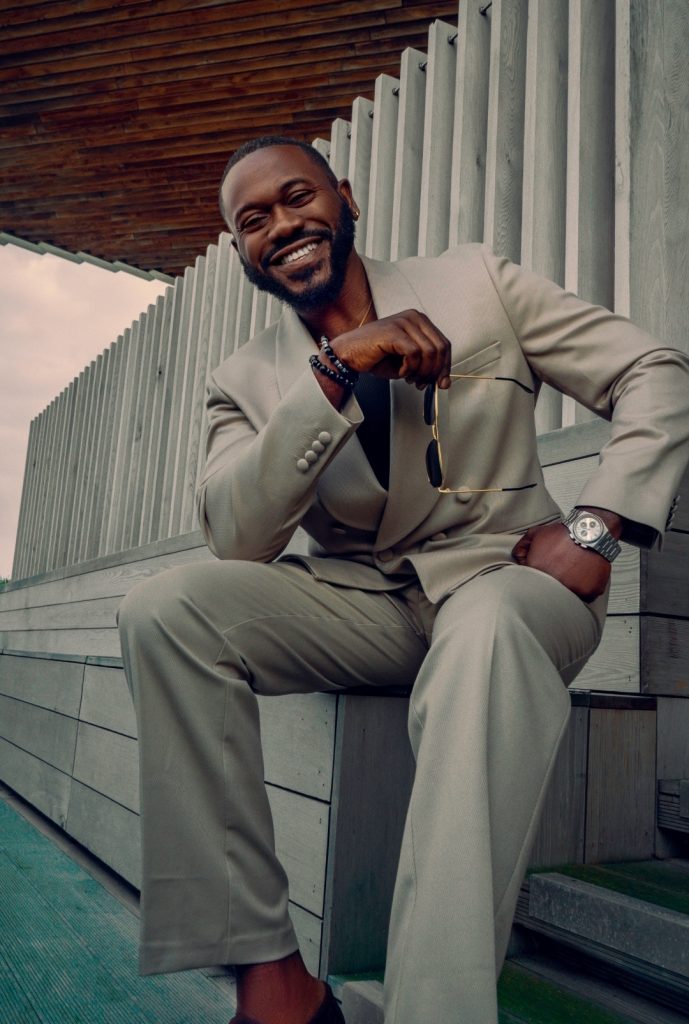
Before he became one of Nollywood’s most sought-after leading men, Deyemi Okanlawon was navigating the structured world of corporate Nigeria, armed with strategy, precision, and a clear understanding of value.
Today, those same principles define his journey as an actor, producer, and storyteller who has carved a distinct identity in a competitive industry.
In this revealing interview with Allure Vanguard, Okanlawon, a graduate of Chemical Engineering, traces his path from the boardroom to the big screen, recounting the risks, reinventions, and defining decisions that shaped his career.
He speaks candidly about walking away from stability to pursue purpose, the challenges of not fitting the industry’s conventional mold, and the resilience required to build an audience on his own terms.
You recently collaborated with a perfume brand. Can you tell us more about it?
I’m extremely selective about what I put my name to, and fragrance is about as personal as it gets. A scent walks into the room before you do. It stays in a room after you leave. For an actor who thinks deeply about presence and communication, that’s not a trivial thing. So when this collaboration with Sarah Baker and Seinde Signature came, my first question wasn’t about the commercial terms. It was: does this scent tell a story I’d actually want to tell? Because everything I do is storytelling. If I can’t find the story in it, I’m not interested. So, you can imagine how quickly I said yes once I realised that Sarah Baker is not just a perfumer; she is a writer who attaches a story to each of her fragrances.
Are you considering venturing into that industry soon?
I studied chemical engineering. I actually understand molecules and compounds. (laughs) So, technically, I’m more qualified for this than people realise. But genuinely, fragrance is fascinating to me as an art form because it’s invisible. You can’t frame it. You can’t post it. You feel it. And that’s exactly what great performance does – you don’t see it working, you feel it. Whether I venture in formally, I won’t say. But I’m always curious, and curiosity has a habit of becoming action with me.

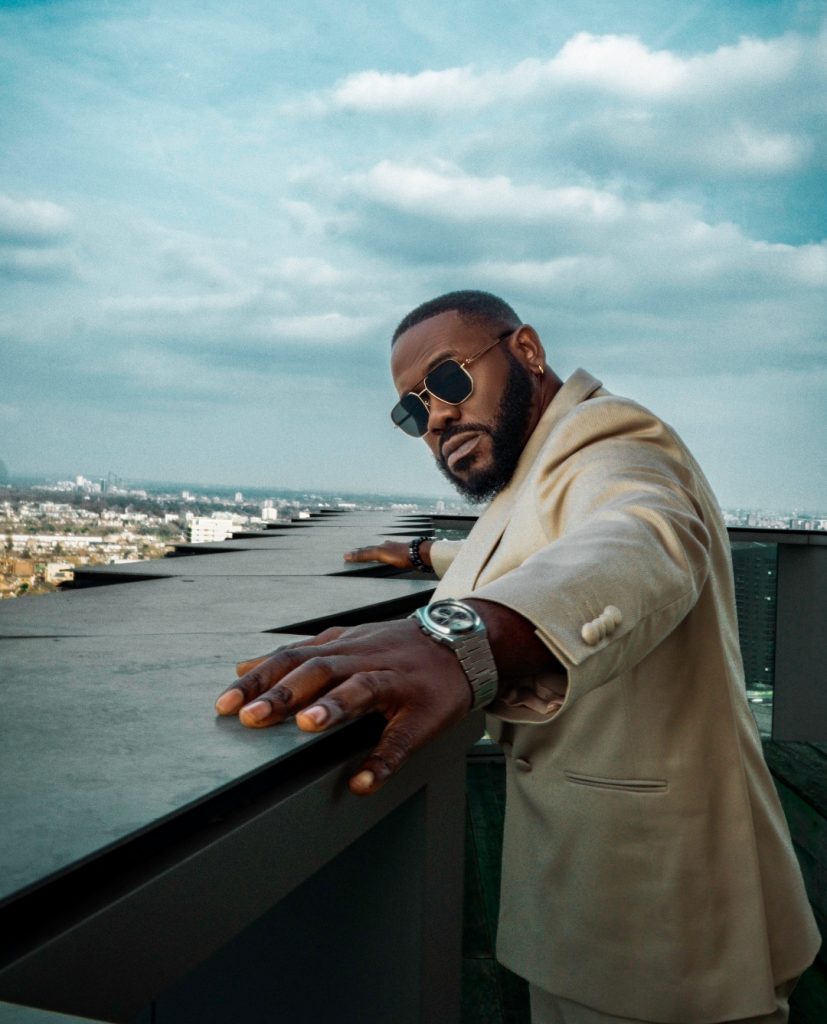
What kind of fragrance do you like to wear?
Oud. Deep, unapologetic, room-filling oud. One of my favourite fragrances is Electimus – the Azure and the UAE, which I now layer Sarah Baker’s Velvet Vendetta over. Now, if you know those three fragrances, you understand that this combination does not whisper. It does not politely introduce itself. It walks in, pulls up a chair, and tells you it’s staying. (laughs).
You’ve become one of Nollywood’s top-grossing actors. What key moments shaped your journey?
Honestly, none of it was planned, which is ironic because I’m very strategic. (laughs) I left my role as Head of Marketing at OLX Nigeria in 2013 to explore acting for a year. Then I got two roles from my first audition, Blink went viral, and Giddy Up took off. In 2019, I quit acting, returned to a 9–5 at Silverbird, even became acting CEO during COVID, then suddenly, the calls came. Mo Abudu, Funke Akindele, Kemi Adetiba, Kunle Afolayan, Jade Osiberu, Niyi Akinmolayan. Projects like Omo Ghetto: The Saga, King of Boys, Blood Sisters, and Swallow. Then I produced All’s Fair in Love, now on Amazon Prime.
From squatting in Shomolu with nothing to this, what made the difference was consistency. I never compromised on quality or integrity, no matter the pay. That’s what made it all make sense.
Looking back, what were the biggest challenges you faced when entering the Nigerian film industry?
I didn’t fit the industry’s idea of a leading man, no “packaged” look, just an intense, unconventional presence. I was even told I was “too expensive,” without the Instagram numbers to back it up. So I built the audience.
The real challenge was that there was no template for who I was. That gap between my vision and the industry catching up is where many compromise; I refused to.
Can you recall a time you almost gave up? What specifically pulled you back?
In 2019, I genuinely quit acting and joined Silverbird, eventually becoming acting CEO. It wasn’t bitterness; I just felt my growth wasn’t keeping pace with the opportunities.
Then COVID hit, and the calls came from the very directors I’d always wanted to work with. At first, it almost felt ironic, but projects like Omo Ghetto: The Saga changed everything.
I realised I wasn’t coming back; I was being called into a new level. And once you understand that, it’s not a comeback.

How do you choose the roles you accept, especially with your increasing influence in Nollywood?
Three things, in order: First, does the story say something real and necessary? Second, can I connect with the character from the inside, even if I don’t like them?
Third, do I trust the team? As an actor, I need to feel safe enough to be fully vulnerable.
Lately, there’s a fourth: does it challenge me? If it doesn’t scare me a little, it’s probably not worth it.
What has been your most transformative role so far, and why?
That’s like asking me to pick a favourite child. (laughs)
Playing General Aderemi in Crown of Blood, a Yoruba Macbeth at Sheffield’s Crucible, changed me deeply. It demanded grounding the role in Yoruba history and culture for a global audience, and it reshaped how I see African storytelling on the world stage.
Kola in Blood Sisters took me to my darkest emotional place. I needed therapy after. And Hakeem Seeking Justice was the most physically demanding, with intense fight training and stunts.
Each role transformed me, but Crown of Blood changed how I see myself.
How do you prepare for complex or emotionally demanding roles?
I have a system I’ve developed over the years that I only recently started talking about publicly. Before I even receive a script, I’m constantly building a mental wardrobe of characters from personal relationships, books, and movies. I create diverse psychological profiles, archetypes, and backstories. I’m essentially keeping spare parts in a workshop. So, when the right material arrives, I’m not starting from zero; I’m simply recognising something I’ve already been cultivating. It accelerates my process significantly. When a specific script comes, I go forensic. What does this character want? What does he fear? What’s the wound he’s never addressed? And then I find the point of intersection between his experience and mine – because great performance isn’t about pretending, it’s about excavating real material and redirecting it.
Have you ever felt pressured to take roles that don’t align with your values? What did you do?
The industry and life will always test you. There’s always a moment where something crosses a line – ethically, creatively, spiritually – and it usually arrives wrapped in very impressive money. I’ve always had the protection of being clear about who I am before I walked through any door and into any negotiation. I came from corporate and had some savings and investments. I didn’t come into the industry desperate for money or fame. And I think this is the most important thing I can say to any young creative: the fastest way to protect your integrity is to ensure you never need any single opportunity so badly that you cannot afford to walk away from it. I have said no to things that would surprise people, and I’ve often even refused work from people whose intentions and integrity I did not trust. Things that would have been career-defining in certain circles. I sleep extraordinarily well. That still matters more to me than any role.

What’s the harshest criticism you’ve received? Did you agree with any part of it?
My harshest critic is myself; I’ve judged my performances more brutally than anyone else ever could. My church drama background reinforced that discipline; mediocrity was never excused, and the corrections, though tough, came with purpose.
As for online noise, like claims that I can’t act, I ignore it; it’s often just a chase for engagement. What mattered more was when a close friend, a marketing executive, told me my social media was “boring.” She was right. I’d focused so much on craft that I neglected visibility.
I took that feedback, adapted, and found a more authentic public voice, which grew my audience. Constructive criticism only hurts if you ignore it; if you listen, it becomes fuel for growth.
When you watch your performances, what do you critique first?
Authenticity. When on set or on stage, my inner question is always: Do I believe myself? Because if I don’t believe me, the audience has no chance. There are moments in any performance where you can see the actor, where you can almost observe the technique or lack of it and where they’re not being real. And that is the thing I refuse to tolerate in myself. The greatest moments in performance are when something unexpected happens – an impulse that wasn’t in the script, a pause that came from genuine uncertainty, a micro-expression that the character earned in that moment. When I see myself reaching for the obvious choice, the predictable emotional response, that troubles me more than almost anything. I’ve been in over fifty productions. Till today, I always sit down to watch every single one of them like a student at the back of the class.
Are there roles you feel Nollywood isn’t offering you yet, but you’re ready to take?
Every time I’ve been asked this question, I’ve answered emphatically “No,” but these days, I find myself saying “Yes.” As I have evolved as an actor, I find myself craving the kind of lead role that tells a complete, complex, morally honest story about what it means to be a man in Africa right now. Not a villain or a hero, but a fully realised human being navigating impossible choices in a world that looks, sounds and smells like home but speaks to the entire planet. There is a story growing in me that begins in Japan and ends in Nigeria, and by God’s grace, I intend to produce it. And that’s just one of the things coming.
Which directors or actors have influenced your craft the most?
Denzel Washington, Chadwick Boseman, and Daniel Day-Lewis. Here in Nigeria, Elder Olu Jacobs’ career is exemplary; he is truly a genius. Uncle RMD, our very own Sean Connery, and Uncle Bimbo Manuel, who doesn’t get enough flowers; he’s an actor’s actor in the truest sense. Directors: Kunle Afolayan, Kayode Kasum, Kemi Adetiba, Jade Osiberu, Biodun Stephen, Moses Inwang, and, without question, Mojisola Kareem, who was my director in the UK theatre production, Crown of Blood.
How do you balance your career with family and personal life?
I stopped trying to balance it. Balance implies some perfect equilibrium that doesn’t exist in any high-performance life. What I do instead is be fully present wherever I am. When I’m on set, I’m completely in it. My wife lets me immerse myself in my work; she doesn’t even follow me on social media. She doesn’t watch every film I’m in; I tell her which ones to see and she trusts my judgment. When I’m home, the phone disappears and the character stays outside the door. My three boys don’t care about Netflix – they care whether their father shows up present. Not just available providers like our fathers before us but present guides. I got married in January 2013 and in August of the same year, I quit my corporate job to act full time. We have built this life together, simultaneously. She is an exceptional woman who understood early that she wasn’t just marrying a man, she was marrying a calling. I pray for God’s grace, every single day, and try to make sure she never has cause to regret that.
What’s one misconception about you that you’d like to clear up?
That I’m arrogant. (laughs) I’m not, I’m confident in the skill I’ve built. People often mistake self-assurance for arrogance, but there’s a difference: arrogance says “I’m better than you,” confidence says “I know who I am.”
I don’t diminish others, but I also don’t shrink to make anyone comfortable. I’ve been called mischievous, intense, even difficult—but really, I just take my work seriously and refuse to dim my light.
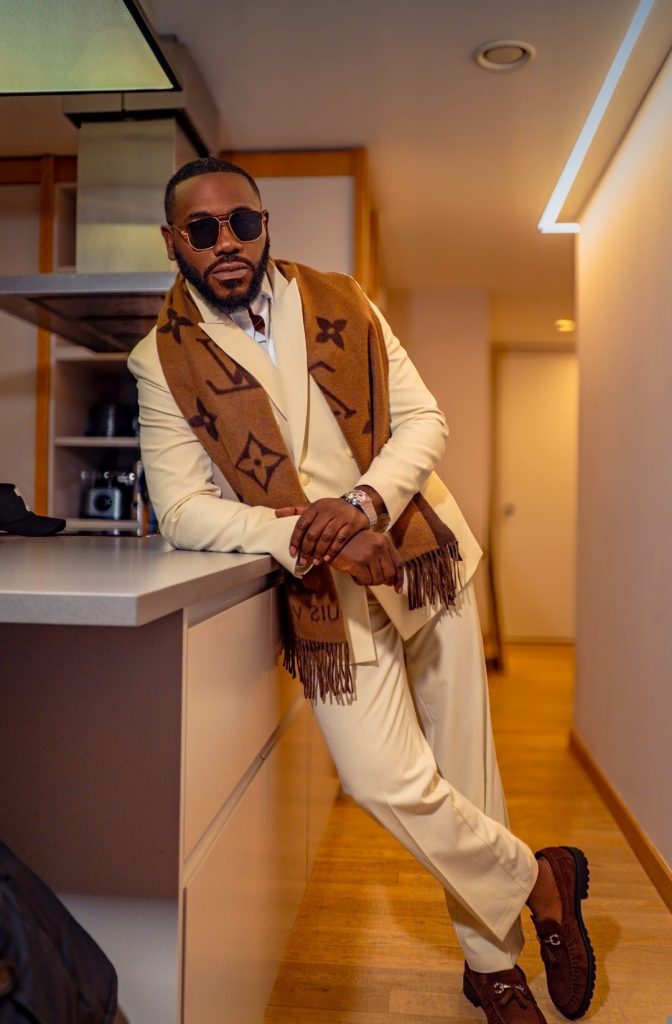
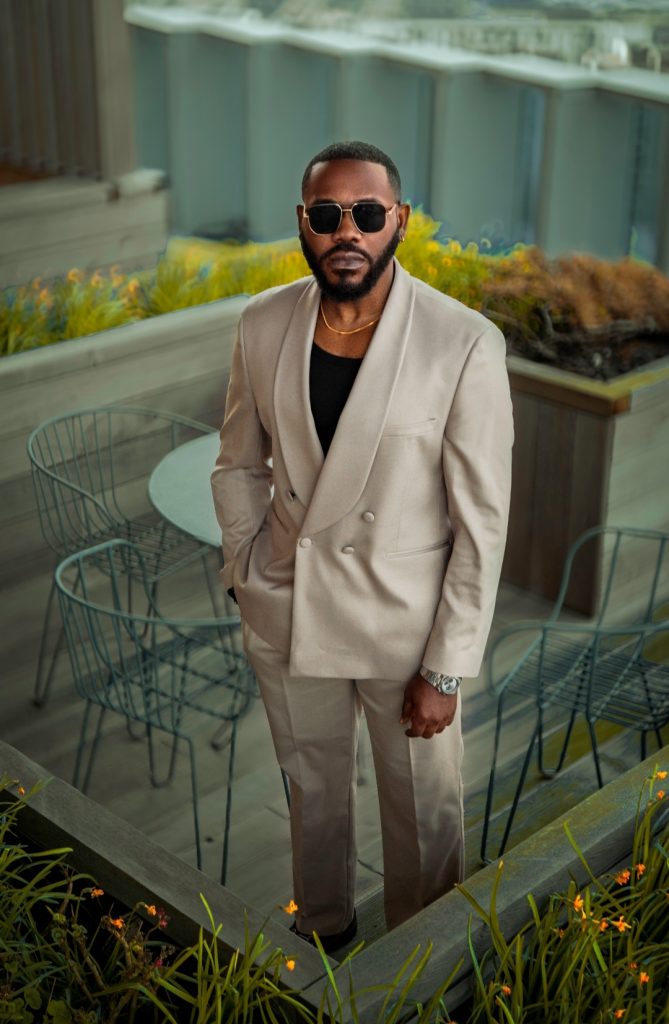
Can you describe your style?
There is a saying that “the man makes the suit, not the suit the man”. While a well-cut suit, preferably bespoke, is my home, you’ll often times find me relaxing in a casual wear.