

Compiled by Jemi Ekunkunbor
Fashion has been a huge part of people’s life since ancient times. The evolution has been phenomenal. Fashion is full of weird history and practical tricks that stuck around. While some people enjoy this journey others just don’t bother. But if you do, here, we share some interesting facts about the fashion world that would astonish you.

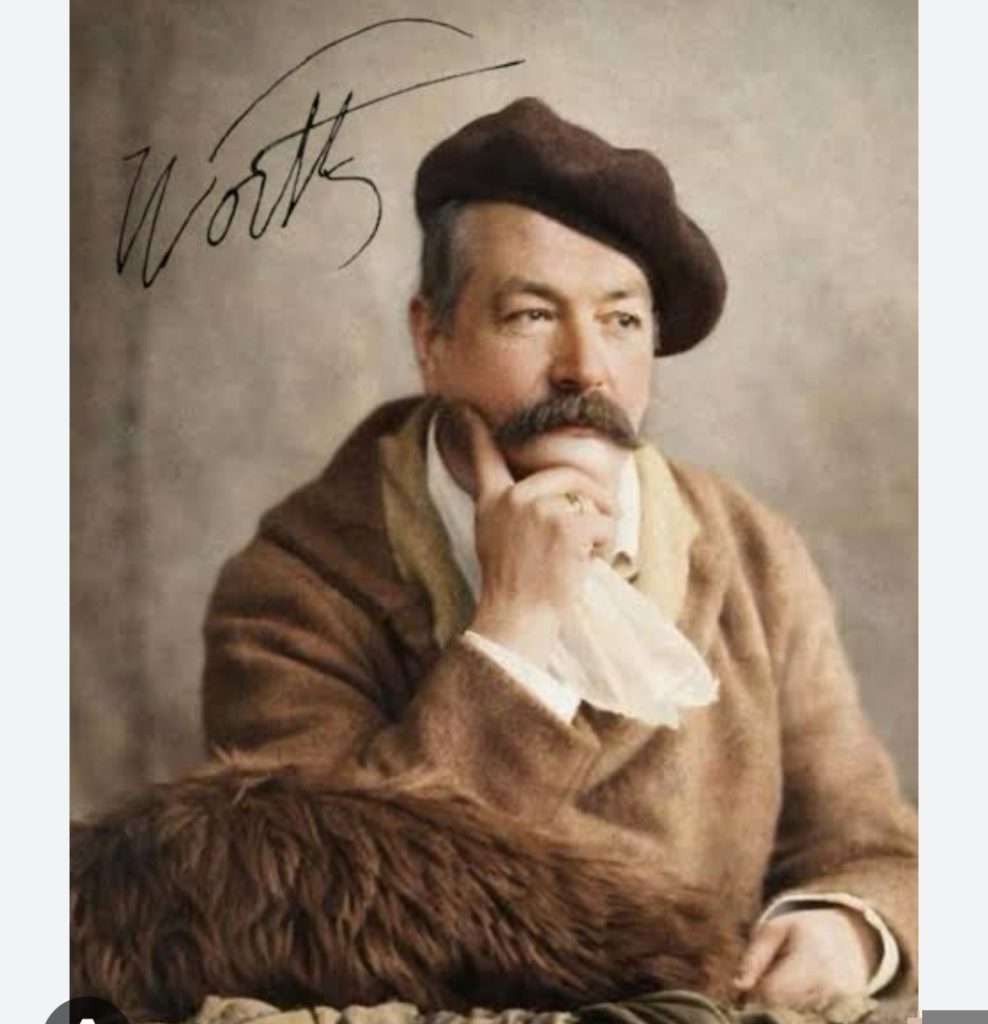
Charles Frederick Worth (First fashion designer)
Before the 19th century, clothing was custom-made by tailors and dressmakers without any singular designer leading trends. That changed with Charles Frederick Worth, an Englishman based in Paris, who is credited as the first fashion designer (in the modern sense of the term) and the inventor of haute couture.
After founding his House of Worth in 1858 at 7 rue de la Paix in Paris, Worth was the first to invite customers to his atelier and recognise and implement a business model based on a single collection. He staged “salon shows” where he showcased designs unique to one collection only. The main goal of these “salon shows” was not so much for art purposes, but mainly to find clients and sell the collection.
Showing his designs live on models at the House of Worth was a first in fashion; his clients could choose a model and select fabrics and colours and had garments tailored according to their preferences and measurements.
Later on, Worth had the idea of organising events twice a year, so all clients could be in town at the same time and designers could present their different collections, which laid the foundation of Fashion Week. Basically, Worth invented the way the industry runs today and how fashion houses operate and build their collections.
Why shirts have back loop
Most people have worn a button-down shirt countless times without ever noticing the small fabric loop stitched just below the collar on the back. When it does catch the eye, it’s easy to assume it’s decorative—or simply a forgotten detail left over from manufacturing. In reality, that tiny loop serves a very real purpose and carries a history that goes back more than a century.
Known as a locker loop, this feature first appeared on U.S. Navy uniforms in the early 1900s. Life aboard naval ships meant tight quarters and limited storage. Closets were rare, and hangers were often nonexistent. The loop allowed sailors to hang their shirts on simple wall hooks, keeping them off the floor, reducing wrinkles, and helping damp fabric dry more efficiently. It was a practical solution designed for daily life at sea.
As military influences gradually shaped civilian fashion, the locker loop made its way into everyday menswear. By the mid-20th century, it became especially common on college campuses, particularly at Ivy League schools. While students no longer needed the loop for storage, it became associated with a polished, classic look. On some campuses, it even took on social meaning, quietly signaling personal style or attention to detail.
Corsets and the snatching culture
Corsets have been a staple of women’s fashion for centuries, evolving significantly over time. During the 19th century, tight-lacing was common, creating an impossibly tiny waist. Yet, corsets were not just about aesthetics; they played roles in health and social status too. Ironically, the feminist movement of the late 19th and early 20th centuries saw women burning their corsets as a symbol of liberation.
The Iconic Shoe Behind Naomi Campbell’s Famous Fall
In 1993, supermodel Naomi Campbell tripped and fell while strutting down the runway in Vivienne Westwood’s 12-inch electric blue platform heels during the Paris Fashion Week show.
The shoes, named the “Super Elevated Gillie” heels, are widely considered one of the most famous pairs of shoes in fashion history.
Part of Westwood’s Autumn/Winter 1993 collection, titled “Anglomania,” they were crafted from mock-croc electric blue leather, with silk ribbons wrapped around the ankles, referencing 18th-century footwear.
The exact shoes, which had “Naomi” written inside them, are now part of the permanent collection of the Victoria and Albert Museum in London.
Twenty years later, in 2013, Campbell famously wore the shoes again on The Jonathan Ross Show to prove she could still walk in them.
The style has since been re-released by the brand several times over the years.