

By Jemi Ekuunkunbor
Ndidi Ukaonu is a transformational leader with over 25 years of experience in the financial sector. She is the Lead Facilitator at The Intrapreneur Project Limited.
She attended the Advanced Management Programme (AMP) at Lagos Business School and has also completed executive education programmes at Harvard Business School, the Wharton School of the University of Pennsylvania, and IESE Business School, Spain.She
She is a Fellow of the Association of Chartered Certified Accountants (ACCA), a Fellow of the Institute of Credit Administration, and a Certified Financial Planning and Wealth Management Professional (FPWMP).
This mother and wife is also an Associate of both the Chartered Institute of Bankers of Nigeria and the Chartered Institute of Taxation of Nigeria.
Her commitment to professional development and empowerment, particularly through The Intrapreneur Project, has led her to author several books, including The Power of Work, Career Navigator, and The Art of Managing Your Boss.
Beyond her corporate achievements, Ndidi is a highly sought-after speaker who has graced several prestigious platforms, including The Platform Nigeria (2023, 2024, 2025, and the 2026 Economic Summit) and TEDx events.
Having spent most of her career in the financial sector, money naturally became the focus of this interview, as we discussed the importance of helping young people develop sound financial knowledge and habits.

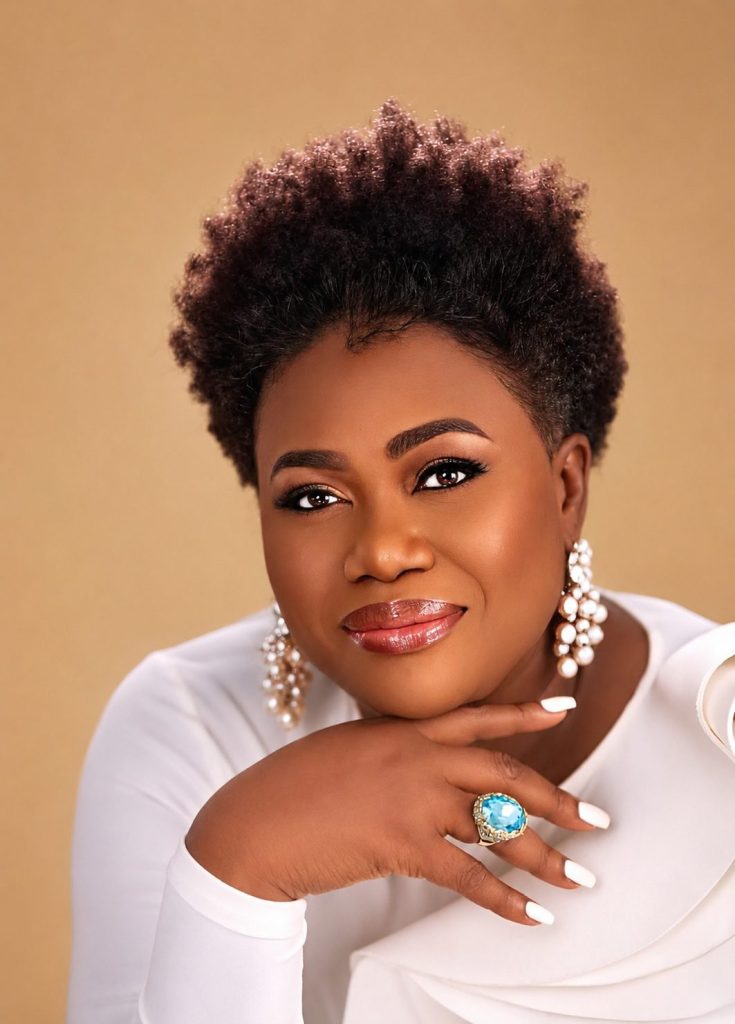
Money connects everyone because it underpins how the modern economy operates. At what age do you think people should begin learning about money?
As early as possible, ideally by their pre-teen years. I started teaching my children financial responsibility and money management at that age, and they are now in their twenties.
I began by giving them pocket money and setting clear rules for how it should be used. Over time, I saw those lessons help them become disciplined and responsible with money. Today, I often say that those early habits have helped them stay financially prepared and liquid.
A few years ago, I saw a social media post about a father who used money to reward the habits he wanted to build in his children. For instance, they earned a set amount whenever they read a book, but there were guidelines for using the money: they gave a portion as tithe, saved another portion, and spent the rest wisely.
I found that approach excellent because it teaches children that money comes with responsibility. These lessons should begin early.
What aspects of our upbringing discourage children from learning about money?
When parents take full responsibility for everything. In many Western countries, children are introduced to work early.
When they want to buy something, they are encouraged to earn the money for it. That experience teaches important lessons. Through work, children learn to manage people, resources, and money. More importantly, they become more financially responsible because they understand the effort required to earn money.
By contrast, many of us see parenting as taking complete responsibility for every part of a child’s life, from walking them to school to paying their bills and providing everything they need. I do not support that approach, and it was not how I raised my own children.
Children need responsibilities that teach them the value of work, money, and accountability from an early age.
Social media promotes certain lifestyles that do not encourage financial prudence. How can young people cope with this?
Social media has both benefits and drawbacks. However, I often use this analogy: when two people disagree and one person gets to the police first to tell their side, the officer naturally starts forming an opinion before hearing the other person. In the same way, parents must reach their children before social media does. We must teach the values of delayed gratification.
We need to speak honestly with children about what they see online and help them understand that many lifestyles portrayed on social media are not always real. Most importantly, we must teach them to think critically.
Children should learn to question what they see, assess situations objectively, and make independent decisions instead of being shaped by peer pressure, social media trends, or society at large.
The quest to “make it” has driven many young people into harmful and unethical activities. As a wealth manager, what investment opportunities are available in the financial sector that they can take advantage of instead?
There are many legitimate investment opportunities available today. However, before discussing them, it is important to remember a basic principle: you reap what you sow. Anything worthwhile requires a process.
That process builds resilience, grit, and character. It prepares you to sustain success when it comes.
Individuals can consider several investment options based on their financial goals and risk appetite.
The most common options are savings accounts and fixed deposits with commercial banks. Asset management companies, however, offer a broader range of investment opportunities.
One example is money market funds, which can offer returns comparable to fixed deposits while investing in carefully selected instruments such as treasury bills, commercial papers, and fixed-income securities.
Mutual funds are another option. They are managed by experienced investment professionals, giving investors access to professional fund management without requiring them to make every investment decision themselves. Because mutual funds have different objectives, investors can choose those that match their goals and risk tolerance.
Some mutual funds are ethical or faith-based, avoiding industries that conflict with specific religious or ethical principles. Others focus on equities listed on the Nigerian Stock Exchange, dollar-denominated assets, or other specialised investment classes.
Ultimately, the key habit is to consistently save and invest a portion of every income received.
As a transformational leader, if Nigeria were a business, what area would you prioritise for change?
Without hesitation, I would make education my top priority.
Knowledge is power, and globally, the value of education is changing. The world is placing increasing emphasis on practical skills, not just certificates.
I would focus on two key areas.
First, I would review our educational institutions, especially primary and secondary schools. Over time, I believe we have lost some of the resilience and discipline that once defined our education system. In trying to adopt aspects of Western education, we may also have let go of teaching methods that helped build grit and character in young people.
Second, I would review our tertiary institutions. We need to assess whether the courses offered are practical, relevant to today’s economy, and able to prepare graduates for the future. The way those courses are taught is just as important.
Beyond universities, I would strengthen vocational education. Nigeria has both formal vocational schools and informal apprenticeship systems, and we need to find a way to combine the strengths of both effectively.
Excellence is not a culture that is widely practiced in many businesses in our country. How do you foster a culture of excellence in your organisation?
In my experience, the standard a leader sets becomes the standard the team strives to meet. Whether you are leading employees, volunteers, or any other group, people tend to rise to the expectations you establish.
Unfortunately, I believe many leaders have lowered the standards they expect from their teams.
Aristotle famously said that excellence is a habit, and I believe lasting excellence is built through consistent habits.
Repetition is powerful. Consider the exceptional musicians many churches produce; their skill is often the result of consistent practice over time.
The same principle applies in every organisation. Leaders must set high standards and consistently reinforce the behaviours needed to meet them using repetition until those behaviours become habits. Over time, habits shape character, and character produces excellence.
You have authored several books. What motivated you to become a writer?
My greatest motivation has always been impact. I am drawn to work that creates meaningful, lasting outcomes, and everything I do is guided by a desire to add value and positively influence people’s lives.
I joined the Covenant Community Group initiative as a volunteer and served as Governor of the New Managers Community. Through that platform, and with the support of Pastor Poju Oyemade, I began teaching on work, leadership, and personal development. As attendance grew, I received more invitations to speak and teach in other forums.
After my presentation at the platform in 2023, the requests increased significantly. I realised there was strong demand for the ideas I was sharing, so I began thinking about how to extend that impact beyond physical speaking engagements.
Writing books became the natural next step.
The books are intentionally concise, usually about 100 pages or fewer, so they can be read in a day or two while still offering practical, life-changing insights.
You have said that work has power. Can you tell us more about what you mean by that?
I believe many people have the wrong perspective on work. Because they are employed in someone else’s business, they often focus only on the value their employer gains. Employees certainly receive salaries and other financial rewards, yet many still feel that the business owner benefits far more than they do. I see it differently.
Employees have a significant advantage. While earning an income, they are also gaining knowledge, developing valuable skills, building professional networks, acquiring practical experience, and learning how successful organisations operate.
Those assets often become more valuable than the salary itself because they are lifelong resources that can create future opportunities.
Work builds competence, character, discipline, confidence, relationships, and credibility. It also prepares you for opportunities you may not yet see.
When you begin to see work this way and recognise it as one of the strongest pathways to achieving your dreams, your attitude towards it changes completely.
That is why I wrote The Power of Work: to help people understand the transformational value of work beyond simply earning a living.
What inspired your book The Art of Managing Your Boss?
The inspiration came from my conversations with professionals through the Covenant Community Group initiative.
Over the years, I realised that one of the most common workplace challenges was the relationship between employees and their managers. There was often significant friction between bosses and their direct reports.
I experienced some of those challenges myself, but one experience became a turning point in my career. I was able to turn a difficult relationship with a manager into one built on trust and mutual respect. Eventually, that person became both my mentor and, in some ways, my sponsor.
I decided to document the principles and practical strategies that worked for me because I believed they could help other professionals facing similar challenges.
Are there bosses who cannot be managed?
Some bosses may be extremely difficult to manage, while others may seem impossible to one person but be managed successfully by someone else.
One important lesson I have learned is not to judge a boss solely by another person’s experience.
People may describe a difficult relationship with their manager, but they rarely explain how they might have contributed to it. Because people naturally protect themselves, you seldom hear the full story.
Not many women make it to the top in the financial sector. How can more women be supported to reach leadership positions?
My experience has been different. I spent 22 years at Guaranty Trust Bank, where I had the opportunity to look up to remarkable leaders such as Mosun Olusoga, fondly known as Aunty Mo, Cathy Echeozo, Kafilat Araoye, Titi Osuntoki, and Aku Odinkemelu, among many others.
These women were already leading while I was rising through the ranks. They mentored, encouraged, and inspired many of us, and Cathy in particular has been my mentor for many years.
Seeing women succeed at that level gave me confidence. I often told myself, “If they can do it, I can too.” That visible example made a tremendous difference.
One way organisations can better support women is by deliberately creating opportunities for younger women to interact with and learn from women in leadership. Senior women become visible examples of possibility, showing that success is achievable and inspiring others to aim higher.
Beyond organisational support, women also have a responsibility to invest in their own development. It is important to intentionally build a community of strong, accomplished women. People often talk about the “boys’ club,” but I believe there is also a growing network of successful women committed to supporting one another.
I am privileged to be part of the 360 Degree Leadership Programme, founded by Mrs. Ibukun Awosika, and I have gained a great deal from that community.
Personally, I do not advocate playing the gender card, especially in the workplace.
I believe leadership should be built on competence, character, excellence, and a consistent ability to deliver results.
As an executive who shows up every day, how has your role influenced the way you dress?
There is a popular saying that you should dress the way you want to be addressed. I agree, but your appearance should never compete with the value you bring. There must be a balance.
This is not only about whether a skirt is too long or too short. Sometimes the jewellery, colours, or style may be unsuitable for the occasion and draw unnecessary attention.
At the same time, dressing too casually or appearing underwhelming can also become a distraction.
How have you been able to balance your work and personal life?
Balance does not happen by chance; it is created through deliberate habits and consistent choices.
There is a season for raising toddlers, another for raising teenagers or young adults, and eventually a season of becoming an empty nester. Each stage brings different priorities and routines.
The key question is: What habits will make this season as productive and fulfilling as possible?
One of my most important habits is being intentional about how I begin and, even more importantly, how I end each day.
Many people believe a successful day starts in the morning, but I have learned that it actually begins the night before. As a Christian, I often reflect on the biblical account of creation, which says, “The evening and the morning were the first day.” That perspective shapes how I prepare for each day.
I also make wellness a deliberate part of my routine. Whether it is going to the gym, resting, visiting the spa, spending quiet time alone, or nurturing meaningful relationships, these are not luxuries. They are essential habits that help me stay healthy, productive, and at peace.
When you are not working, how do you like to unwind?
When I am not working, I am quite a homebody. My husband and I truly enjoy spending time together, so we are most often relaxing at home.
I also spend much of my free time on impact projects. When I make time for leisure, I enjoy interior decoration, gardening, and watching movies. These activities help me relax and recharge.
Where is your favourite travel destination?
Mauritius and Cape Town stand out for me. I love both destinations.
I am especially drawn to places surrounded by nature. Cape Town, in particular, is one of the most beautiful places I have ever visited, with breathtaking scenery that makes it one of my favourite destinations in the world.