

Words by- Josephine Agbonkhese
She steps into the spotlight with beauty, poise, presence and a story that seems to stretch far beyond the camera lens. But Bertha Amuga is not interested in being remembered simply as the woman who wore a crown.

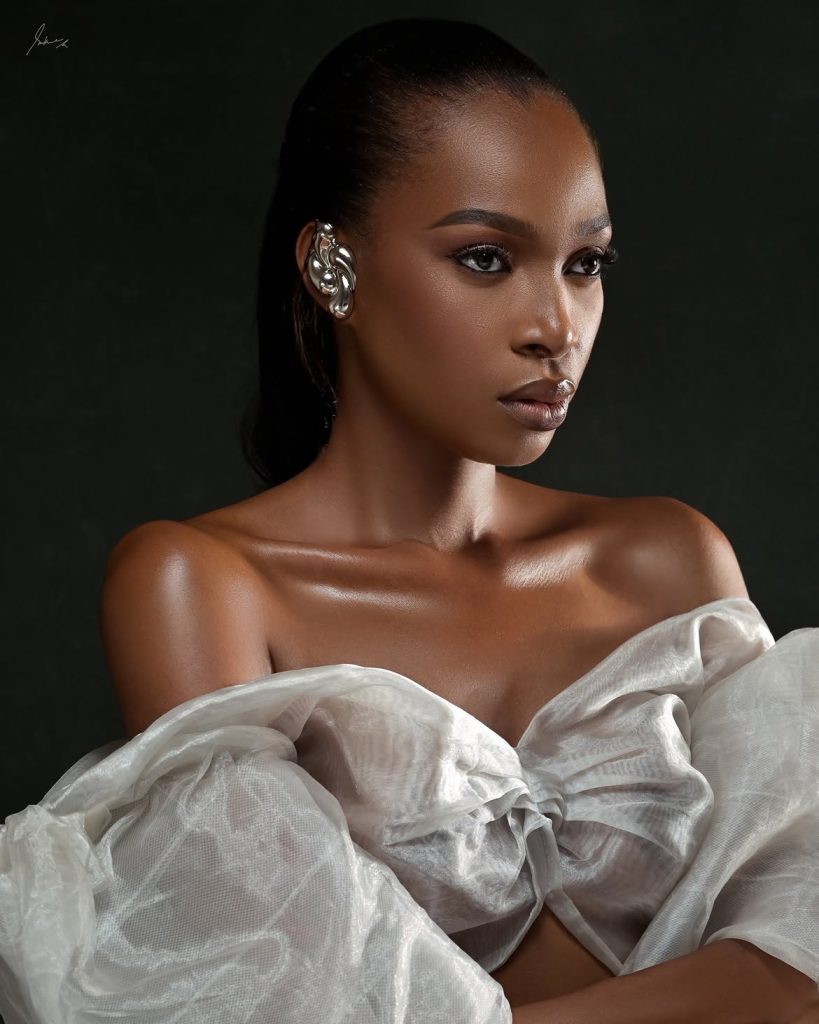
A supermodel, actress, Nigerian-British beauty queen and advocate, Amuga is navigating the intersection of glamour and purpose with an uncommon sense of responsibility. As the reigning Miss Afrikana United Kingdom 2026-2027, she has the visibility many young women dream of. Yet, for her, visibility is valuable only when it can be converted into impact.
The crown, she says, is a “megaphone”. And she intends to use it.
Her conversations reach beyond beauty pageants and fashion runways to teenage pregnancy, women’s empowerment, education, mentorship, digital literacy and the protection of vulnerable young women and girls. Through her foundation, Amuga’s Hope, she is building a platform around the belief that young women should not merely be rescued from difficult circumstances but equipped with the knowledge, confidence and resources to determine the direction of their own lives.
In this exclusive interview with Vanguard Allure, Amuga opens up as she gears up for the Miss Afrikana International stage, about the woman behind the crown, growing up between cultures, the responsibility of representing African women, her passion for empowering girls, the lessons she has learned about boundaries and success, and why, ultimately, the most beautiful legacy may be the one that has nothing to do with a crown.
Quotes
- Growing up straddling different vibrant cultures has given me a rich, expansive lens on the world.
- I want to highlight our continent not merely as a narrative of historical resilience or charitable need, but as a dynamic, thriving epicenter of innovation, art, fashion, and intellectual rigour.
- Living in the UK places me at a unique intercultural crossroads where I can bridge global perspectives.
- When a young woman learns how to code, design, tell visual stories, or manage digital platforms, she is no longer dependent on traditional gatekeepers for her livelihood.
You describe yourself as a Nigerian-British model, actress, queen and advocate. Who is Bertha Amuga when the titles and crowns are stripped away?
Beneath the titles, the cameras, and the ceremonial robes, I am simply a woman deeply anchored by purpose, empathy, and a quiet resilience. I view myself as a lifelong learner and a nurturer at heart—someone whose greatest fulfillment comes from service, connection, and creating spaces where others feel seen and valued.
When you strip away the public-facing accolades, what remains is an individual who finds profound joy in the stillness of private moments: studying law and social policy, spending grounded time with people I call family, and reflecting on how to make a tangible difference in my community. The crowns and titles are merely tools and instruments I utilise to amplify a mission that existed long before any stage lights found me. At my core, I am someone who believes that our ultimate legacy is measured not by the applause we command, but by the quiet acts of kindness and empowerment we leave behind in the lives of ordinary people.
How has being Nigerian and now leaving in the United Kingdom influenced the woman you have become, particularly in the way you see identity, beauty and belonging?
Growing up straddling different vibrant cultures has given me a rich, expansive lens on the world. My identity as a Nigerian woman deeply shaped by the rhythm, community values, and unyielding strength of my heritage, combined with the dynamic environment of living in the United Kingdom, has taught me a rare kind of adaptability and resilience.
This dual heritage completely shifted my understanding of beauty, moving it away from narrow, eurocentric standards toward something rooted in heritage, depth, and unapologetic self-expression. Belonging, for me, is no longer about trying to fit seamlessly into a single geographical box or cultural expectation. Instead, it is an internal sanctuary. Being Nigerian and now living in the UK has shaped me in so many ways; I navigate corporate boardrooms with the same cultural pride and grace that I bring to traditional gatherings. It has given me a panoramic view of human dignity and a refusal to let anyone else define the boundaries of my potential.
What did winning the Miss Afrikana United Kingdom crown mean to you beyond the glamour and recognition that came with it?
The crown is less an accolade and more an accountability mechanism. While the glamour, the recognition, and the platform are wonderful, they are merely the entry ticket to a much larger responsibility. Becoming Miss Afrikana United Kingdom transformed my personal aspirations into a collective mandate.
For years, much of my community work—through initiatives like Amuga’s Hope—was done quietly, driven by a personal commitment to uplift vulnerable teenagers and women. The crown acted as a powerful institutional megaphone. It validated that quiet labour and opened doors to official rooms, policy conversations, and media platforms where I could advocate far more effectively for systemic change. It shifted my journey from an individual pursuit of excellence to a collective mission of liberation and upliftment.
You have said that the crown gives you a “megaphone” for advocacy. What is the most important conversation you want to use that megaphone to start?
I will continue to center the conversation on creating awareness around teenage pregnancy, comprehensive women’s empowerment, and equitable access to education. We often talk broadly about human potential, but without tangible tools, financial literacy, and mentorship, potential remains unrealised—trapped by circumstance and societal barriers.
We need to dismantle the stigma surrounding vulnerable young mothers and redirect our societal gaze toward systemic prevention and support. Education is not just about academic retention; it is about economic emancipation. By starting these conversations loudly and persistently, I want to challenge policymakers, community leaders, and everyday citizens to move past performative sympathy and invest in real, sustainable infrastructure for young women.
What would you like people to remember about your year as Miss Afrikana United Kingdom?
I hope to be remembered not just for how I wore the crown, but for how many doors I left unlocked behind me. Success for me is never defined by a sparkling, fleeting moment on stage under the bright lights; it is measured by the lasting infrastructure of support we build within our communities.
When my reign concludes, I want the initiatives we launched, the young girls who found their voices, and the community dialogues we sparked to continue thriving independently. If people look back at my tenure and say, “Bertha didn’t just hold a title; she shifted a paradigm and created pathways where none existed,” then I will have fulfilled the true purpose of the crown.
You have identified mentorship, youth empowerment and community development as key areas of focus. Why are these issues particularly important to you?
These issues are deeply personal to me because I’ve witnessed firsthand how a single act of mentorship, a word of encouragement, or a timely resource can alter a young person’s trajectory. No one succeeds entirely in a vacuum; behind every resilient woman is often someone who looked at her and said, “I believe in you, and here is the map.”
Communities thrive only when young people are equipped not just to survive the harsh realities of modern life, but to actively architect their own futures. Through my work across social care, administration, and community advocacy, I have seen the devastating cost of neglect and the miraculous transformation that occurs when young minds are nurtured with dignity, resources, and unwavering belief.
What specific change would you like to see in the lives of the young girls you mentor by the end of your reign?
By the end of my reign, I want to see tangible self-efficacy: young girls who possess the right tools and education to navigate modern economies, the unshakeable confidence to tell their own stories, and the unwavering belief that their voices carry weight in any room they enter.
I want to move beyond temporary inspiration and see structural shifts in their everyday lives—girls transitioning from academic uncertainty to clear career pathways, and becoming aware of who they are, refusing to accept marginalisation as their default destiny. When a young girl looks in the mirror and recognises that her future is entirely hers to command, that is the ultimate victory.
How are you using your platform in the UK to strengthen conversations around African culture, identity and excellence?
Through intentional storytelling, creative collaborations, and grassroots community advocacy, I strive to dismantle monolithic, outdated views of Africa. I want to highlight our continent not merely as a narrative of historical resilience or charitable need, but as a dynamic, thriving epicenter of innovation, art, fashion, and intellectual rigour.
Living in the UK places me at a unique intercultural crossroads where I can bridge global perspectives. Whether I am engaging in cultural showcases, participating in public speaking engagements, or leveraging fashion as a visual language of heritage, I make it a point to project the multifaceted brilliance of the African diaspora—ensuring our contributions to global society are recognised, respected, and celebrated.
Many young girls today struggle with comparison, self-doubt and unrealistic standards of beauty. What would you say to a teenage girl who feels she is not beautiful, talented or good enough?
Comparison is a thief of joy that feeds entirely on illusion, especially in an era dominated by hyper-curated social media feeds. I would tell that young girl that her uniqueness is her ultimate superpower—she was never designed to fit into a mass-produced mold, and her worth is inherent, not something she has to earn through perfection, filters, or the fleeting validation of others.
The things that make her different—her quirks, her heritage, her individual perspective—are precisely what make her irreplaceable. True beauty radiates from self-acceptance and purpose, and no algorithm or societal standard can ever diminish the inherent power of a woman who knows who she is.
You want to introduce young girls to creative skills, digital literacy and self-expression. Why do you believe these tools can change the trajectory of a young woman’s life?
Traditional academic routes are undeniably vital, but creative skills and digital literacy provide immediate economic agency and global reach. In today’s interconnected world, mastering digital tools allows young women to monetise their passions, build independent livelihoods, and harness technology to amplify their voices far beyond their immediate geographic borders.
When a young woman learns how to code, design, tell visual stories, or manage digital platforms, she is no longer dependent on traditional gatekeepers for her livelihood. She gains the independence to create her own opportunities, ensuring she can weather economic storms and thrive on her own terms.
What is one thing you wish someone had taught you as a young girl that you had to learn for yourself?
I wish I had been taught earlier that boundaries are a form of self-respect, not selfishness. For a long time, conditioned by societal expectations of women as perpetual caretakers, I thought saying yes to every demand proved my capability and worth.
I had to learn the hard way that overextending yourself does not equal strength; it leads to burnout and dilution of purpose. True personal power lies in protecting your peace, honouring your energy, and recognising that you cannot pour from an empty cup. Learning to say a firm, unapologetic “no” was one of the most liberating lessons of my adult life.
Tell us about your foundation, Amuga’s Hope, and the gap you hope the organisation will fill in the lives of vulnerable women and teenagers.
Amuga’s Hope was born from a deep-seated desire to bridge the critical gap between vulnerability and opportunity. We focus on providing vulnerable women and teenagers with holistic mentorship, educational support, and tangible resources so they can successfully transition from merely surviving to truly thriving.
Whether it is offering guidance on reproductive health, providing educational workshops, or creating safe spaces for open dialogue, our mission is to ensure that no young person falls through the cracks of a failing social safety net. We treat every individual not as a statistic requiring charity, but as a future leader requiring the right soil to grow.
As a supermodel, how do you reconcile the demands of the fashion industry with your personal values and boundaries?
I navigate the fashion industry by treating it as a collaborative medium rather than a master. The fashion world is fast-paced and prone to objectification, but I approach it with a strong sense of self and an unwavering internal compass.
My boundaries are strictly non-negotiable: if a project, campaign, or designer compromises my integrity, my cultural respect, or my personal comfort, it is an immediate and absolute “no.” By remaining clear on who I am outside of the runway, I ensure that fashion serves my broader mission of empowerment and artistic expression, rather than the other way around.
At Miss Afrikana International, what message do you hope to communicate about the African woman?
I want to communicate that the African woman is inherently powerful, intellectually formidable, and culturally rich. We are not a monolith of struggle or a backdrop for other people’s stories; we are dynamic, actively shaping the future across every imaginable discipline—from law and technology to the arts and governance.
When people look at the African woman on that international stage, I want them to see a woman who commands the room with her intellect, leads with her empathy, and honours her heritage with pride.
If a young girl were to look at your journey 10 years from now, what would you want her to learn from your story?
I want her to learn that success is never a linear sprint, but an authentic, sometimes winding unfolding. You do not have to compromise who you are, flatten your personality, or abandon your cultural roots to make a profound impact.
Your unique story, combined with unyielding resilience, hard work, and deep empathy, is your greatest asset. If my journey teaches her anything, I hope it teaches her that she has permission to dream audaciously, build fearlessly, and leave every space she touches vastly better than she found it.
Describe your skincare routine…
Simplicity and consistency are my anchors: a gentle hydrating cleanser to respect the skin barrier, a potent vitamin C serum to protect against environmental fatigue, a deeply nourishing moisturiser, and daily SPF protection without exception.
What’s your most-priced fashion item?
A classic, impeccably tailored bespoke blazer that bridges heritage print with modern structural design. It is a piece that instantly shifts my posture, grounds my confidence, and lets me feel like I can walk into any boardroom, meeting, or event and command my own space with authority and grace.
Where would you prefer to spend a two-week getaway and why?
For a two-week reset, there is nothing quite like the rhythm of London: balancing quiet afternoons wandering through world-class galleries with the electric energy of a city that constantly reinvents itself while honouring its past. It feeds both my intellectual curiosity and my need for grounding urban inspiration.