Dr. Inya Lawal: Building Institutions
By Yemisi Suleiman
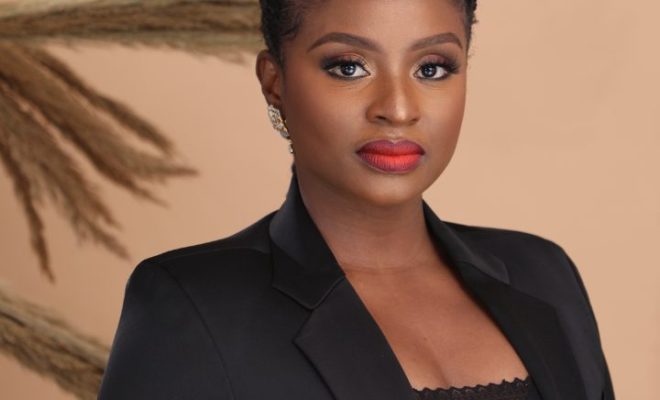
Inya Lawal is the founder of Ascend Studios Foundation, ASF, an institution dedicated to empowering women and youth while working with governments, corporations, and organisations to design impactful programs across Africa.

At the forefront of the continent’s creative and entrepreneurial renaissance, she has spearheaded initiatives such as the Africa Creative Market, ACM, Global Tech Africa, GTA, Africa Creative Blueprint, ACB, and the Women Empowerment Program for Trafficked Persons, WEPTAP. She also serves as President of Women in Film and Television Africa (WIFT Africa), where she champions women’s leadership and visibility in film and television.
Her influence extends far beyond Africa. In 2019, she was one of only 19 women worldwide selected for the Fortune Most Powerful Women’s Mentoring Program, an experience that positioned her on the global stage. More recently, she secured a landmark $1 million grant (part of a $3.5 million co-investment) to train 3,500 creatives in Nigeria.
This year, Lawal once again made waves as Convener of the Africa Creative Market (ACM 2025), a four-day event in Lagos that brought together innovators from film, fashion, technology, and the arts, to position Africa’s creative economy for global recognition. Against this backdrop of vision and impact, Allure sat down with Dr. Inya Lawal for an inspiring conversation about her journey, her mission, and the future of Africa’s creative economy.
You recently convened the Africa Creative Market 2025. What is your broader vision for Africa’s creative economy?
My vision is that Africa’s creative economy will no longer be treated as an “emerging sector” but recognised as a global powerhouse. Over the next decade, I see Africa exporting not just music, film, and fashion, but fully established creative enterprises that compete globally. I want African creators to own their intellectual property, build billion-dollar companies, and shape narratives worldwide.
ACM convenes value chains, while GTA ensures technology accelerates scale. Together, they are blueprinting a future where Africa doesn’t just contribute to trends, it sets them.
Securing a $1 million grant to train 3,500 creatives is remarkable. What does this achievement mean to you?
Personally, it reaffirmed my belief that Africa’s creative economy deserves large-scale investment. Professionally, it validated years of ecosystem-building and proved that global partners recognise our vision’s viability.
What excites me most is that the Africa Creative Blueprint was designed not just for training, but for production. Participants acquire skills and transition straight into work, gaining both income and experience. With partners, the total co-investment came to $3.5 million. That level of confidence shows the creative economy is not symbolic, it is systemic. We are now preparing to roll out the program in Kenya in 2026.
You were selected for the Fortune Most Powerful Women’s Mentoring Program and paired with leaders at Goldman Sachs. What lessons from that experience guide you today?
That program taught me three enduring lessons: the power of networks, the necessity of systems, and the importance of scale. My mentor helped me see that empowerment cannot stop at helping individuals, it must be about building frameworks that thousands can plug into.
It also shifted my mindset. Proximity to power accelerates vision. Being in those rooms changed my sense of what was possible, and I carry that boldness into every initiative I lead.
How do you see women reshaping the film and TV industry?
Women are no longer waiting for permission, we are financing our own films, telling authentic stories, and entering decision-making spaces as directors, producers, distributors, and financiers.
This shift is reshaping not just the stories told, but the ecosystem itself. Women are diversifying narratives of African womanhood and proving that representation is about power, not tokenism.
How did Ascend Studios Foundation came to be?
ASF was born from the need for a dedicated vehicle for capacity building and empowerment. I initially started Ascend Studios as a talent management company, then expanded into production. But soon, I realised the ecosystem was held back by structural challenges, fragmented value chains, lack of financing, and weak policy frameworks.
At the same time, I had a personal passion for empowering women entrepreneurs across sectors. It became clear that Africa needed not just another business, but an institution committed to building structures and opportunities at scale. That realisation gave birth to Ascend Studios Foundation.
What were the early challenges you faced?
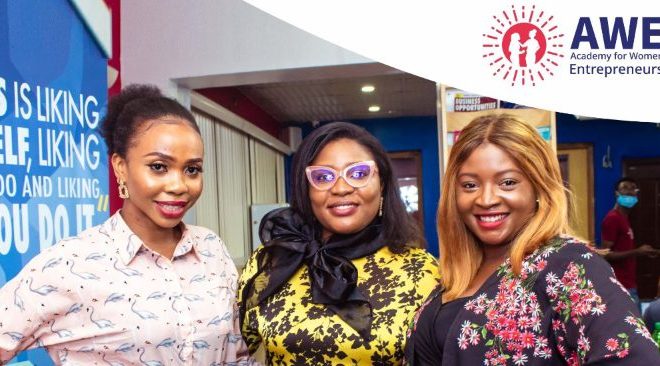
Funding was a major challenge. Designing ambitious initiatives required resources we didn’t always have. But a breakthrough came when we secured the partnership of the U.S. Government’s Academy for Women Entrepreneurs program. That partnership gave us credibility, scale, and success stories that opened doors to further partnerships and government collaborations.
Let’s go back to your early years. What was your childhood like?
I am the last of nine children, raised in a family-oriented home with supportive parents. I was fiery, resilient, and bold, even as a toddler I was unafraid to sing, dance, or speak in public.
I also grew up with dyslexia and ADHD, which gave me an unusual energy and curiosity. I was restless, easily bored, so I threw myself into activities, joining every group at church, persuading my pastor to let me sing in the main choir long before I was old enough. Looking back, that was my training ground for resilience, creativity, and problem-solving.
How has that shaped the woman you’ve become?
My challenges became my strengths. Dyslexia and ADHD taught me to think differently, to strategise creatively, and to design structures where others might see chaos. Those seeds grew into what I do today, building ecosystems, creating platforms, and leading fearlessly.
With your busy schedule, how do you maintain balance in your personal life?
Balance is about intentionality. I carve out time for family, reflection, and rest. Those are not luxuries, they are necessities.
What’s your favourite way to unwind?
Traveling with my family, watching documentaries or sci-fi films, swimming, long walks, and listening to music. These things ground me and restore my energy.
And your best form of rejuvenation?
For me, rejuvenation is spiritual, through prayer, reflection, and reconnecting with my purpose. I also draw strength from travel and experiencing new cultures. True rejuvenation isn’t about escape, but about reconnecting to your source of strength.
How would you describe your personal style?
My style is semi-casual and comfortable, I love abayas, tailored jackets, and bright colours that reflect my energy and optimism. For formal events, I balance elegance with authority.
Does fashion play a role in your leadership identity?
Yes, absolutely. As a leader, presentation communicates confidence and respect, but it also reflects creativity. For African women leaders, fashion can be a declaration, that we embody culture, elegance, and authority in equal measure.
Finally, what advice would you give to young African women who want to lead and make an impact?
Lead with clarity, courage, and consistency. Don’t wait for perfect conditions, start where you are, with what you have. Build networks, because no one succeeds alone. And, remember, impact is not about visibility, it’s about building systems that outlast you. If you want to change the world, don’t just start movements, build institutions.