
Rev. Cole Chiori @80: Celebrating Grace & Purpose
By Comfort Eguahon & Abimbola Ekundayo
Rev. Cole Chiori is a distinguished and respected cleric who has dedicated more than half a century to the Gospel, missionary work, and soul-winning.
His commitment and dedication have not only earned him widespread admiration within and beyond the Christian community but have also inspired generations of believers.
Faithful to his calling—a ministry not defined by the pursuit of worldly gain—he has devoted his life to raising leaders, advancing the Kingdom, and bringing hope to communities across Nigeria.
Through seasons of hardship, personal sacrifice, resilience, and extraordinary testimonies of God’s faithfulness, he has demonstrated that a life surrendered to God can become a channel of transformation for countless others.
Beyond the pulpit, Rev. Chiori has built a legacy rooted in integrity, humility, compassion, and service, while faithfully raising a God-fearing family.
An accomplished author, his books—including The Man They Couldn’t Kill!, Yesterday, Today, and Tomorrow, and Reject the Sweet Influence—reflect his lifelong conviction that God’s grace is sufficient to sustain those who remain faithful to His calling.
Today, as family, friends, and the wider Kingdom community gather to celebrate this gospel legend at 80, Rev. Cole Chiori continues to remind the Church and the nation that true greatness is measured by service, sacrifice, and a life wholly devoted to God. His enduring message of unity, integrity, and the fear of God remains as relevant today as ever.
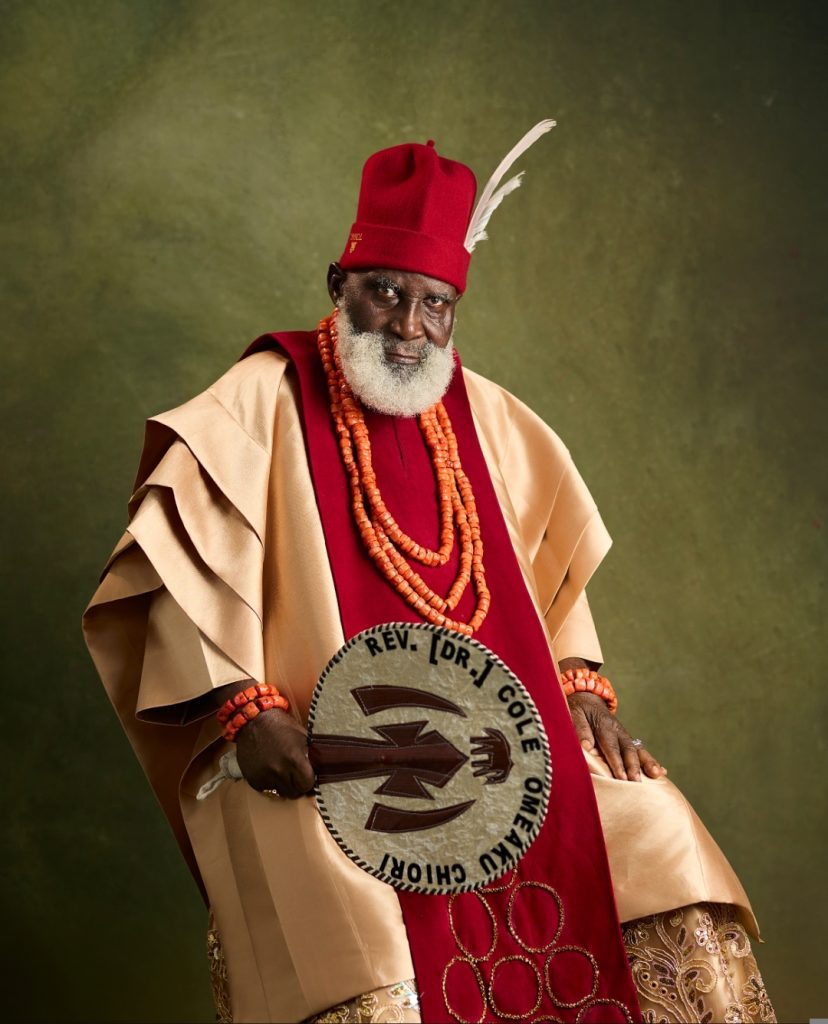
In this exclusive interview with Vanguard Allure, the octogenarian reflects on his remarkable journey in life and ministry.
Excerpts:
Congratulations on your 80th birthday, Sir. How does it feel to celebrate this remarkable milestone?
First, I give all glory, to the Almighty God by whose grace and faithfulness I am privileged to celebrate this remarkable milestone today. I lost my father at the tender age of two, and at the age of nineteen, a marine doctor told me that I was unlikely to live long enough to celebrate my fortieth birthday.
Rather than being overwhelmed by fear, I smiled and told him that I would outlive the age he had predicted because he was not my God.
So, even before I became a believer, I found the courage to reject a negative prognosis and, unknowingly, place my confidence in God whose faithfulness has sustained me throughout my life’s journey.
What gave you the confidence to reject the doctor’s report even when you were not a believer then?
I was only a toddler when I lost my father. He was both a pastor and a local industrialist. However, one of his close friends, Pastor Ukpong, an Efik man after whom I was named, played a significant role in preserving my father’s legacy.
Pastor Ukpong told me that my late father had prophesied that I would one day become a pastor, just as both of them were. As I grew older, this conviction was further reinforced by my psister (wife of late Rev. Uma Ukpai), My aunt, (my father’s younger sister) and Rev. Ukpai’s mother-in-law. They all independently confirmed the same prophecy.
Although I was not yet a believer at the time, these consistent testimonies had taken deep root in my heart. They gave me an unusual sense of conviction that my life had a divine purpose and that God still had a future for me. It was this assurance that enabled me to reject the doctor’s report and hold firmly to the belief that my life would not end prematurely.
Please take us back to your childhood. What values and experiences shaped the young Cole Chiori?
I would say that God has been the greatest influence in my life. He moulded my character, preserved my destiny, and guided my steps, ensuring that I did not stray from the path He had ordained for me.
Equally significant was the profound influence of my mother. She instilled in me the timeless principles that have shaped my life and career. She did not merely teach honesty and integrity; she exemplified them through her words, actions, and daily conduct. From an early age, she impressed upon me that lasting success can never be built without honesty and a strong moral foundation.
As a result, the core values of honesty, integrity, determination, and hard work became deeply rooted in my character from childhood. Those principles have remained my guiding compass and have played a defining role in shaping the person I am today.
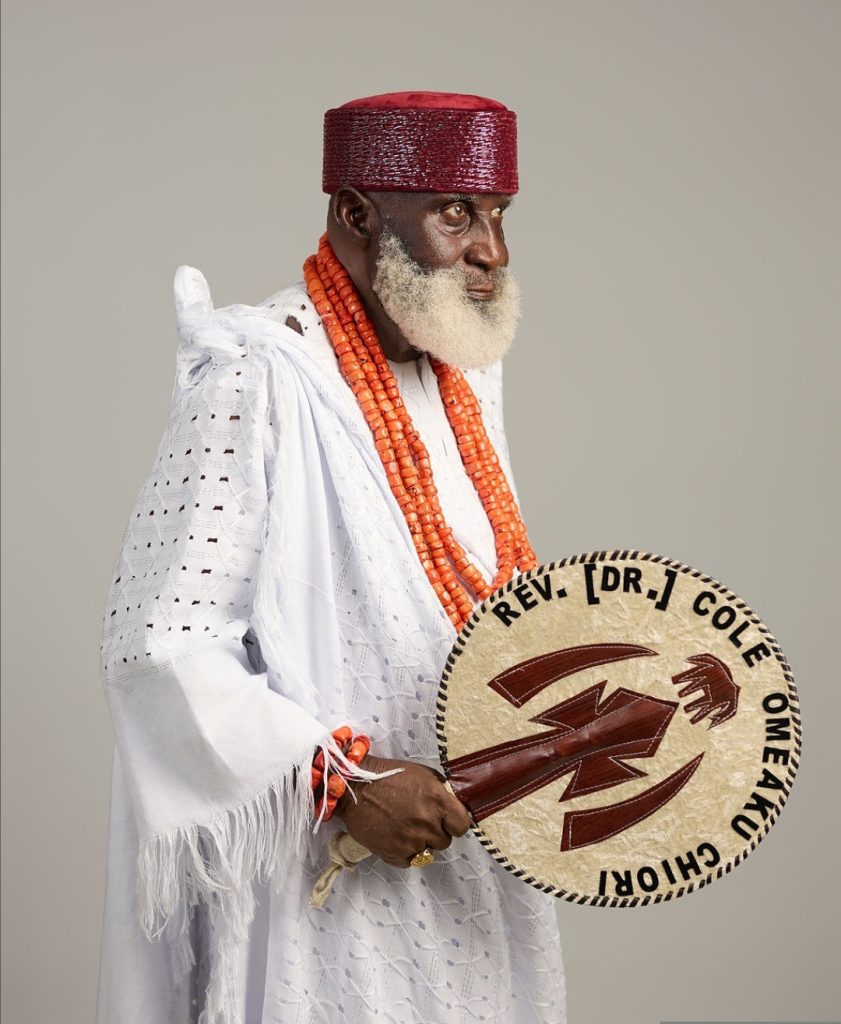
Were there individuals who significantly influenced your character and spiritual growth?
Human influence can shape a person’s character either positively or negatively, but I have come to understand that whenever God deposits greatness or a unique purpose in someone’s life, the enemy often seeks to frustrate or destroy that destiny before it is fulfilled.
I was told that as a toddler, I once crawled into a fire my mother had lit while processing palm oil. She was overwhelmed with fear and could only cry out for help. Someone quickly rescued me by pulling me from the flames and throwing me into a nearby bush to extinguish the fire.
To this day, I still bear the scars from that incident. Looking back, I can only attribute my survival to the grace and preserving hand of God.
I also experienced the reality of negative influences. For a period, I lived with my maternal uncles, many of whom smoked, drank excessively, and abused drugs. Being exposed to that environment at a young age, I adopted those same destructive habits.
My life deteriorated to the point where one of my uncles would gather young people in the compound and use me as an example of what not to become. He would warn them against following my path, convinced that I would never amount to anything.
Yet, God’s grace intervened. He rescued me from that destructive lifestyle, restored my life, and awakened the godly values my mother had instilled in me from childhood.
My mother’s teachings on honesty, integrity, and upright living, combined with God’s transforming power, became the foundation upon which my life was rebuilt.
So, how were you eventually called into ministry?
One day, while I was praying, I saw Christ in a vision, I saw blood flowing from the upper part of His body. The vision occurred twice. At that moment, I became convinced beyond doubt that Jesus Christ had indeed been crucified for the salvation of mankind. That revelation led me to genuine repentance, and I gave my life to Christ at Church of God Mission.
Later, when I relocated to Northern Nigeria and could not find Church of God Mission, I joined the Assemblies of God Church in Katsina. It was there that God began to reveal His specific purpose for my life. During a spiritual encounter on a mountain, the Lord showed me a group of men dressed in white agbada attire.
He placed a Bible in my hands and instructed me to bring those people out of darkness into His marvellous light. I later understood that the people I saw represented Muslims. That encounter became the foundation of my missionary calling.
Once when preparations were being made for missionary outreach, the American missionaries who were expected to participate could not come. Rev. Busari recommended me for the assignment. I was sent to Gongola, now known as Adamawa and Taraba States.
There, God granted extraordinary grace in reaching Muslim communities with the gospel. Among those who came to Christ were respected Alhajis and other Islamic scholars. Many initially visited my home to study the Qur’an with me. By God’s grace, I had studied comparative religion extensively and owned three different translations of the Qur’an. This enabled me to engage them thoughtfully and respectfully in discussions about their faith while presenting the message of Jesus Christ. As they searched the Scriptures alongside these conversations, many became convinced of the truth of the gospel, repented, and surrendered their lives to Christ.
Looking back, I see every stage of my journey as a fulfilment of God’s promises. He faithfully confirmed every prophetic word concerning my life and graciously accomplished His purpose through me.
Given that some people enter the ministry for financial gain, how can one distinguish between them and those with genuine divine calling?
God always communicates and gives clear instructions to those who are willing to listen. The challenge is that many people are so preoccupied with the affairs of life that they fail to recognise or hear Him.
Over the years, God has spoken to me in different ways.
When I was sent to plant a church in a rural community, only little children gathered around me. Desiring to see more people come to Christ, I withdrew into the forest to pray. During that time of prayer, I sensed the Lord asking me, “What is your request?”
I prayed that He would give me souls from the community. Three times, the Lord impressed upon my heart, “Souls are Mine.” Again, He asked what my request was. I then prayed that God would use whatever means He deemed fit to bring the villagers to the knowledge of Christ through His healing power. As I prayed, I felt three distinct taps on my back. I immediately turned around, but no one was there. At that moment, I believed God had heard and answered my prayer.
As I was returning from the forest, the first person I encountered was a blind man. I invited him to follow me home. When we arrived, he sat near the entrance. I picked up a lamp and asked him in the local dialect, “What is this?” He replied, “It is a lamp.” Quietly, I moved closer and picked up his walking stick. He immediately remarked that I had taken it. I then asked him, “Can you see me?” He answered, “Yes.”
I had not even prayed for him, yet God restored his sight. It was a powerful reminder that the miracle was God’s work, not mine.
This experience confirms He remains a God who speaks clearly and faithfully to those who seek Him.
In your opinion, what significant changes have taken place in Christianity over the years, and how does the Church today compare with what it was in the past?
A great deal has changed over the years. The central message of salvation and genuine love for Christ is no longer the primary focus in many places. Instead, there appears to be an increasing emphasis on material prosperity and financial gain. Many people are more interested in the miraculous than in cultivating a life of prayer, discipline, sacrifice, and obedience, which are the foundations of true Christian service.
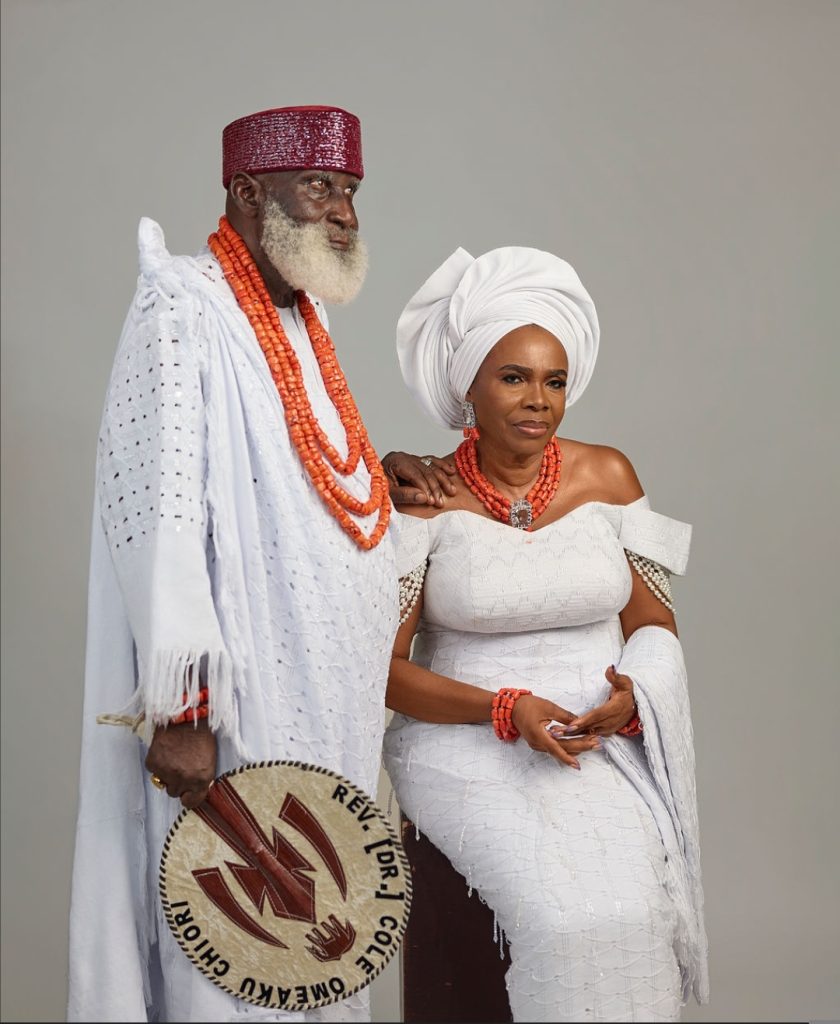
Behind every successful minister is often a supportive family. How has family contributed to your journey?
I’m grateful to God for giving me a supportive wife and children who understood the demands of ministry and stood faithfully with me throughout the journey.
My wife was a tremendous pillar of support throughout my ministry. She is a woman of deep prayer. Whenever I travelled on missionary assignments, she faithfully held the home together.
Our children also understood the calling and willingly supported the ministry in practical ways, including helping to clean and maintain the church. They never saw the ministry as my responsibility alone but embraced it as a family assignment.

How were you able to balance the demands of ministry with your responsibility as a husband, father?
From the very beginning, I understood that my family was my first congregation. If I failed at home, it would be difficult to succeed in ministry.
Whenever I travelled on missionary assignments, my wife faithfully cared for our home and nurtured our children in the fear of God.
As a father, I made it a priority to spend time with my children whenever I was at home. I led them by example, and encouraged them to live lives of integrity, humility, and service. I wanted them to see Christianity not merely as something we preached but as something we lived every day.
Balancing these responsibilities was not always easy, I learned to depend on God for wisdom and strength.
In your opinion, what should be the Church’s role in promoting unity, integrity, and national development in Nigeria?
The primary role of the Church is to be a light in every community where darkness exists and be a catalyst for positive transformation in society.
If a church fails to bring about meaningful spiritual and moral transformation in its environment, then it must honestly re-evaluate its mission and purpose.
When people are transformed by the Gospel, barriers of ethnicity, tribe, and division begin to crumble and unity flourishes. In my opinion, this is the divine mandate of the Church.
At 80, what legacy do you hope to leave for future generations?
My greatest desire is to leave behind a legacy of a generation that genuinely loves God, trusts Him wholeheartedly, and lives according to His Word.
If these principles become the hallmark of our homes, our churches, and our nation, we will raise a generation of people with integrity, compassion, and unwavering faith—people who will honour God and positively transform society.
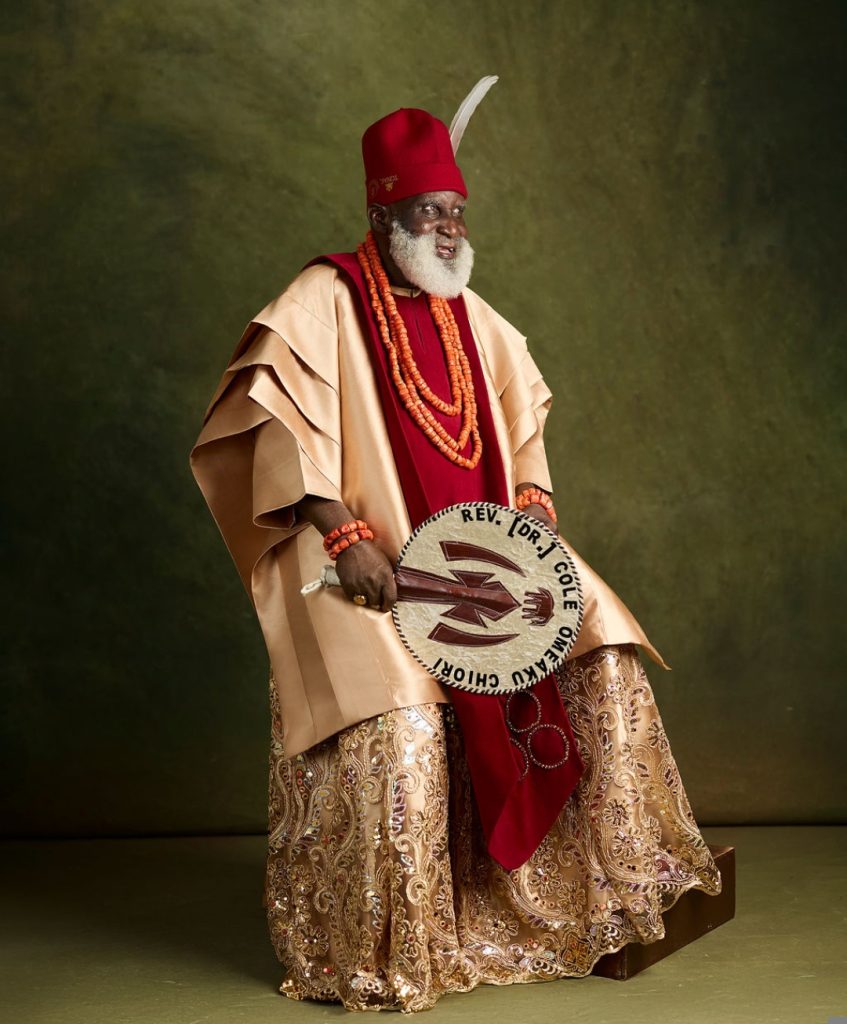
What advice would you give to young ministers?
Remain faithful to God’s calling and never lose sight of the true purpose of ministry, which is to glorify God and win souls for His Kingdom. Let your relationship with God take precedence over your desire for recognition, influence, or material gain.
Remember that ministry is a divine assignment, not a business or a platform for self-promotion.
What do you miss most in retirement?
I have not missed anything because I still depend on God, work with God, do my work as a deliverance minister and go to churches for revival.
What has life taught you?
Life has taught me to be
humbler, kinder and more respectful.
What would you do differently if you had the chance?
Hasten my footsteps to heaven.
If you had a chance to go on an all expense paid holiday, where would you like to go?
I would like to revisit all the beautiful places I had visited. I love Paris, Spain and many parts of London.
In what ways can Ministers be supported?
Ministers can be supported financially and by you giving them whatever you think will be beneficial to them.