Menstrual Health Hygiene: Why Sarah Kuponiyi took it to the National Stage
In a nation where menstruation has been buried beneath layers of stigma, silence, and institutional neglect, one woman has refused to whisper. Sarah Kuponiyi is not just breaking the silence; she is bulldozing it.
Known across Nigeria as the “Pad Queen,” earlier this year, she made history by launching Nigeria’s first-ever Menstrual Health and Hygiene Management (MHHM) Summit, a seismic moment that forced the country to confront what it has long ignored.
As a public health development practitioner, gender advocate, and founder of both the AWA Initiative and Alora Reusable Pads, in this interview, Kuponiyi speaks about myths or taboos around menstruation and the role men and boys have to play in menstrual health advocacy and why she took Menstrual Health hygiene advocacy to the National Stage
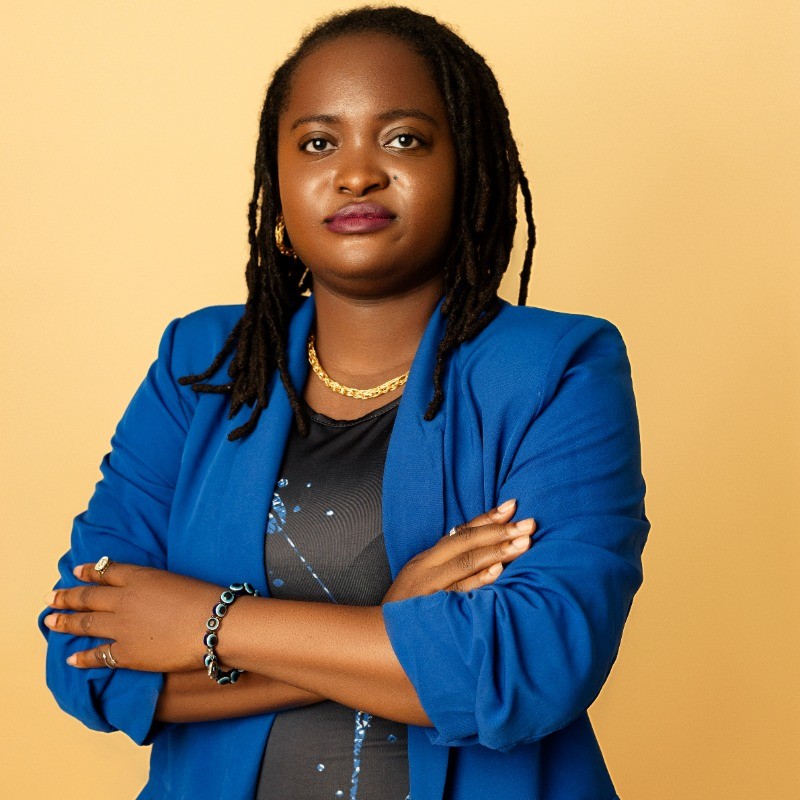
Sarah Kuponiyi
What inspired you to initiate the first-ever MHHM Nigeria Summit? What is something people don’t know about the work that goes into organising a summit like this?
It started as a simple but persistent question: Why hasn’t Nigeria ever hosted a national summit that puts menstrual health at the centre? For too long, menstrual health was either ignored or buried inside broader SRHR or WASH conversations. In late 2023, I stopped waiting for someone else to start it and decided to build the platform myself—through my NGO, A Well-Informed Adolescent (AWA) Initiative, alongside my social enterprise, Alora Reusable Pads.
The work behind it, though, was far from simple. People often only see the glamour of the big stage on the day. What they don’t see are the late-night WhatsApp group messages, the countless drafts of letters, the unending partner calls and meetings or the tears shed over a to-do list that felt impossible. At one point, I sat crying at my desk, then wiped my face and got back to work. That’s what it took—conviction, persistence, and partnership. Thankfully, Wonder Woman Nigeria came on board as co-conveners, and together with the support of the Government and development partners, we worked together to create this history.
How do you define success in menstrual health advocacy in Nigeria? What was the most powerful moment for you during the summit?
For me, success is when menstrual health stops being an afterthought and becomes part of Nigeria’s national agenda. Success is when policies translate into real products, services, and dignity for women and girls.
The most powerful moment was watching Nigeria’s first-ever National Menstrual Health and Hygiene Policy being validated just weeks after the summit—a process championed by the Federal Ministry of Women Affairs, with strong support from development partners. Standing in that room, I realised that policy follows advocacy, and impact follows policy. That moment confirmed everything we had worked for.
Take us back to the moment you realised menstrual health was your calling? Was it your personal experiences that shaped your passion? What challenges did you face early on?
Growing up, I thought menstruation was something girls had to quietly figure out—hidden, unspoken, managed privately. That silence stayed with me. Later, as I trained in public health, it hit me: what if we broke that silence for the next generation?
My passion was shaped by personal experience, but also by what I saw in communities—girls missing school, women using unsafe alternatives, and the stigma that kept us quiet. Early on, the biggest challenge was convincing people that menstrual health deserved its own spotlight. People would say: Why not just tuck it under SRHR? Why make noise? But through the AWA Initiative and Alora Pads, I kept pushing, because I knew visibility was the first step to change.
How would you describe your leadership style?
My leadership style is driven by conviction and collaboration. I start things because I believe in them deeply, but I also know they cannot succeed alone. I try to create space for young people, for grassroots voices, and for partners—whether it’s the bilateral organisation, or CSOs—to see themselves as co-owners. I don’t mind rolling up my sleeves and doing the hard work—but I also believe in building tables big enough for everyone. And that was exactly what happened at the MHHM Summit that made it successful: collaboration.
What myths or taboos around menstruation do you think are most damaging? And what is the role of men and boys in menstrual health advocacy?
One of the most damaging myths is that menstruation is dirty or shameful. That belief drives stigma, poor hygiene, and exclusion. Another is that menstrual health is a “women’s issue” alone.
Men and boys have a huge role to play. When fathers buy pads for their daughters without shame, when boys in school understand periods instead of mocking them, when male policymakers—from the Ministry of Education to the Ministry of Health—champion menstrual equity, then we begin to shift culture.
Are you satisfied with the federal government’s commitment so far? What’s your vision for menstrual health in Nigeria five years from now? And what’s next for the Summit—annual, global?
I am encouraged by the federal government’s commitment, especially with the validation of the National Menstrual Health and Hygiene Policy. But commitment is only the first step. What matters is implementation—ensuring the policy doesn’t just sit in a file but transforms lives. Five years from now, I envision menstrual health being fully integrated into Nigeria’s 2026–2030 National Development Plan, with girls across rural and urban areas accessing safe products, services, and education without stigma.
As for the summit, we plan to make it an annual gathering—Nigeria’s own space to drive research, advocacy, and accountability on menstrual health. Over time, yes, I would love to see it expand into a regional or even global platform, because period poverty and stigma know no borders.