
Vanguard Allure

Top Menu

  • Vanguard

Main Menu

  • Home
  • Allure Magazine
    • Features
    • Magazine
    • Profiles
  • Allure TV
  • Celebration
    • Fashion & Style
    • Weddings
    • Lifestyle
    • Events
  • Wellbeing
    • Allure Woman
    • Healthy Living
    • Beauty
  • Happiness
    • Food
    • Shopping
    • Travel
    • Relationships
    • Career
  • News
  • Vanguard

logo

Vanguard Allure

  • Home
  • Allure Magazine
    • Beyond the Canvas: Fortune Ileleji on Art, Life and Cohesion

      October 18, 2026
      0
    • John Opene: Driven By Purpose

      October 18, 2026
      0
    • Quinnybel Ventures empowers Nasarawa communities women with entrepreneurial skills

      October 15, 2026
      0
    • Africa Cannot Remain Just a Source; We Must Become the Factory— Beatrice ...

      October 14, 2026
      0
    • Many women in underserved communities in Nigeria struggle to afford quality mental ...

      October 13, 2026
      0
    • Omoayena Odunbaku @ 45: Still Becoming

      October 11, 2026
      0
    • EXCELLING BEYOND BORDERS

      October 4, 2026
      0
    • Stakeholders call for fair, consistent coverage of women in public leadership

      September 23, 2026
      0
    • Erelu Dr Anuoluwapo Esuola: Finding Purpose

      September 20, 2026
      0
    • Features
    • Magazine
    • Profiles
  • Allure TV
  • Celebration
    • Fashion & Style
    • Weddings
    • Lifestyle
    • Events
  • Wellbeing
    • Allure Woman
    • Healthy Living
    • Beauty
  • Happiness
    • Food
    • Shopping
    • Travel
    • Relationships
    • Career
  • News
    • From the Streets to Runway: Collection Celebrate Talent and Transformation

      August 30, 2026
      0
    • The Winlos Unveil Prophet Suddenly 4, Take Children's Discipleship Campaign to the ...

      August 2, 2026
      0
    • Omobola Abioye to host Fireside Conversation in Brussels

      June 21, 2026
      0
    • WeMove Summit celebrates power of motion

      June 14, 2026
      0
    • EDEN REBORN: ‘Glamgirl By Sefiya’, A Couture Fantasy Where Fashion Becomes Mythology

      June 3, 2026
      0
    • Seinde Signature Introduces Luxury Perfume Bar Experience in Ikoyi

      May 7, 2026
      0
    • Seinde Signature Hosts Sarah Baker in Landmark Multi-City Fragrance Premiere in Nigeria

      April 14, 2026
      0
    • Faith Morey Takes The Grace Circle Beyond Borders with Accra Edition

      April 11, 2026
      0
    • World Autism Day: Foundation calls for early intervention in Children

      April 7, 2026
      0
  • Sotayo Gaga Wins Best Indigenous Lead Actress, Graces Achievers Chronicles Cover

  • ADEKEMI OLADIPO TO UNDERTAKE BIZ-A-THON GUINNESS WORLD RECORDS ATTEMPT IN NOVEMBER

  • Beyond the Canvas: Fortune Ileleji on Art, Life and Cohesion

  • Laughing Gas: This Is Not a Laughing Matter

  • Feeling Fine Is Not A Health Check

Happinesslifestyle
Home›Happiness›Once Upon a Nigerian Home

Once Upon a Nigerian Home

October 6,2026
Share:

Many of us grew up in a particular kind of Nigerian home: one where the furniture was carefully covered, the best plates were kept for visitors, the sitting room was almost too precious to sit in, and the television was often the centre of family life.


The house smelled different too.
Some things were off-limits. Others were brought out only when important visitors arrived. And there were those household items that seemed so ordinary that nobody imagined they would one day become relics of another era.

Homes have changed.
As Nigerian families have become more urban, lifestyles more digital and tastes more contemporary, many of the familiar objects and practices that once defined our parents’ homes have gradually disappeared.
Some have been replaced by technology. Others have become unfashionable. And a few have survived only in the homes of parents and grandparents who refuse to let them go.

The plastic-covered sofa
The sofa could be expensive, imported or locally made, but whatever its quality, it was often protected from the people who actually lived in the house. You were told not to sit there at all because “that is for visitors.”
Today, many younger homeowners prefer minimalist furniture, neutral colours and comfortable living spaces designed to be used rather than preserved.
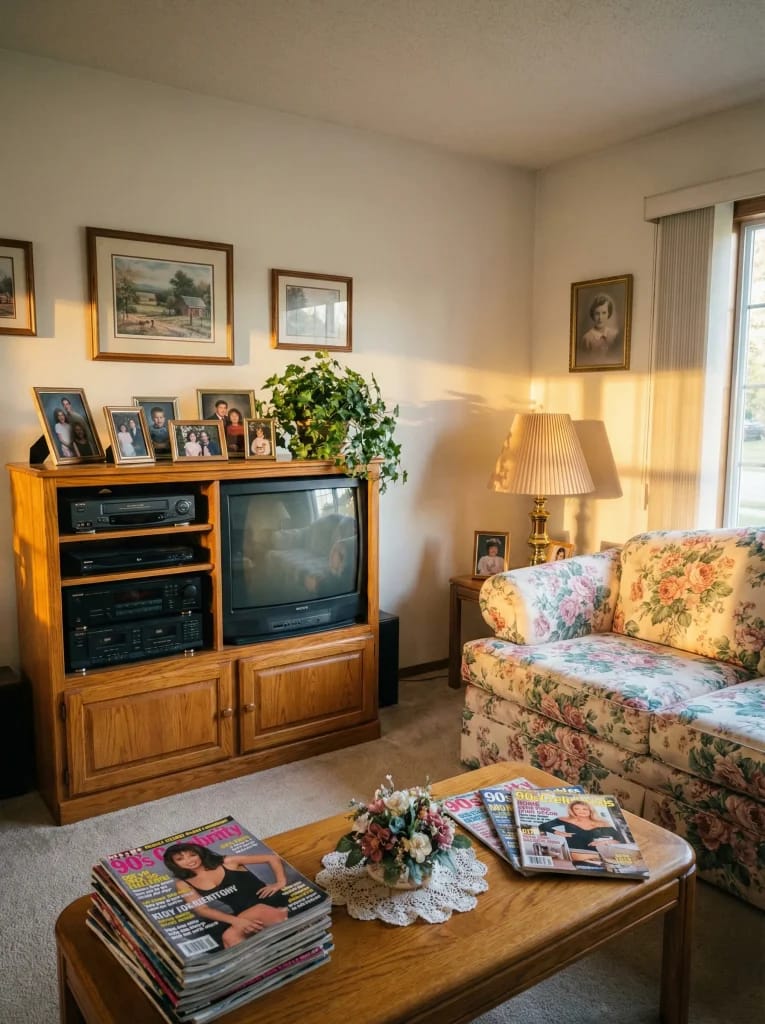
The display cabinet full of glassware
A few years ago, many Nigerian sitting rooms had a glass display cabinet.
Inside were carefully arranged glasses, plates, ornaments, figurines and sometimes expensive-looking dinnerware that nobody was allowed to use casually.
There were wine glasses, even though the family rarely drank wine. There were elaborate tea sets. Decorative plates had probably never seen food.
The cabinet was less about practicality than presentation.
It told visitors that the family had taste, standards and perhaps a little money.
Today, many of those cabinets have disappeared, replaced by cleaner interiors where decoration is deliberately understated.

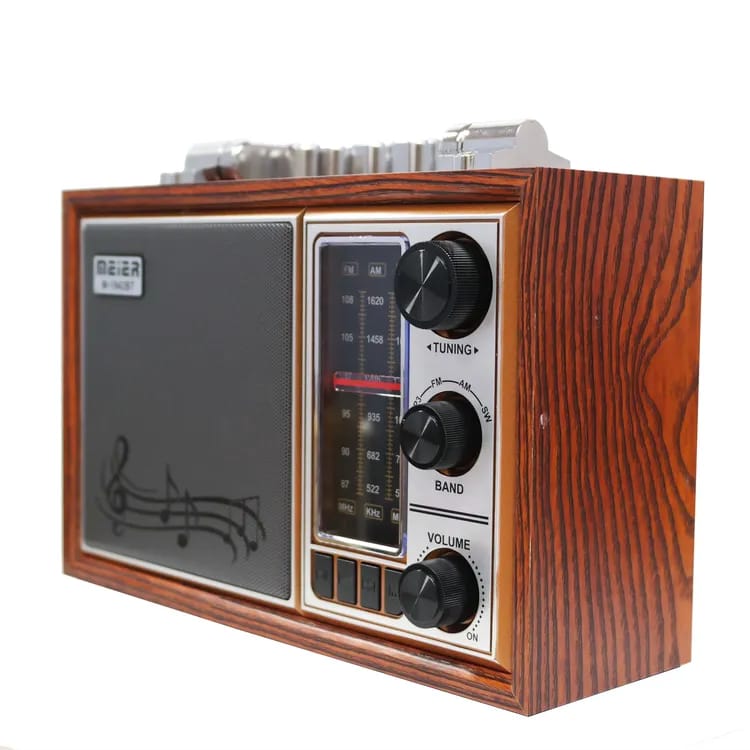
The big wooden radio and cassette player
Before Bluetooth speakers and streaming platforms, entertainment often came from a large radio-cassette player.
It was not unusual to see parents carefully record songs from the radio onto cassette tapes or play albums bought from a music shop.
The cassette collection could contain everything from highlife and gospel to reggae, juju, Nigerian pop and foreign music.
There was also the ritual of rewinding a cassette with a biro when the tape became tangled. Today, an entire music collection can fit inside a phone.

The encyclopaedia and dictionary shelf

There was a time when a respectable Nigerian home could have a small library containing dictionaries, encyclopaedias, religious books, newspapers and carefully preserved novels.
Children were often sent to “go and check the dictionary” rather than search online.
The encyclopaedia was treated almost like a family treasure.
Today, Google has replaced much of the physical reference shelf. A smartphone can answer a question in seconds that once required opening several books.

The sewing machine
For many Nigerian mothers, the sewing machine was more than a household appliance.
It was an emergency fashion department.
A torn uniform could be repaired. A loose button could be fixed. A dress could be adjusted. Sometimes, they made clothes from scratch.
The familiar sewing machine sitting in one corner of the house represented a certain kind of self-reliance.
Today, the average family is more likely to take clothes to a tailor or fashion designer than bring out a sewing machine at home.
The wall calendar
Not the sleek digital calendar on your phone.
The enormous wall calendar featuring a bank, church, beverage company, supermarket or pharmaceutical company.
It hung in the kitchen, sitting room or bedroom, and everybody knew what month it was because someone had already turned the page. The calendar often came with a free advertisement, which somehow made it even more valuable.

The centre table covered with magazines

Another disappearing feature was the stack of newspapers and magazines sitting proudly on the centre table.
Newspapers were read from front to back. Magazines were passed around. Visitors could pick one up while waiting.
Today, news arrives through social media, websites and messaging apps. The physical newspaper has become less central to everyday family life, while magazines are increasingly consumed digitally.

The “special occasion” dinner set
These come out during Christmas, birthdays, weddings or when an important visitor arrives. Everyday plates were for everyday people. The beautiful set was for special occasions.
Today, younger homeowners are more likely to buy dinnerware they use regularly rather than maintain an entire collection for occasional display.

The lace curtains and heavy drapes
There was a particular Nigerian approach to window dressing: lace curtains underneath, heavy curtains on top, sometimes with elaborate valances completing the arrangement. The heavier and more decorative the curtains, the more impressive the sitting room seemed.
Modern interiors have moved towards blinds, simple curtains, sheer fabrics and minimalist designs.
The transformation is more than aesthetic. It reflects a broader shift in how Nigerians understand the home.
Our parents often designed their homes for visitors, but young Nigerians design theirs primarily for themselves.

What did we really lose?
These objects were not merely household possessions. They were part of the architecture of Nigerian family life.
The radio created shared listening experiences while the telephone connected the household to relatives and friends. The dining set came out during celebrations. The wall calendar marked the passing months, and the sewing machine represented resourcefulness. The display cabinet reflected pride. Even the plastic-covered sofa told a story about a generation that believed good things should be protected.
Perhaps that is why seeing one today can transport an adult back to childhood almost instantly.

TagsNigerian homes
Previous Article

The Healing Power of Getting Away

Next Article

CRITIQUE VIEW: ZainabIbraheem’s Bridal Collection Makes Room ...

0
Shares
  • 0
  • +
  • 0
  • 0
  • 0
  • 0

Related articles More from author

  • Relationships

    #RelationshipThursday: 4 Tell-Tale signs you are going to cheat on your partner

    June 28, 2018
    By CHIOMA
  • Allure MagazineCareerInterviews

    10 Mins. With Benjamin Olasunkanmi

    February 13, 2018
    By allure1
  • Allure WomanRelationships

    Toyin Abraham’s husband thanks her for always listening to him

    December 31, 2020
    By Temitope
  • FoodHealthy Living

    How to Make Oat Cookies

    June 9, 2021
    By Dami
  • FoodHappiness

    No-Added-Sugar Blueberry Muffins

    March 5, 2026
    By CHIOMA
  • HappinessRelationships

    SEXUAL TIPS FOR MEN (2)

    July 28, 2025
    By CHIOMA
0

  • CareerNews

    Meet the British-Nigerian actress, who could become youngest EGOT winner

  • EntertainmentTrending

    Actors who play native doctors should pray fervently – Yoruba actor, Adewale Alebiosu

  • Entertainmentmusic

    Naira Marley releases Sultry BTS Photos for “Coming”

  • 5312
    Followers
  • 0
    Likes

Timeline

  • October 21, 2026

    Sotayo Gaga Wins Best Indigenous Lead Actress, Graces Achievers Chronicles Cover

  • October 21, 2026

    ADEKEMI OLADIPO TO UNDERTAKE BIZ-A-THON GUINNESS WORLD RECORDS ATTEMPT IN NOVEMBER

  • October 18, 2026

    Beyond the Canvas: Fortune Ileleji on Art, Life and Cohesion

  • October 18, 2026

    Laughing Gas: This Is Not a Laughing Matter

  • October 18, 2026

    Feeling Fine Is Not A Health Check

Categories

Subscribe to our Newsletter

Sign up to receive email updates and to hear what's going on with our magazine!

  • Recent

  • Popular

  • Comments

  • Sotayo Gaga Wins Best Indigenous Lead Actress, Graces Achievers Chronicles Cover

    By CHIOMA
    October 21, 2026
  • ADEKEMI OLADIPO TO UNDERTAKE BIZ-A-THON GUINNESS WORLD RECORDS ATTEMPT IN NOVEMBER

    By CHIOMA
    October 21, 2026
  • Beyond the Canvas: Fortune Ileleji on Art, Life and Cohesion

    By CHIOMA
    October 18, 2026
  • Laughing Gas: This Is Not a Laughing Matter

    By CHIOMA
    October 18, 2026
  • Chioma Jesus, Sammie Okposo, Midnight Crew set for #THUGGLA2018

    By CHIOMA
    April 24, 2018
  • American rapper, Kendrick Lamar wins Pulitzer prize for 2017 ‘Damn’ album

    By CHIOMA
    April 17, 2018
  • Afrobeat singer, Seun Kuti drops new album titled ‘Black Times’ 

    By CHIOMA
    April 23, 2018
  • Actor, Yul Edochie declares intention to run for presidency

    By CHIOMA
    April 23, 2018

Entertainment

  • September 12, 2026

    Etinosa Idemudia: The Many Sides of a Nollywood Powerhouse

  • August 25, 2026

    Country music Icon Dolly Parton dies at 80 

  • August 2, 2026

    The Winlos Unveil Prophet Suddenly 4, Take Children’s Discipleship Campaign to the Big Screen

  • June 6, 2026

    Subtle Intensity: Balikis Badru’s Figures Between Music, Memory, and Elemental Force

  • January 3, 2026

    Olajide Ajose, Davido, Omoni Oboli Make Visibility 50 Africa List

Follow us