From Chieftaincy to Corsetry: Helen Keshi’s ‘The New Era’ Rewrites the Rules of Isi-Agu
By Yemisi Suleiman
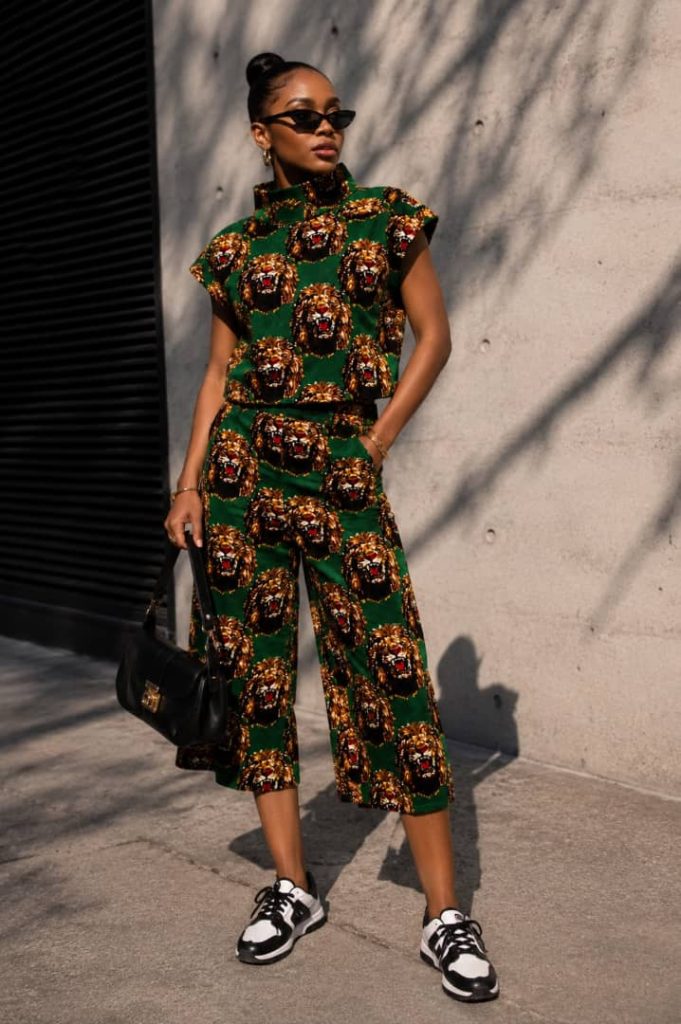
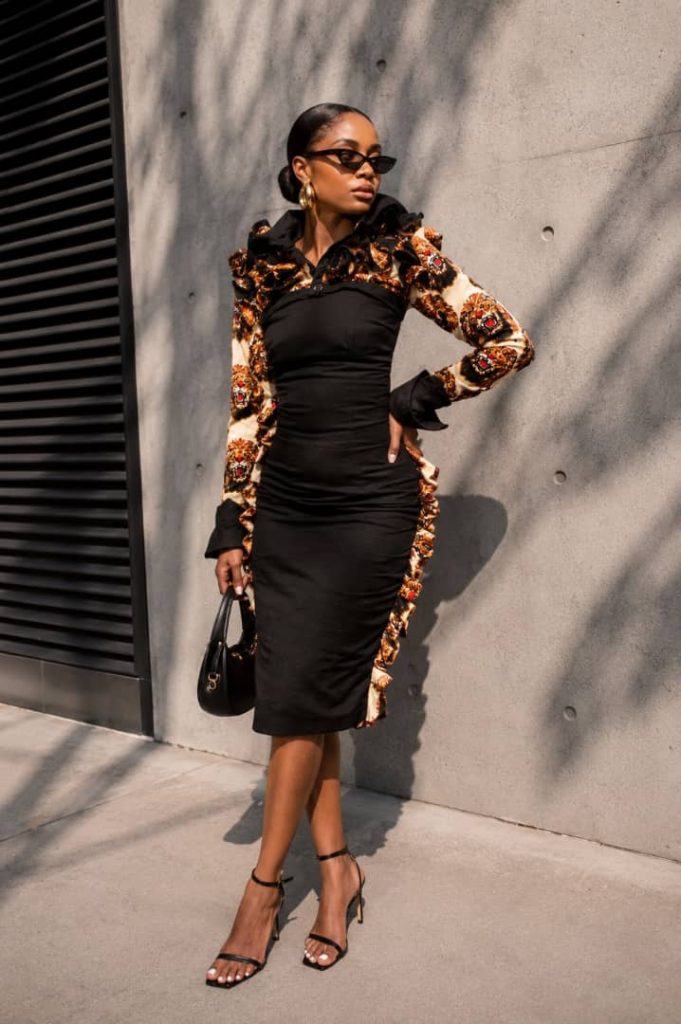
Helen Keshi’s The New Era begins with an act of displacement and refuses to apologize for it. Isi-Agu, the embossed Igbo textile that for generations has signaled chieftaincy, lineage, and ceremonial authority in menswear, is taken out of the agbada and remade into corsetry, oversized tailoring, cropped jackets, relaxed trousers, and layered separates. That move is the whole point of the collection, and it is what gives the work its charge.
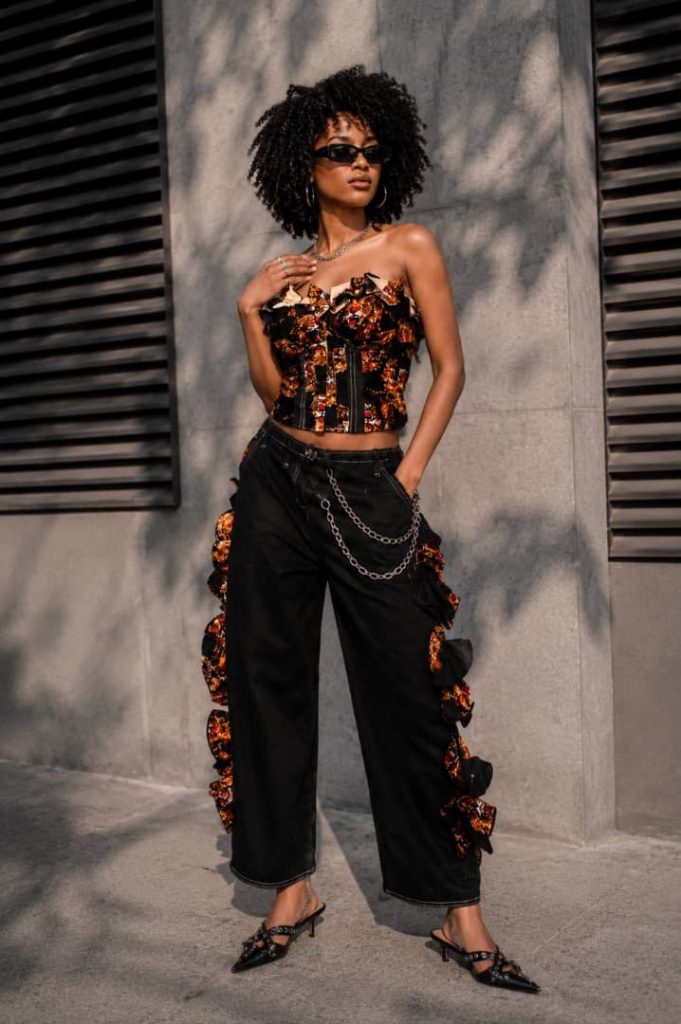
Keshi is not quoting tradition for effect. She is interrogating it, stretching it, and insisting that it can hold new meanings when it meets the realities of how women dress now. In doing so she places heritage in conversation with the street, with the office, with nightlife, with anywhere a woman might need to feel both grounded and untethered.
The collection therefore reads less like a tribute and more like an argument: that culture does not lose value when it evolves, and that respect can look like reinvention.
This approach is consistent with Keshi’s broader design practice, which frequently explores the intersection of heritage, contemporary femininity, and cultural storytelling. Rather than preserving tradition as a static reference point, she treats it as a living material capable of adaptation, allowing historical symbols and textiles to engage meaningfully with present-day lifestyles and identities.
The emotional architecture of The New Era is built on confidence, but it is a specific kind of confidence. It is not loud, and it is not nostalgic. It is the confidence of a woman who does not have to choose between being modern and being rooted. You see that in the tension Keshi sustains across the silhouettes, strength set against softness, structure set against fluidity, tradition set against rebellion.
Those contradictions do not cancel each other out. Instead they create a push and pull that keeps the clothes from settling into any single category.
The Isi-Agu remains the hero in every look, but it is never allowed to be a museum piece. It is cut, patched, layered, and paired with darker structured fabrics until it feels contemporary without erasing where it came from.
The colour palette deepens that effect. Deep blacks, warm browns, greens, and golds anchor the collection in a visual language that is rich, deliberate, and still unmistakably tied to Igbo aesthetics. The tones are luxurious without being decorative, and they allow the patterned weight of the textile to assert itself even in the most minimal silhouettes.
Visually, the look book continues that same discipline.
The photography is editorial in its restraint. Neutral backgrounds, clean styling, and strong, direct poses put all the attention on the garments and the fabric. There are no props, no overt signifiers, no attempts to dress the clothes in folklore. The decision reads as intentional, because it trusts the viewer to recognize the cultural weight of Isi-Agu without being led by hand.
That trust is important, because it shifts the conversation away from exoticism and toward design. We are not being asked to admire the textile from a distance. We are being asked to see how it behaves when it is made to move, to fit, to contour, to relax, and to challenge the body in new ways.
In that sense the collection also functions as a generational statement. It proposes that a new cohort of designers and consumers can inherit cultural materials without being confined by the rules that first defined them.
The most compelling idea at the heart of The New Era is the gendered shift. Isi-Agu has been coded as masculine authority for so long that its presence in womenswear immediately changes its meaning. When the lion heads and crests appear on a corset or a cropped jacket, they are no longer signaling title or lineage in the way the tradition intended. They are signaling autonomy, presence, and self-definition.
That re-coding is powerful, and it opens up questions that the collection invites us to sit with.
What happens to a symbol when the body wearing it was never imagined in the original context? How does a textile’s authority change when it is worn not to inherit status but to claim it?
Keshi does not spell out answers, and she does not need to. The clothes themselves do the work by existing in a space that the tradition did not originally allow.
The collection’s strength lies in the clarity of its vision. Through its silhouettes, textile choices, and cultural references, The New Era presents a compelling case for reimagining heritage rather than merely preserving it. While the collection’s conceptual framework is already strong, future explorations may reveal even more opportunities to push the relationship between tradition and contemporary design in unexpected directions.
What The New Era ultimately achieves is a repositioning. It takes a textile that has been defined by ritual and proves that it can also define daily life. In doing so, it expands the cultural vocabulary of Isi-Agu itself, demonstrating that a textile long associated with masculine authority can also become a vehicle for contemporary expressions of female confidence and self-determination.
It argues that African fabrics can participate in global fashion conversations about streetwear, luxury, and femininity without being reduced to accent or ornament. And it makes the case that evolution is not a betrayal of heritage, but one of its most honest forms.
The collection does not ask the wearer to perform culture. It asks her to live in it, to move through the world with it, and to use it as a tool for self-expression rather than as a costume for display. That is a difficult balance to strike, and Keshi strikes it with conviction.
If this is the beginning of a longer exploration, the future looks promising. The conceptual groundwork is already strong, supported by a thoughtful engagement with identity, heritage, and contemporary womanhood. As the conversation continues, The New Era stands as an example of how cultural materials can be reimagined without losing their significance.
It will not simply be read as a statement about culture and identity.
It will be experienced as one. And that is where the collection, and the designer, move from making an argument to setting a new standard.