
Spotlight on House of Anaum’s latest Collection: Noor al-Nahr
By Yemisi Suleiman
For some time now, African designers have continued to push the boundaries of fashion on a global scale. Outfits that were once narrowly tagged as “African” and presumed unwearable beyond the continent’s shores are now being redefined, as African wear gains widespread global acceptance. Beyond Adire and Aso-Oke fabrics that are now firmly positioned on the global fashion stage, African fashion today is no longer fighting for visibility; it is fighting for ownership and respect.
As global interest in African fashion continues to grow, the conversation has shifted from simply being seen to being properly represented. At the centre of this dialogue is modest dressing, fashion that reflects culture, attitude, and personal beliefs, and it has become the responsibility of African designers to push this narrative intentionally. One designer doing just that is Nigeria’s Lateefat Odunuga, Founder and Creative Head of House of Anaum.
Through her thoughtfully curated collection titled Noor al-Nahr, the designer proves that her craftsmanship is one the world should pay attention to. Noor al-Nahr showcases the dynamism of modest dressing while highlighting key elements of African fashion.
The collection is a tribute to the spirit of Eid ul-Adha, a celebration of sacrifice, devotion, and light born from surrender. Inspired by the legacy of Prophet Ibrahim (AS) and Hajar (AS), Noor al-Nahr honours the strength of the modest woman: one who chooses faith over ease and dignity over display. Created during Eid Mubarak, each piece reflects resilience stitched with elegance, embodying the light that comes through giving. House of Anaum worked primarily with African fabrics–damask, Aso-Ofi, and Ankara, to represent heritage, while silk and lace were introduced to bring modern elegance.
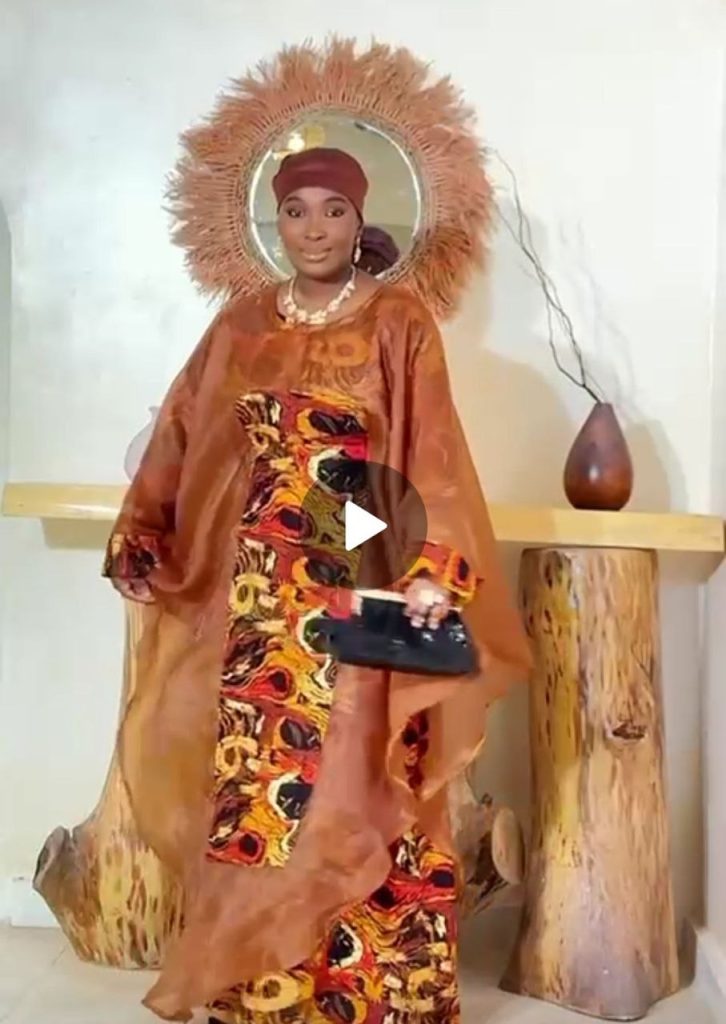
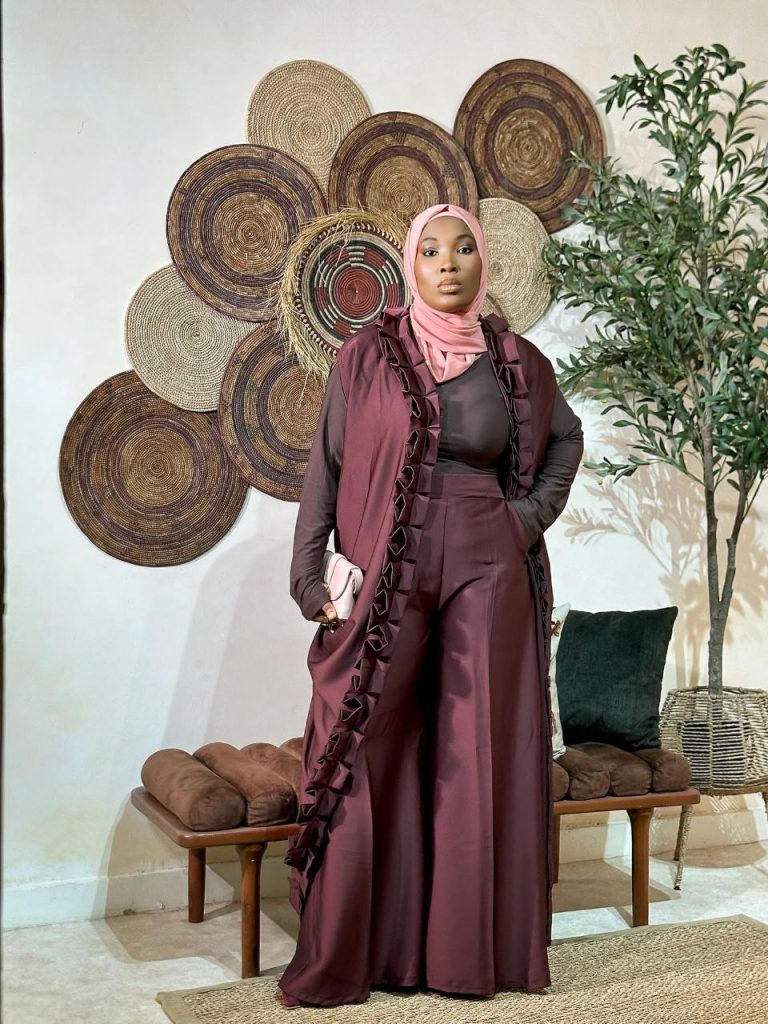
The collection features fitted bodysuits paired with palazzo pants, elegant kimonos with ruched details on both sides, and jackets finished with ruffled trimmings, styled with the hijab, the elegant head wrap worn by Muslim women. Another standout piece is the Ankara kaftan with an organza overlay in bright peach. Its perfect fit, silhouette, and finishing are noteworthy.
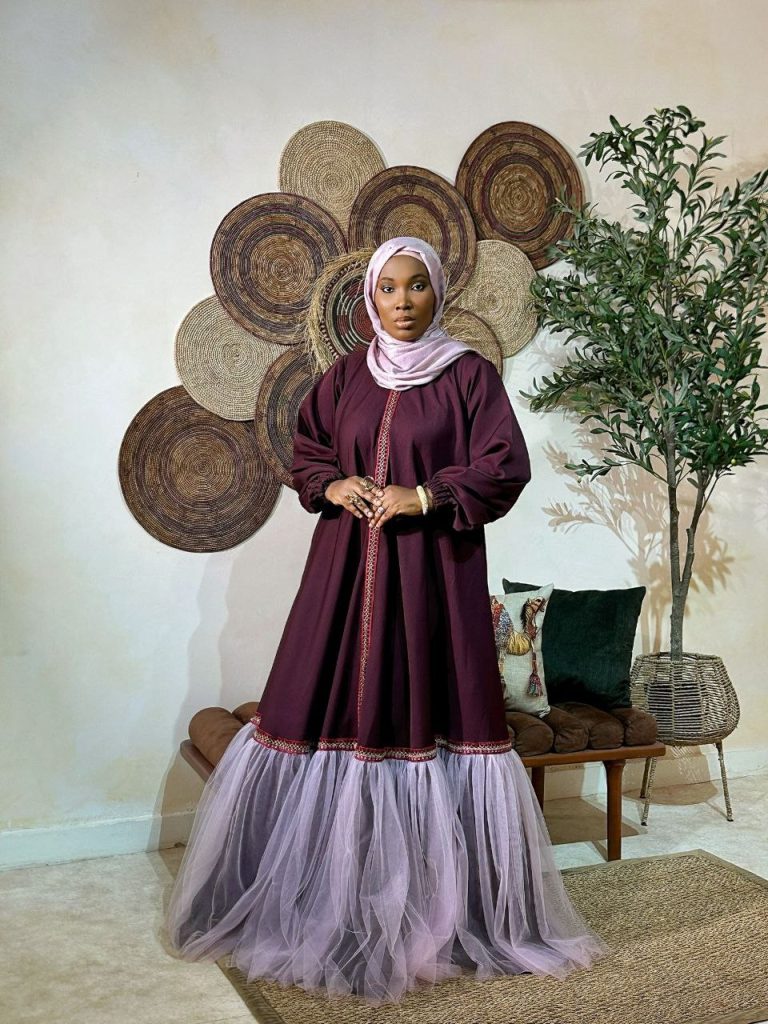
The beauty of this dress is further enhanced by the use of fine gold jewellery, a complementary purse, and a fancy head wrap or turban, all working together to elevate the look. Also worthy of mention is a long, loose-fitting dress with gathered tassels at the hem. Its relaxed silhouette makes it a one-size-fits-all piece, suitable for a variety of special occasions.
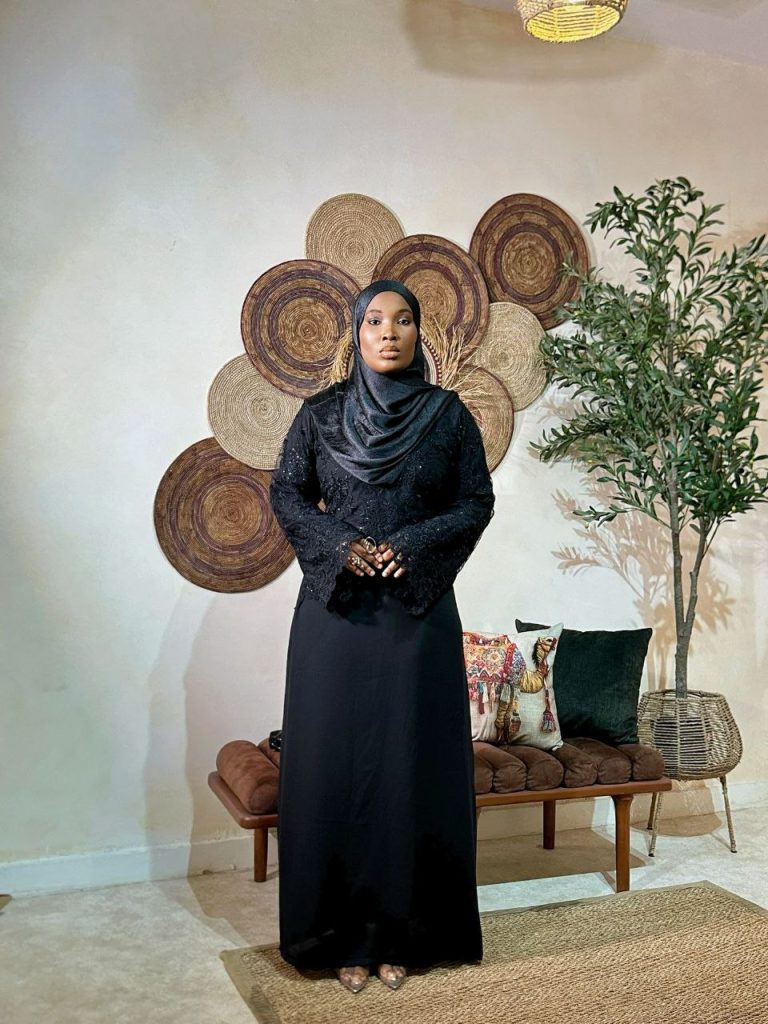
Perhaps the most elegant piece in the collection is the black lace-up kaftan. From the sleeves to the silhouette, cut, fit, and finishing, the design is sleek and contemporary, perfect for today’s woman who wants to look sexy, powerful, and modest all at once.
The Noor al-Nahr collection does more than promote modest dressing; it reflects the designer’s creative depth and ability to project the beauty and elegance of the African woman. The collection clearly bridges two worlds Western and African, and the pieces can be worn comfortably beyond the shores of Nigeria.
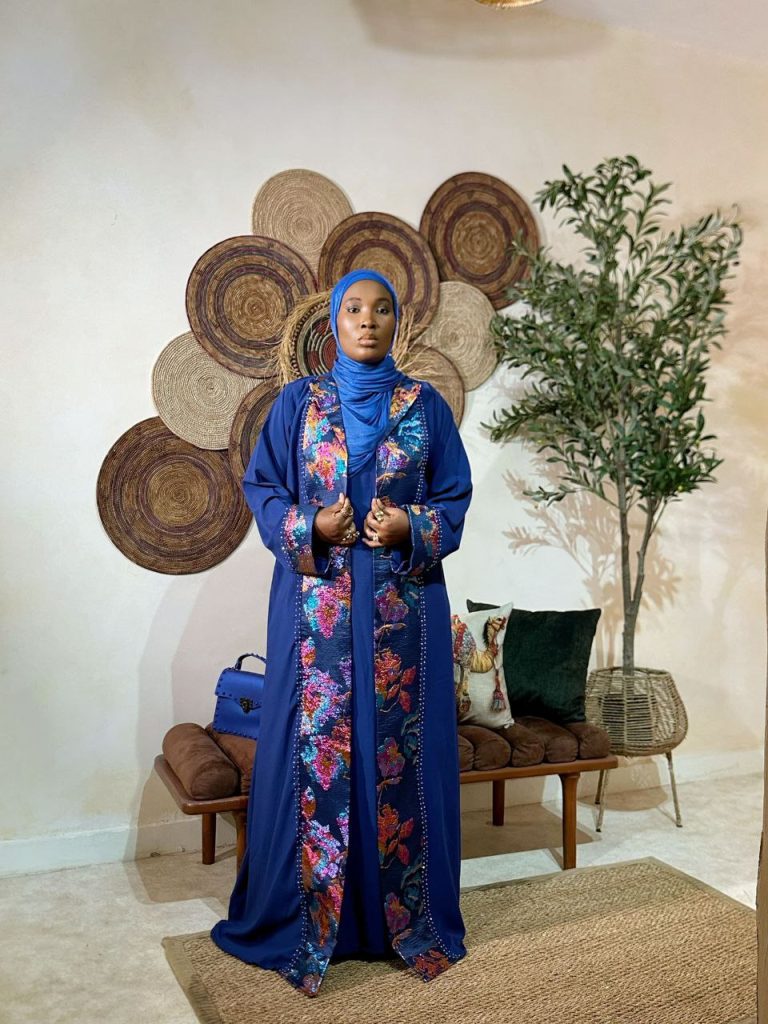
The fabrics are rich, the colours well thought-out, and the tailoring refined. Take, for instance, the blue kaftan paired with a matching blue kimono finished with damask trimmings, a class act on its own. The colour combination is brilliant, the fabric skin-friendly, and the pieces versatile enough for various occasions. While the collection will likely resonate strongly with both Muslim and non-Muslim women in Nigeria, it may face some limitations on the global stage, as not every woman would opt for styling that includes the hijab. Additionally, the designer could consider incorporating more winter-friendly fabrics for colder climates. Silk, Ankara, Aso-Ofi, and damask may not provide sufficient protection against harsh cold, and a thoughtful mix with heavier textures such as fur would enhance global wearability.
Overall, Noor al-Nahr by House of Anaum is more than a beautiful collection, it redefines meaning, intention, and tradition. It is designed for the woman who walks in grace, clothed in the radiance of every sacred sacrifice. With this refined and intentional body of work, House of Anaum has firmly stamped its place as a brand to watch on the global fashion radar, and we look forward to what the label delivers next.