When Mythology Meets Modern Masculinity: The Ideal Craftsman Reframes Craft for the Present
There is a confidence to The Five that feels increasingly rare in menswear: a refusal to explain itself too much. For SS26, this collection reclaims mythology as a tool for contemporary dressing, using Yoruba gods not as exotic references, but as frameworks for modern masculinity; complex, adaptable, and unapologetically symbolic.
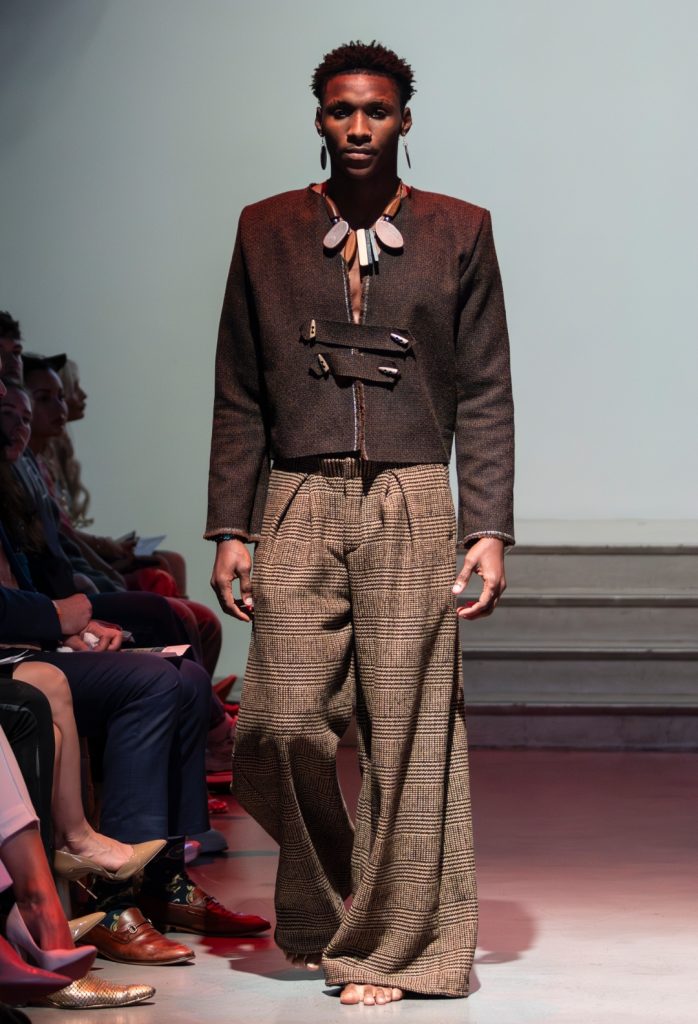
Obatala’s ensemble takes authority further, stripping it back to form. The cropped jacket with high, wide shoulders is architectural, almost militaristic, but the horn buttons introduce ritual symbolism that softens the severity.
Paired with checkered wide-leg trousers in British wool, the look balances tradition and modern tailoring. The oversized drape and exaggerated pleats feel intentional, not indulgent.
The deep V-neck and unfinished edges signal a willingness to leave things unresolved, a refreshing departure from over-polished menswear.
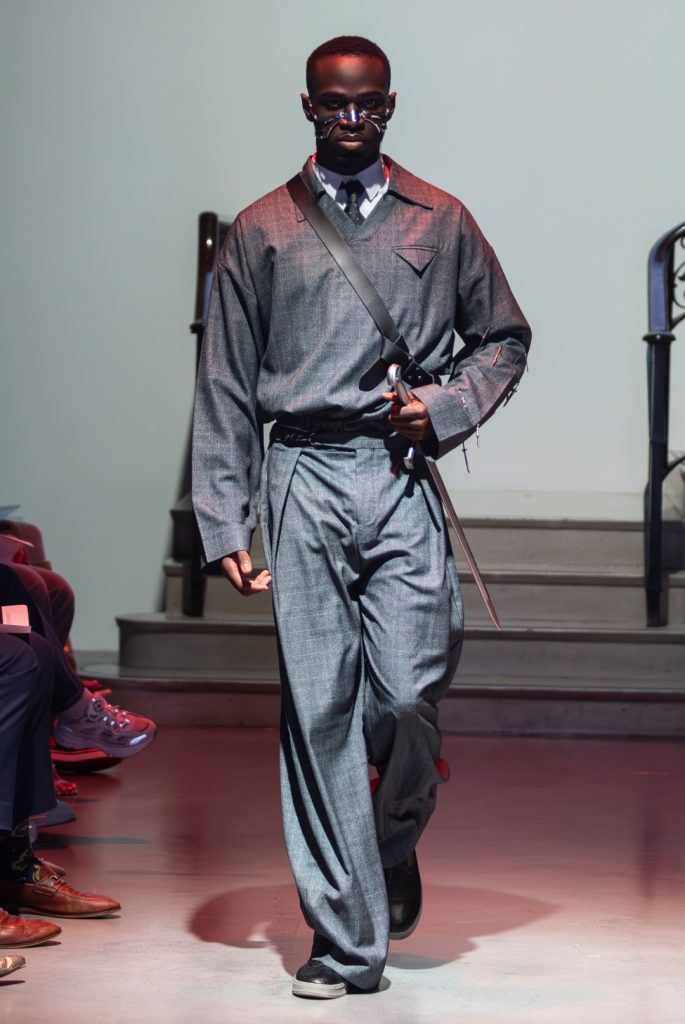
Ogun’s look is a masterclass in restraint and intention. The grey wool jacket, cut into a boxy silhouette, immediately asserts authority. The miniature metal swords hanging along the left sleeve are striking, yes but more importantly, they are directional. They do not overwhelm the garment; they define it. The V-neck with half collar and elasticated waist pull the look away from ceremonial stiffness and into real-world functionality. This is power that moves.
The trousers complete the story. Giant forward pleats create volume without bulk, while the metal waist adjuster adds a utilitarian edge. The elasticated back is a quietly progressive detail acknowledging that modern masculinity includes adaptability, not rigid conformity to size or shape.
Esu’s design is the wildcard and perhaps the most telling. The black cotton two-piece, punctuated by a red satin pocket flap, introduces disruption without chaos. The balloon sleeves and trousers exaggerate proportion, creating a silhouette that resists easy categorisation. It is playful, unsettling, and deliberate; mirroring Esu’s role as the god of confusion and crossroads. In a fashion landscape that often equates masculinity with predictability, this feels refreshingly honest.
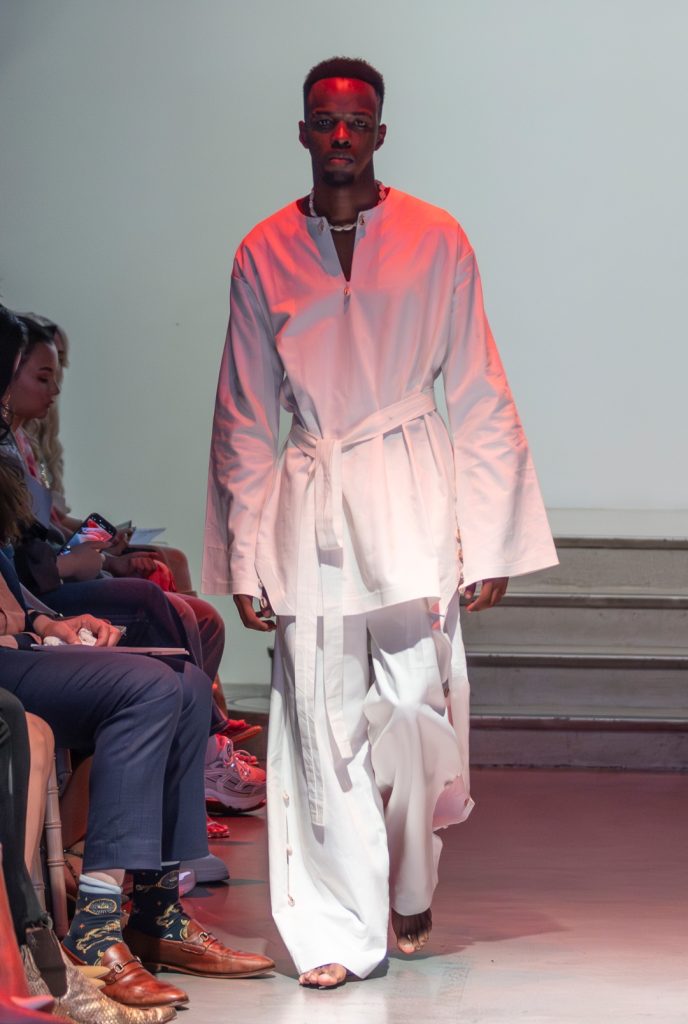
Orunmila’s off-white kimono set reframes purity altogether. Rather than minimalism, the design embraces abundance. The fluid silhouette, generous proportions, and cowry embellishments speak to wealth as knowledge, power as wisdom.
The sleeve splits, running from wrist to elbow, introduce movement and openness; an invitation rather than a barrier. It is a look that challenges the idea that masculinity must be closed, contained, or severe.
Materially, the collection stays disciplined. Wool and cotton dominate, grounding the designs in tactility and wearability. The drape is purposeful, the silhouettes considered. There is no reliance on novelty fabrics or gimmicks. Instead, the focus remains on form, symbolism, and construction.
The Five succeeds because it understands that modern menswear is no longer about proving strength, it is about articulating it. By reimagining Yoruba gods as contemporary figures, the collection offers a new vocabulary for power, spirituality, and self-expression. It is not loud. It does not need to be. The authority is built into the cut.