
Intermittent Explosive Disorder
By Dr, Gbonjubola Abiri
This young man in front of me at the clinic that day was in his early thirties. He was
intelligent, handsome and articulate. While his life appeared to be well put together in
theory, the reality before me was that of a troubling story. He had lost five jobs in rapid
succession, relationships kept ending as soon as they started, and friendships never saw
the light of day. He was exhausted, ashamed and deeply confused as to why his life
appeared to be going nowhere.
He described sudden episodes of intense anger which came out of nowhere. He
mentioned that on facing minor frustrations such as a comment he perceived as critical
from a friend, traffic challenges, a question on his competence at work or a poor attitude from a salesperson, his reactions, verbal and sometimes behavioural, would be way bigger than the situation deserved. The episodes were impulsive, damaging, distressing and overwhelming. Following the outburst, he would feel regret, guilt, remorse and fear.
This is the reality of persons living with the Intermittent Explosive Disorder (IED).
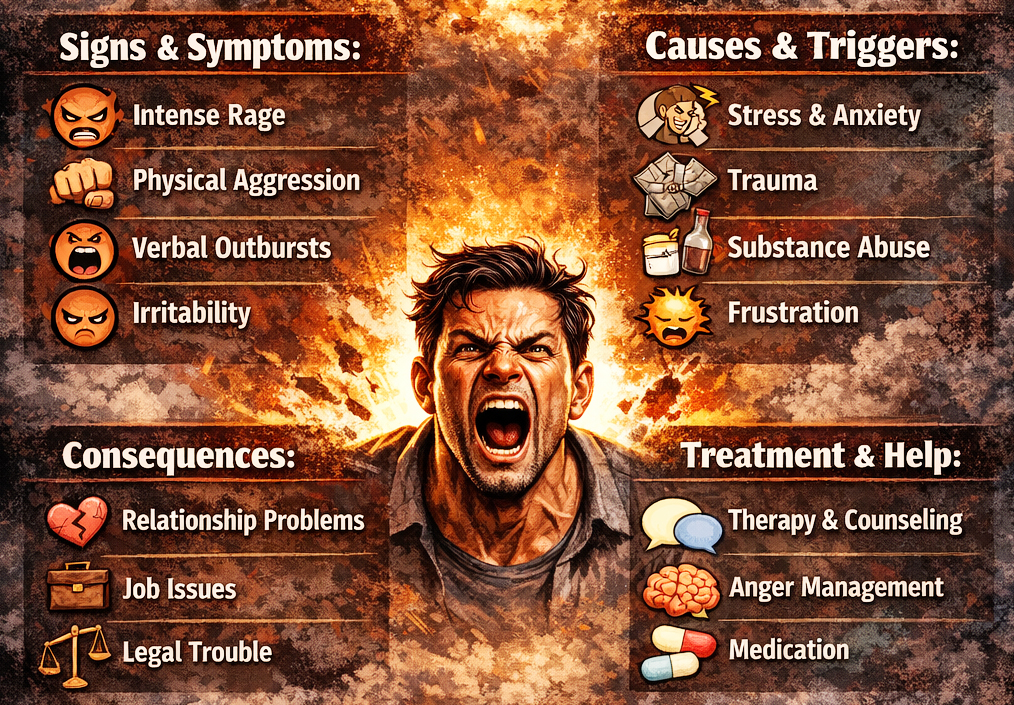
IED is a mental health condition, classified under the Impulse Control Disorders, that is
characterised by recurrent outbursts which are disproportionate to the situation at hand.
The outbursts, which last for about 30minutes may be verbal or behavioural, and are often impulsive. In between the episodes, the individual may feel ashamed or confused about
their reactions, but is often able to function quite well at work. The episodes may
include: road rage, domestic abuse, breaking or throwing objects. The condition causes
harm to relationships, work, school and even problems with the law. It can go on for years,
with the severity of the outbursts reducing with age.
Before the occurrence of an aggressive bout, the individual may feel rage, shaking, tingling, irritability, racing thoughts, more tension and energy, as well as chest tightness. The verbal and behavioural outbursts are often preceded by long, angry speeches, shouting, heated arguments, slapping, shoving or pushing, property damage and threatening or harming people or animals. The condition may co-occur with other mental health conditions such as mood, anxiety and substance use disorders.
IED is treatable with proper assessment, psychotherapy (specialised talk therapy which
focuses on emotion regulation skills) and sometimes medication. Individuals with the
condition are helped to recognise their triggers, pause before reacting and develop
healthier ways of expressing and managing their anger. In the case of my patient, his
awareness and diagnosis of the condition were a turning point.
If you know someone who struggles with frequent anger that damages self-worth,
relationships or work, please look beyond character judgments and seek professional
help.
Remember, there is no health without mental health.