IS BEING NIGERIAN EMBARRASSING NOW?
– Written by Momo Spaine
In October 2025, British Vogue published Chanté Joseph’s essay “Is Having a Boyfriend Embarrassing Now?” (25 October 2025). This viral article offers a sharp diagnosis of how social media has altered what used to constitute status.
If Joseph’s piece is about the familiar modern war between private intimacy and public performance, Nigeria’s version is about the rising tension between national pride and public perception. The identity that once felt like an obvious flex can now feel complicated. One reason it travelled so fast is that it named a feeling many western women already had: the online performance of being in a romantic relationship is no longer aspirational.
Nigeria may be having a parallel moment, just on a national scale. DataReportal estimated 38.7 million active social media user identities in Nigeria in January 2025, cautioning that these “user identities” may not necessarily represent unique individuals. Either way, millions of daily posts and comments now shape what “Nigerian” looks like online and in real life.
Think of a Nigerian passport as your significant other. Does the little green booklet signal status and bring honour? Or does lifting it feel heavier than it should?
For many Nigerians, especially those of us with ambitions to live or work abroad, identity is loaded with disappointment, and the fear that aligning with it will invite mockery at best and loss of life-changing opportunities at worst.
When I was a child, Nigeria’s “magic” felt like a secret.
With limited internet access, global narratives about Africans were still blunt. Then the early 2010s arrived and Nigerian music began breaking ground across Africa. I was in Johannesburg at the time, in an environment where Nigerian confidence was often treated as arrogance. But the culture shifted: South African clubs, typically loyal to house and kwaito music started sprinkling in Nigerian hits. That repeated exposure signalled that Nigeria was becoming a cultural reference point on the continent.
By the early 2020s, the genre of afrobeats was no longer niche. Burna Boy headlined London Stadium in 2023 and sold it out again in 2024. Beyoncé’s The Lion King: The Gift also put Nigerian artists inside a globally visible pop-cultural package. The world discovered what we had always known about ourselves. Nigeria’s culture became “cool” in a way that was legible everywhere. That is still true.
So this is not a debate about whether Nigerians are proud. We are.
The real question is whether the digital identity we have built reflects what it currently costs to claim that identity and how that gap shapes the way the world sees us.
Since May 2023, daily life has carried a sharper edge: inflation pressure, fuel costs, and the fatigue of trying to plan in a country that frequently feels like it’s improvising.
When the petrol subsidy was scrapped in late May 2023, reporting noted that pump prices “nearly tripled,” spiking transport costs. Insecurity has stayed brutal too. A 2025 SBM Intelligence report cited by Vanguard counted 4,722 abductions and ₦2.57bn paid in ransom in one year (July 2024–June 2025).
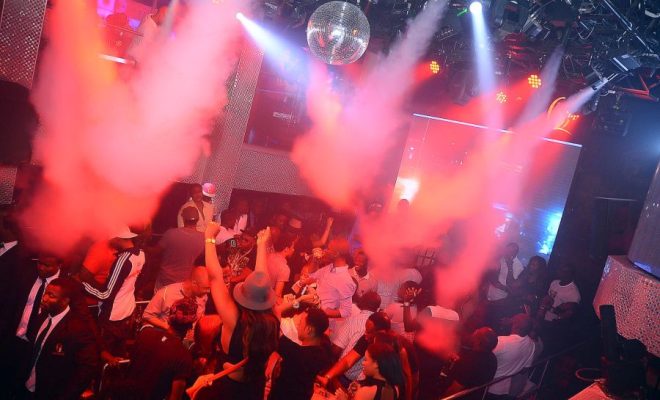
This is the backdrop. Yet online, Nigeria can look like a permanent afterparty with curated abundance and “luxury” aesthetics. Aspiration is not the problem. The problem is when aspiration becomes the dominant national story we export while the offline reality says otherwise. The result is a collective double life: one Nigeria living in bills, scarcity, and survival while another Nigeria lives in a bubble of edited content where reality does not make the cut.
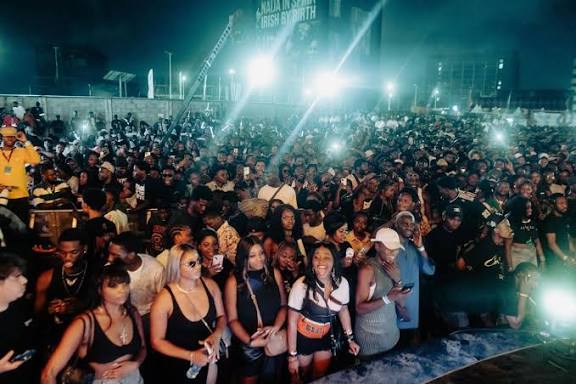
In early 2026, a new wave of mockery caught fire through viral travel content. American streamer IShowSpeed’s “Speed Does Africa” tour reached Nigeria in January, with huge crowds captured live (he arrived in Lagos on 21 January 2026). Clips from Lagos spread fast, and soon after the nickname “Abegistan” trended as pan-African banter after viewers fixated on constant requests for Speed to “show love.”
This is where the metaphor stings. The idea of “embarrassment” online is akin to a global public ranking system. It is the constant generalization of any group of people based on the actions of a faction. It is the pile-on effect of being labelled a “scammer” or “corrupt” by an association with something you have no control over. It is being reduced to a punchline while knowing you are more complex than the short clip being shown. It is a quiet fear that the internet’s version of you will become the only version that matters in real life.
Another part of Nigeria’s digital identity is response. Nigerians are not passive online: we swarm, defend, correct, amplify, and trend. That power is impressive, but it also makes our outrage predictable and that predictability is exploitable. Rage drives engagement and the algorithm rewards whoever can trigger the most engagement.
The flip side is just as real: praise Nigerians online and you can be adopted instantly, given a native name, and welcomed warmly into the fold. Any foreigner’s validation of our culture and values creates an instant bond. Both behaviours come from the same place: a need to control narrative in a world that does not always tell our story with dignity.
Pop culture makes the pattern obvious. For Nigerian viewers, reality TV shows like Big Brother Naija rarely stay “just entertainment”. They become a proxy war for dominance, status, and relevance. Love Island USA, for example, restricts voting to viewers in the United States via its official app. Yet Nigerian fandoms still override their restrictions with VPN and fight like the outcome of voting for their favourite couple affects national policy.
It seems unrelated but it could be because online participation has become one of the only places Nigerians feel “seen” at scale.
So, is being Nigerian embarrassing now? “Embarrassing” is harsh.
What is more accurate is disappointment which is sometimes private, sometimes public, and sometimes disguised as humour. Nigeria’s online identity is caught in a tug-of-war between pride in cultural dominance and grief over national dysfunction. We aspire to cope with reality. We use defensiveness as self-preservation. We turn performance into a survival tactic. And mostly, we use humour as anaesthesia.
Pride and shame can coexist and for many Nigerians, they already do.
As a filmmaker, I know the importance of what we choose to show and what we choose to leave on the cutting room floor. Social media is not always “fake,” but it is always edited. And the messy, unfiltered, and often contradictory comment sections of popular digital spaces have become one of the most honest archives we have of public sentiment in real time. In my upcoming documentary, Doctors Across Borders, I plan to use the raw honesty of online commentary to echo these voices.
Nigerians online do not need to be embarrassed by our identity but we do need a more honest and vulnerable self-portrait. A digital identity strong enough to hold both our global cultural power and our real national pain without collapsing into denial or self-hate.
To learn more about Momo Spaine and her work in film follow her on Instagram.