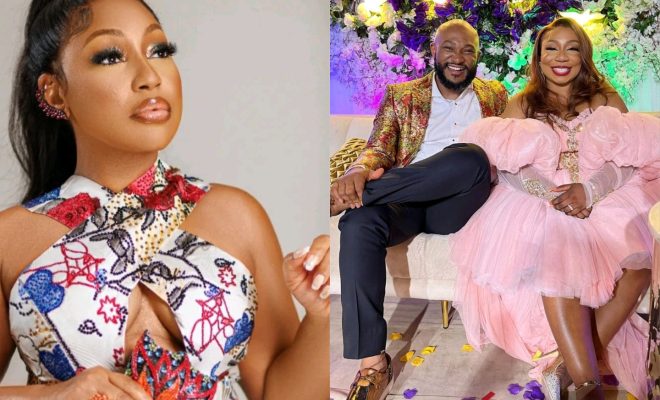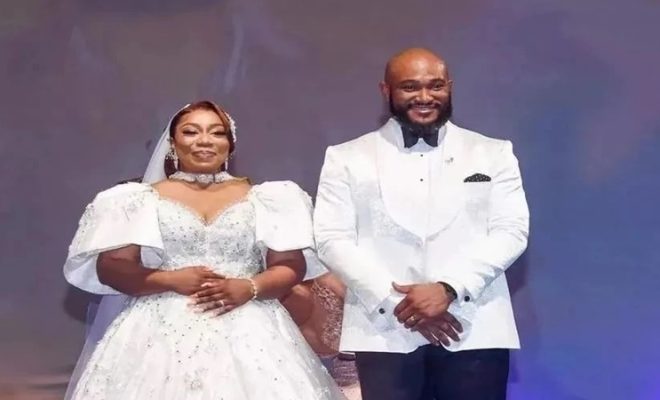
Lydia Lawrence-Nze & Blossom Chukwujekwu: Journeying through For Better or Worse
By Yemisi Suleiman
In a society where infertility is whispered about, shame is left for the woman, and silence is often mistaken for strength, For Better or Worse arrives as both a love story and a reckoning.
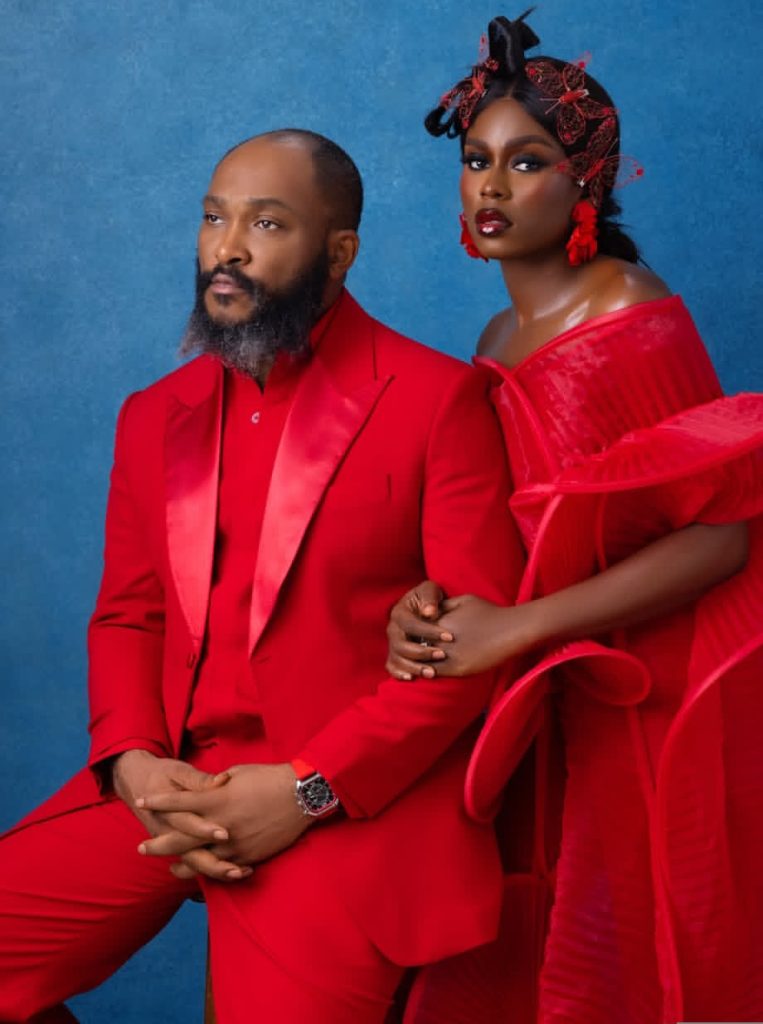
Produced by Lydia Lawrence-Nze under Only Good Films and starring one of Nollywood’s most compelling leading men, Blossom Chukwujekwu, the film dares to confront what many marriages endure behind closed doors—infertility, abortion, guilt, masculinity, and the fragile line of trust.
But this is not a story driven by spectacle. It is driven by restraint. By conscience. By the psychological weight of secrets and the radical power of choosing love when it would be easier to walk away.
Told largely through the woman’s emotional and psychological lens, the film explores Asherman’s syndrome not as a plot device, but as a doorway into deeper conversations about internalised guilt, stigma, and the quiet isolation many couples face.
For this week’s Vanguard Allure cover, we sit down with producer and lead actress Lydia Lawrence-Nze and her co-star Blossom Chukwujekwu to unpack conscious storytelling, restrained masculinity, the politics of infertility, and why the word “I chose you” may be the most radical declaration of love in modern marriage.
This is not just a film about having a child. It is about preserving love when the dream is under attack.
LYDIA LAWRENCE-NZE : On Conscious Storytelling
With a background in Biochemistry from Enugu State University of Science and Technology, Lydia Lawrence-Nze represents a new generation of Nollywood creatives who blend discipline with depth. Not interested in noise, Lydia is interested emotionally intelligent storytelling and has appeared in projects such as Hush, Battleground, and Treasury while steadily expanding her footprint behind the scenes as a producer.
What drew you to tell this story?
I have always been a sucker for conscious storytelling. the kind that reflects real life and speaks to what people are truly going through in the society. Stories with meaning. Stories with truth. Stories that make us pause and confront reality. Themes like love, betrayal, loyalty, and even infidelity are not just drama; they are conversations many people are silently living through.
Infertility is something many couples experience silently. I also wanted to tell a story about the hidden layers, not just the physical struggle, but the shame, the secrets, and the emotional isolation that can exist inside a marriage. This film is really about what happens when silence becomes heavier than truth.
Why approach it from the woman’s psychological lens?
Women often carry the visible burden of infertility, socially and emotionally. But beyond that, I was interested in exploring internalised guilt, what happens when a woman feels responsible for something that happened years ago? How does that reshape her sense of worth in a marriage? That is the whole idea.
How did you ensure sensitivity in portraying Asherman’s syndrome?
We did research. We spoke to medical professionals and women who have experienced fertility complications. I didn’t want it to feel sensational. The goal was empathy, not judgment. The condition is real, and so is the emotional complexity around reproductive health. We also had an advantage because our director is a medical doctor.
Was confronting stigma intentional?
Yes, it was. In our society, infertility is often whispered about. And abortion is even a bigger taboo. I wanted to hold space for nuance, not to justify, not to condemn, but to show humanity.
What do you hope women take from this film?
Women should know that they are not beyond redemption. That shame should not define their future. And most importantly, that love rooted in grace can still exist after truth is revealed. That healing is possible. That forgiveness is not weakness but courage. Those broken places in our lives can still become spaces where growth begins. And that sometimes, the very truth we fear, is the same truth that sets us free.
BLOSSOM CHUKWUJEKWU — …. Redefines masculinity
One of Nollywood’s quintessential leading man, Blossom Chukwujekwu has built a reputation for performances marked by emotional intelligence and quiet authority. From his breakout in Flower Girl to acclaimed roles in Finding Mercy and Knocking on Heaven’s Door, he has consistently chosen characters layered with vulnerability beneath strength.
In For Better or Worse, Blossom delivers one of his most restrained performances yet— a husband who responds to betrayal not with rage, but with discipline; not with domination, but with dignity. His character challenges popular ideas of masculinity, offering instead a portrait of leadership without ego and love without spectacle.
How do you approach playing a man who leads with calm?
I think strength is often misunderstood. True strength is not loud. It is controlled and measured. This character understands that reacting from ego would destroy what he’s trying to protect. So, what is he protecting? Is it his wife from panic, shame, or depression? Or his dignity? Or protecting the home from becoming a battlefield?
I also portrayed the cost of being calm, because it is not numbness. It can be a man swallowing words that would be easy to throw like stones. It can be him breathing through humiliation, choosing not to contaminate the room with his pain. It is leadership that does not make his emotions everyone’s burden, yet still communicates them clearly—though you can still feel the storm behind his eyes.
Why quiet restraint instead of rage?
That is because rage is easy and often becomes a performance of power. Restraint, on the other hand, is discipline and power that needs no applause. Mature love does not look for opportunities to win arguments; it looks for ways to preserve unity. In infertility, rage can become a way to avoid real problems and emotions. So, I felt like, his restraint was him trying to stay human in a moment that could make him cruel. He does not want to punish the person he loves for something that neither of them planned. He is trying to keep love alive while the dream is under attack. So go rage at the devil!
First, a lot of cultures carry the assumption that fertility is “a woman’s issue,” so men are either excused or allowed to stand at the edge like spectators.
What does true masculinity look like here?
It is responsibility without ego. A man who can sit in discomfort and not run, who does not outsource his shame to his partner, is being strong enough to be gentle and secure enough to be vulnerable, even if he cannot fully say the words yet.
It’s him being present in the unsexy moments. I will say true masculinity here is: not allowing this situation to turn me into somebody you fear. That is leadership without domination. It is protection without control and compassion without weakness.
The moment he walks in and sees another man, how did you interpret that?
That scene was not about the other man. It was about the fracture in the marriage. He sees pain before he sees betrayal. That is why he responds the way he does. That moment was not just about jealousy. It was a full-body confrontation with a fear he could not control.
But I also played the shame underneath it because sometimes, the first thing that hits is not anger at the other man. It’s anger at you..
So, I interpreted it like a collision: love meets pride, pride meets insecurity, and insecurity meets grief. And he was trying to keep his face from telling the truth too loudly.
It’s the kind of moment where his being quiet was not a weakness; it was him choosing not to destroy the room because he was bleeding inside. Restraint, that’s the word,
What does “I chose you” mean?
Choice is powerful. Marriage is not sustained by feelings. It is sustained by a decision. And Love is a Choice. He is saying: even with your past, even with the hurt, I am still here. It reminds me of John 15:16. It is a bankable assurance! Before any of the noise, I chose you. It is not “I settled.” It’s not “I’m stuck.” I deliberately did. It is intentional love and devotion.
And in this context, it also becomes a protest against circumstances. Like saying: “Even if the dream is delayed, even if the world is judging us, even if your past was dark and foolish, I am not negotiating my love for you.”
Do men get overlooked in infertility conversations?
Yes, often. And it is not necessarily always intentional, but it is real. I’ll give a 2-pronged answer. First, a lot of cultures carry the assumption that fertility is “a woman’s issue,” so men are either excused or allowed to stand at the edge like spectators.
This framing is dangerous because it is actually society protecting men from discomfort and embarrassment at the cost of women being the scapegoats. When you excuse men from the medical and emotional reality of fertility, you also quietly excuse them from accountability. You create a world where a man does not have to test, does not have to learn, or carry any of the weight, yet he still benefits from the social privilege of not being questioned.
Even more painful is the fact that women carry the blame, the pressure, the invasive procedures, and the shame. Even in the language, we use “she can’t have children” as if children are something a woman manufactures alone. It turns the woman into a “problem to be fixed,” rather than two people facing a shared medical reality they should tackle together.
Secondly, men hurt too. They don’t always have permission to express it. I wanted to show a man who feels deeply but processes it with grace.
Many men are silently collapsing because infertility does not just challenge the body; it challenges identity, pride, lineage, expectations, and even how a man sees his worth.
The tragedy is that many men do not feel they have language for it. So, they suffer in private, and sometimes they show it in the worst, inexcusable ways; distance, control, blame, etc., when what they are actually feeling is grief and fear.
So, this story, to me, makes room for men to be seen without excusing bad behaviour. It says: men hurt too, men need support too, and healing works better when both partners stop performing strength and start practising honesty.