
Bola Obileye on Purpose, Power and the Art of Fashion
By Yemisi Suleiman
Bola Obileye is a Nigerian-born, UK-based fashion designer and the Founder and Director of TOTE London, a brand known for its timeless handbags and art-inspired pieces. With a background in Information Technology, where she worked as a Cisco Certified Consultant and Business Analyst, her journey into fashion did not follow a traditional path—but one shaped by curiosity, creativity, and a deep sense of purpose.
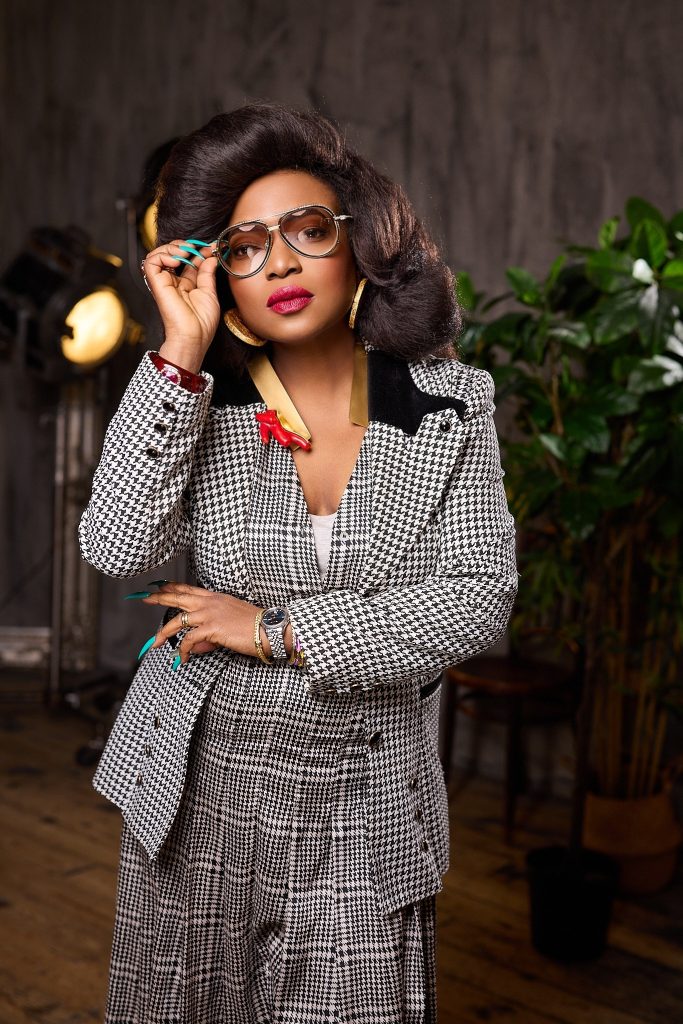
What began as making clothes and handbags for herself soon grew into something more, as people around her took notice. Encouraged by their response, Bola leaned into her natural talent, gradually transforming a personal passion into a globally minded brand. Today, her work reflects a seamless blend of Nigerian heritage and British influence, with a strong focus on craftsmanship, colour, and authenticity.
In this interview with Allure, Bola Obileye shares the story of how she found her voice in fashion, built a brand across two continents, and continues to create with intention, honesty, and legacy in mind.
After you started what was the defining moment for you?
The defining moment I would probably say is not one single thing. However, one of my friends, Isabel, held a lifestyle event at home in 1004, Victoria Island, about 16 years ago now and she invited me to showcase some of the things I had made. At that point, I started selling those pieces and that was where I saw that there was really opportunities there. I have always loved art as well. One thing led to another and before I knew it, I started to get more comfortable with creating and seeing myself as a creative and a creator.
What sets you work apart in such a saturated digital space?
Well, first, it is intention and honesty. Also, I think it’s the love of colour and art. I am one of those people who will propose to you that fashion is a form of art and should be respected as art. Because it is a skill, those things come naturally to me. I would say that every piece that I have, carries those signatures and especially the timelessness. I love pieces that can sashay through any period and you know, that stays relevant and useful as much as possible.
Authenticity for me is about staying true to yourself. In my creative journey, I find that staying true and close to the things that I love and things that I judge as beautiful, as timeless, as classic is what I should be giving the world. So, I do my best to stay close to my compass and what is important to me, and share my whole heart with the world.
Are these your creations made in Nigeria or the UK?
I am really excited that, my handbags are made in some of the finest factories at home and abroad. So, I’m really excited about how Tote London is going.
What gap in the fashion market were you looking to fill when you started out?
I started out making my handbags in Nigeria. About 15-16 years ago, people who were making bags at the time, were just a handful and the level was not worldclass. And that was what I was aiming for when I started making handbags.
How does TOTE London reflect your personal style and philosophy?
My philosophy in life is really to just pour yourself into your creativity.
You were given this talent, vision and insight for a reason to share with the world. I always say that when I die, I want to be empty of every good idea, dream, and vision that I have carried that I believe belongs to this world. It’s all about legacy for me and I want that legacy to be in the work that I do. I want people to be able to look back on my time on earth and say, well, that started because Bola lived.
What has been the most defining moment for the brand so far?
It has to be styling the crew from The Lion King last year, at the Africa Fashion Week London. Also naming a bag after a First Lady and having her style and wear this bag. It’s such an honour to see things that have faded in the privacy of my own home on display on the world stage. That has been really exciting to me.
I have had many defining moments for my brand. I’ve had first ladies carry my brand. I’ve had really, really incredible women of substance carry my brand.
I’ve had one of the richest women in the world carry my bag. I’ve had many defining moments that made me smile. I have had an Oba carry a bag that was commissioned.
These are really exciting for creators and creatives. When we get encouragement and support like that, it makes it all feel worthwhile.
As someone operating between the UK and Nigeria, how has this dual cultural perspective shaped your work?
I am loving the experience. I’m loving the fact that I’m able to constantly infuse my Nigerian-ness into my UK creativity. I tend to now make between Nigeria and the UK and I just love how fluid that is because I feel like it reflects the reality and it’s more authentic in the way we live.
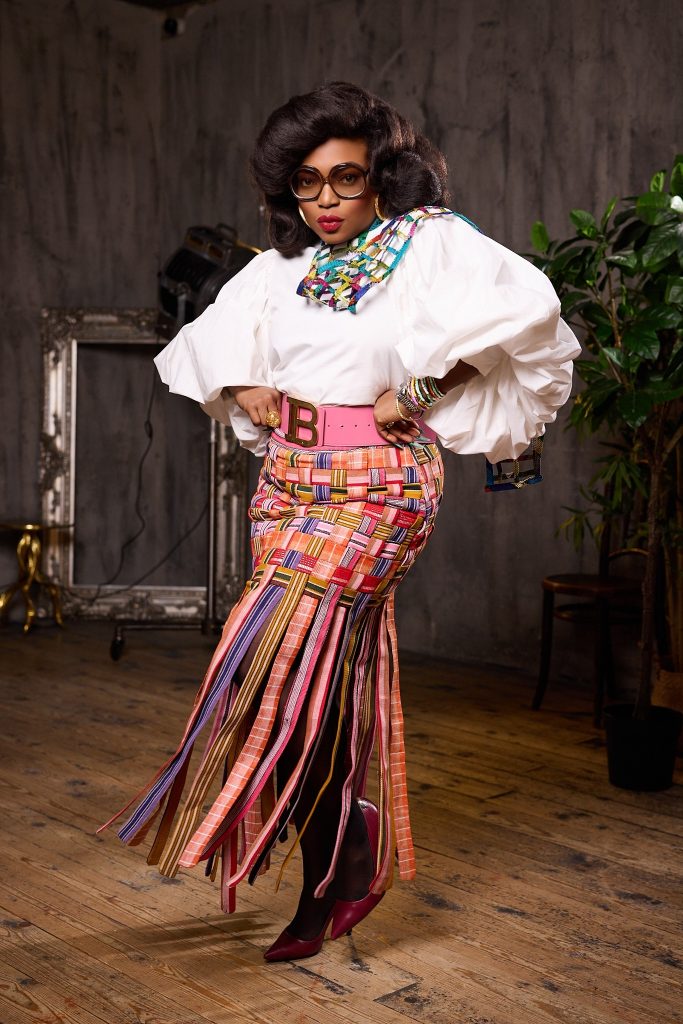
Nigerians are citizens of the world and being able to bring these influences together in my craft is so important to me and I’m super excited that I get to do that seamlessly. It is really quite beautiful especially for someone like me, who takes such great pride in being Nigerian and in being Yoruba. Yorubas are known to be fashionistas, to be stylish, to be tastemakers.
And I carry that DNA with me everywhere I go. I really want that to show in my work. And besides being Yoruba in particular, I am proud to be Nigerian, and someone that is also really eternally in love with the UK, having spent over 30 years of my life in the UK.
So, I am not having to choose one over the other but, I am blessed to be able to bring these two influences together.
What key differences do you see in how both markets engage with fashion and lifestyle?
The key difference is structure and how fashion in itself is approached in Nigeria. There are more barriers in the UK, and more structured competition. Whereas in Nigeria, the entry level is very low. Anyone can just decide one day to set up a fashion business and if luck is on your side, you know, you are competing well. So, both markets have that push and pull effect.
However, it’s really all about understanding the market and trying as much as possible to cater to the needs of that market, to find my feet as a brand and as a creator in these unique markets because sometimes, the rules that apply in Nigeria do not necessarily apply or work in the UK. So, it is really about understanding the environment that you are in and understanding the level that you want to play in.
African fashion is gaining global attention and I am in particular very excited to be playing a role there.
In your view, what is the future for digital influence within fashion and lifestyle?
I think it is unstoppable. We have seen some designers evolve, creating a whole collection using AI. We have seen AI shows. We have seen AI taking over some of the modeling that, you know, traditional models and photography and all of that. And I think it’s not going to stop. I think we have to start thinking about a way for these things to co-exist and co-exist in authenticity, making sure that the things that are culturally and traditionally important to us, like our weaving methods, putting together our aso-oke, our dyeing methods are preserved and not just digitally replaced.
Growing up, did you always know you wanted to work within fashion and lifestyle, or did that path unfold over time?
I think fashion and lifestyle have always been a part of my life, something I did effortlessly. I never thought about it as something that would be my career.
How did your early career experiences influence the way you approach fashion, business, and storytelling today?
I worked as an IT consultant. And then afterwards, I went back to study handbag making, eyewear making and the likes of it, to just really equip me in fashion and in business.
And my earlier work has allowed me to be able to document the things that are important to me and see how creating can become a business.
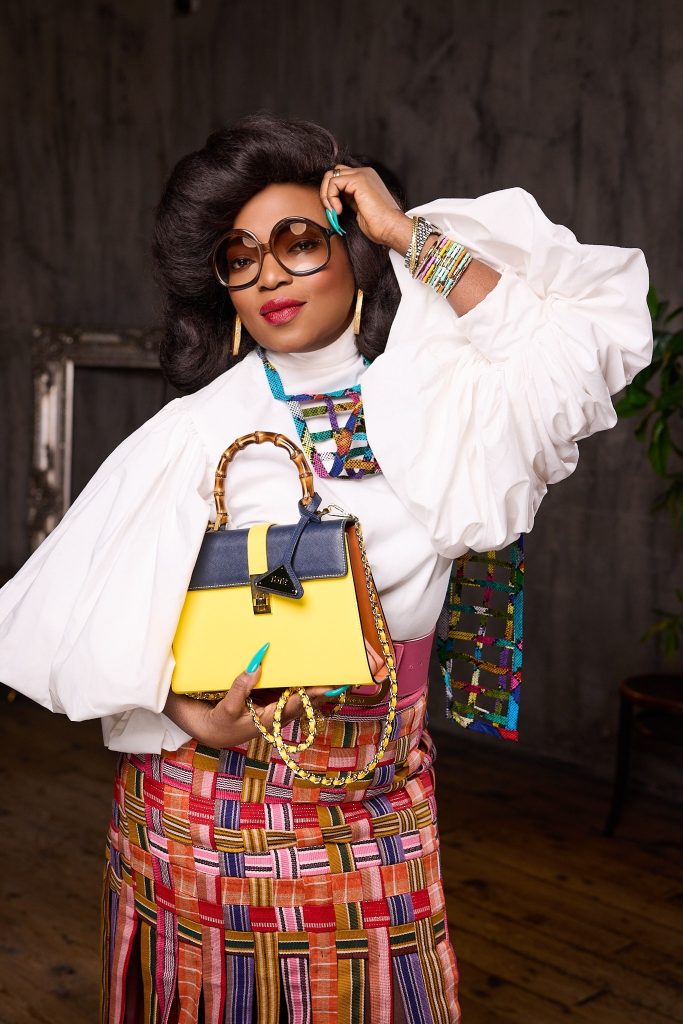
Your hairstyle has become a signature. What inspired it, and how long have you worn it this way?
I needed something that was easy and over time, I started to understand that if I wanted my natural hair to stay in place, I needed some hairpins. As I went along, things started happening and the hair started to take shape naturally.
I’ve always however loved the 1950s so it was easy for me to take on board hairstyle or inspiration from the 50s, but it was really about finding an easy way to wear my natural hair efficiently and without drama. It has indeed become part of my identity.
Your personal style is distinct and instantly recognisable. How did you discover what works for you?
I think my personal style was developed out of my love for the 1950s. I have always loved the 50s. I have always loved vintage lifestyle and I was just wearing things that I loved. Fashion pieces that I thought were really quirky and nice and somehow it became me and I became it.
Was there a moment when you became fully confident in your style identity?
So about seven years ago, I lost a lot of weight from a size 18 to a size 8 and I think I discovered a completely new me. I’d already had my hair in place, but I think that weight loss opened up a fresh level of confidence for me that was unbelievable that I was not expecting, but that I totally enjoyed. It made me want to be more visible and yeah it worked hand in hand with a look that I was already maintaining.
What does fashion mean to me beyond trends?
I think fashion means to me a language of conversation without speaking. You show up somewhere in what you like that represents your style, that represents who you are on the inside and how you want the world to view you. It is a window into so many things that you are about, without even saying a word. It is everything that you want to communicate to the world without saying a word.
Fashion is power to enter a space and control that space based on just the way you look. You can literally shift an atmosphere and I love that about fashion.
What inspires you outside of work?
I love traveling. I love food. I love shopping and I love to discover more about my heritage.
I love Yoruba language. I love to discover new proverbs and to engage. I love Igbo language as well.
I always brag that I’m the Yoruba Igbo girl.
What’s next for Bola Obileye?
I think life, more life, more blessings, legacy, teaching people, showing people how to enter this space, how to become a more confident person, how to enter into their calling. Honestly, there is nothing more beautiful than waking up to do what you were born to do. Finding your place in this life, it is incredible and I feel truly blessed to have found this space.
It took me a while to get here but now that I’m here, I’m not going to be standing on that mountain alone at the top. I’m going to be bringing people to the top as well. To make sure that we all discover and live out our purpose and make sure that our lives are empty of everything that we need to give to the earth before we leave this place.