Vanguard Allure

Top Menu

  • Vanguard

Main Menu

  • Home
  • Allure Magazine
    • Features
    • Magazine
    • Profiles
  • Allure TV
  • Celebration
    • Fashion & Style
    • Weddings
    • Lifestyle
    • Events
  • Wellbeing
    • Allure Woman
    • Healthy Living
    • Beauty
  • Happiness
    • Food
    • Shopping
    • Travel
    • Relationships
    • Career
  • News
  • Vanguard

logo

Vanguard Allure

  • Home
  • Allure Magazine
    • Susan Jumoke Fajana-Thomas: Leadership Beyond Borders

      September 6, 2026
      0
    • Ezekiel Adamu: Beyond The Ring

      August 16, 2026
      0
    • Stars with Hearts: Celebrities Changing Lives Through Charity

      August 9, 2026
      0
    • Ndidi Ukaonu: Leading By Impact

      August 2, 2026
      0
    • Zahinul Tafader: IT Expert Transforming Modern Organisations

      July 31, 2026
      0
    • Rev. Cole Chiori @80: Celebrating Grace & Purpose

      July 26, 2026
      0
    • Beyond Disabilities: Extraordinary Nigerians Breaking Barriers Against All Odds

      July 20, 2026
      0
    • Juliet Esiri: Championing Menstural Dignity

      July 19, 2026
      0
    • COLLECTION REVIEW: The Savannah Collection by The Ella Mo Brand

      July 16, 2026
      0
    • Features
    • Magazine
    • Profiles
  • Allure TV
  • Celebration
    • Fashion & Style
    • Weddings
    • Lifestyle
    • Events
  • Wellbeing
    • Allure Woman
    • Healthy Living
    • Beauty
  • Happiness
    • Food
    • Shopping
    • Travel
    • Relationships
    • Career
  • News
    • From Stitches to the Runway: Don Bosco Celebrates a New Generation of ...

      August 30, 2026
      0
    • The Winlos Unveil Prophet Suddenly 4, Take Children's Discipleship Campaign to the ...

      August 2, 2026
      0
    • Omobola Abioye to host Fireside Conversation in Brussels

      June 21, 2026
      0
    • WeMove Summit celebrates power of motion

      June 14, 2026
      0
    • EDEN REBORN: ‘Glamgirl By Sefiya’, A Couture Fantasy Where Fashion Becomes Mythology

      June 3, 2026
      0
    • Seinde Signature Introduces Luxury Perfume Bar Experience in Ikoyi

      May 7, 2026
      0
    • Seinde Signature Hosts Sarah Baker in Landmark Multi-City Fragrance Premiere in Nigeria

      April 14, 2026
      0
    • Faith Morey Takes The Grace Circle Beyond Borders with Accra Edition

      April 11, 2026
      0
    • World Autism Day: Foundation calls for early intervention in Children

      April 7, 2026
      0
  • PRACTISING SEXUAL CONTENTMENT IN MARRIAGE

  • Etinosa Idemudia: The Many Sides of a Nollywood Powerhouse

  • NONNISTICS ASCENDS: A NEW LANGUAGE OF QUIET POWER

  • Investment Vs Gambling 3

  • Jewellery Trends Defining Luxury Right Now

Trending
Home›Trending›The Nigerian Traditions We Are Slowly Forgetting

The Nigerian Traditions We Are Slowly Forgetting

September 6,2026
Share:

By Josephine Agbonkhese 

From family storytelling to speaking indigenous languages, some of the customs that once defined everyday Nigerian life are quietly disappearing. 

There was a time when a child did not need a smartphone to be entertained. All they needed was an adult with a good story, a compound full of cousins, or an elderly neighbour willing to share a proverb. 
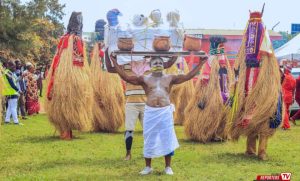
Evenings were different then. Children could sit around their parents and grandparents and listen to stories they had heard countless times but still wanted to hear again. There were tales of clever tortoises, wicked kings, brave hunters and consequences for disobedience. Between the laughter and suspense were lessons about honesty, courage, respect and kindness. 

Today, many Nigerian children are more likely to hear a bedtime story from YouTube than from their parents or grandma. And that is just one example of how some of the traditions that once shaped everyday Nigerian life are gradually disappearing. 

When greetings meant something 

In many Nigerian homes, greeting an elder was not optional. Children were taught to greet everyone properly, sometimes kneeling, bowing or prostrating depending on their culture and family tradition. 

A greeting was more than saying “hello”. It was an acknowledgement of age, presence and relationship. Even the simple act of asking an older person how they slept or how their day went demonstrated courtesy. 

Today, greetings still matter, but the ritual surrounding them is changing. A hurried “Good morning” while staring at a phone can hardly compare with the deliberate greetings of previous generations. 

For Lagos-based teacher and mother, Funmi Adeyemi, the change is noticeable. 

“Children today are not necessarily rude, but the way they show respect has changed. When I was growing up, you could not walk past an elderly person without greeting properly. Parents made sure you learnt it. Those little things taught children to recognise and respect people older than them.” 

The mother tongue is getting quieter 

Nigeria’s linguistic diversity is one of its greatest cultural treasures. Yet, in many homes, indigenous languages are increasingly taking a back seat. 

Some parents speak English to their children because they believe it gives them an advantage academically or professionally. Others simply find it easier because English has become the language of everyday communication. 

The consequence is that some children can understand their parents’ mother tongue but cannot speak it confidently. In another generation, even that understanding could disappear. 

“A language is more than words. It carries history, humour, identity, proverbs and memories. When a language disappears from a family, a small part of that family’s cultural inheritance can disappear with it,” a Professor of Linguistics at the Lagos State University, LASU, who preferred anonymity, explained. 

For Chinedu Okafor, a young professional who grew up in Lagos, the loss is personal. 

“I understand my parents’ language, but I am not as fluent as they are. That is something I wish had been handled differently when I was younger. English was emphasised so much that speaking the indigenous language sometimes felt less important. Now I realise that there are expressions and jokes in the language that cannot be translated properly.” 

The disappearing art of storytelling 

Before television became a fixture in Nigerian homes, storytelling was entertainment, education and family bonding rolled into one. 

Grandparents and older relatives were living libraries. They knew family histories, traditional songs, folktales and proverbs. Children learnt about their roots simply by listening. 

Today, there is still storytelling, but much of it happens through screens. Social media has made it easier to consume stories, but not necessarily to preserve the personal stories of families. 

Perhaps there is a need to ask older relatives more questions while there is still an opportunity. Who were the grandparents? Where did the family come from? What was life like when they were young? These are stories that no internet search can fully replace. 

Mrs. Grace Nwosu, a retired civil servant, remembers storytelling as one of the simplest pleasures of childhood. 

“There was always somebody telling a story. After dinner, children gathered around and listened. Even when the story was familiar, everybody wanted to hear it again. The stories taught children how to behave, how to think and how to understand life. Today, children have so much entertainment, but they may not be getting those lessons in the same way.” 

Food, family and the table 

Food was another important part of Nigerian culture. Recipes were passed from mother to daughter, grandmother to granddaughter, often without written measurements. You simply watched, tasted and learnt. 

Traditional meals were also opportunities for family connection. Today, fast food, delivery apps and increasingly busy lifestyles have changed how many families eat. 

Yet, food remains one of the easiest ways to keep culture alive. Preparing a traditional meal, learning the story behind it or teaching a child how a particular dish is made can preserve something that might otherwise disappear. 

Of course, progress is not the enemy of culture. Some traditions deserve to evolve, especially those that were harmful or unfair. But there are others worth holding on to. 

Perhaps the answer is not to turn back the clock, but to carry the best parts of the past into the future. 

Teach a child the family language. Ask Grandma to tell that story again. Visit an aunt without waiting for a ceremony. Learn how to prepare a traditional meal. Greet an elder properly. 

Because culture does not always disappear dramatically. Sometimes, it simply stops being practised. 

And perhaps the traditions preserved today will be the stories children thank their parents and grandparents for tomorrow. 

Tagsculturetradition
Previous Article

After the Fall: When Fear Steals an ...

Next Article

The Well-Groomed Man: Small Details That Make ...

0
Shares
  • 0
  • +
  • 0
  • 0
  • 0
  • 0

Related articles More from author

  • HappinessTravel

    Have you visited these heritage sites yet?

    March 5, 2026
    By CHIOMA
  • Allure MagazineEntertainmentNews

    ”Forget the big money, I’d rather stay here”- Actress, Toyin Aimakhu reveals why she won’t do a Hollywood movie

    April 27, 2017
    By allure1
  • Style

    The Luxury of Roots: Why Heritage is the New Prestige

    May 10, 2026
    By CHIOMA
  • LifestyleNews

    Tattoos and dreadlocks are alien to Nigerian culture- Police spokesman, Bala Elkana

    April 3, 2019
    By allure1
  • Event

    Culture meets fashion as My Q launches roots

    August 3, 2018
    By CHIOMA
  • Allure MagazineNews

    “We blame women for everything” -Toke Makinwa speaks of failed relationships

    July 5, 2017
    By allure1
0

  • African printFashion & Style

    MTLfashionworld’s “Genesis” gown blends elegance with simplicity—but is it memorable

  • Allure MagazineNews

    ”I married the male version of me” – Newly-wed, Laura Ikeji

  • Healthy LivingWellbeing

    Flu: When should you see a doctor?

  • 5312
    Followers
  • 0
    Likes

Timeline

  • September 12, 2026

    PRACTISING SEXUAL CONTENTMENT IN MARRIAGE

  • September 12, 2026

    Etinosa Idemudia: The Many Sides of a Nollywood Powerhouse

  • September 11, 2026

    NONNISTICS ASCENDS: A NEW LANGUAGE OF QUIET POWER

  • September 10, 2026

    Investment Vs Gambling 3

  • September 9, 2026

    Jewellery Trends Defining Luxury Right Now

Categories

Subscribe to our Newsletter

Sign up to receive email updates and to hear what's going on with our magazine!

  • Recent

  • Popular

  • Comments

  • PRACTISING SEXUAL CONTENTMENT IN MARRIAGE

    By CHIOMA
    September 12, 2026
  • Etinosa Idemudia: The Many Sides of a Nollywood Powerhouse

    By CHIOMA
    September 12, 2026
  • NONNISTICS ASCENDS: A NEW LANGUAGE OF QUIET POWER

    By Yemisi Suleiman
    September 11, 2026
  • Investment Vs Gambling 3

    By CHIOMA
    September 10, 2026
  • Chioma Jesus, Sammie Okposo, Midnight Crew set for #THUGGLA2018

    By CHIOMA
    April 24, 2018
  • American rapper, Kendrick Lamar wins Pulitzer prize for 2017 ‘Damn’ album

    By CHIOMA
    April 17, 2018
  • Afrobeat singer, Seun Kuti drops new album titled ‘Black Times’ 

    By CHIOMA
    April 23, 2018
  • Actor, Yul Edochie declares intention to run for presidency

    By CHIOMA
    April 23, 2018

Entertainment

  • September 12, 2026

    Etinosa Idemudia: The Many Sides of a Nollywood Powerhouse

  • August 25, 2026

    Country music Icon Dolly Parton dies at 80 

  • August 2, 2026

    The Winlos Unveil Prophet Suddenly 4, Take Children’s Discipleship Campaign to the Big Screen

  • June 6, 2026

    Subtle Intensity: Balikis Badru’s Figures Between Music, Memory, and Elemental Force

  • January 3, 2026

    Olajide Ajose, Davido, Omoni Oboli Make Visibility 50 Africa List

Follow us