In Lagos, Aforlyn Unwuchola Is Proving That Sustainable Denim Can Scale
By Josephine Agbonkhese
In Lagos, where fashion often balances urgency with improvisation, Aforlyn Unwuchola’s work stands out for its composure. Her label, Everytindenim, approaches sustainability not as an aesthetic shortcut, but as a technical challenge, one that demands precision rather than nostalgia.
The global conversation around denim is shifting. For decades, the industry focus was on mass production and uniformity. However, a new wave of designers are challenging this model, prioritising circularity over speed. Leading this charge in the West African market is Aforlyn Unwuchola, the Creative Director behind Everytindenim.
Since her breakout in 2021, Aforlyn has expanded beyond conventional ready-to-wear into a production model that is deceptively complex. Her work tackles one of fashion’s most persistent problems, textile waste, without resorting to aesthetic compromise.
Unlike traditional denim manufacturing, which is water-intensive, Aforlyn’s recent output focuses heavily on up cycling and textile manipulation.
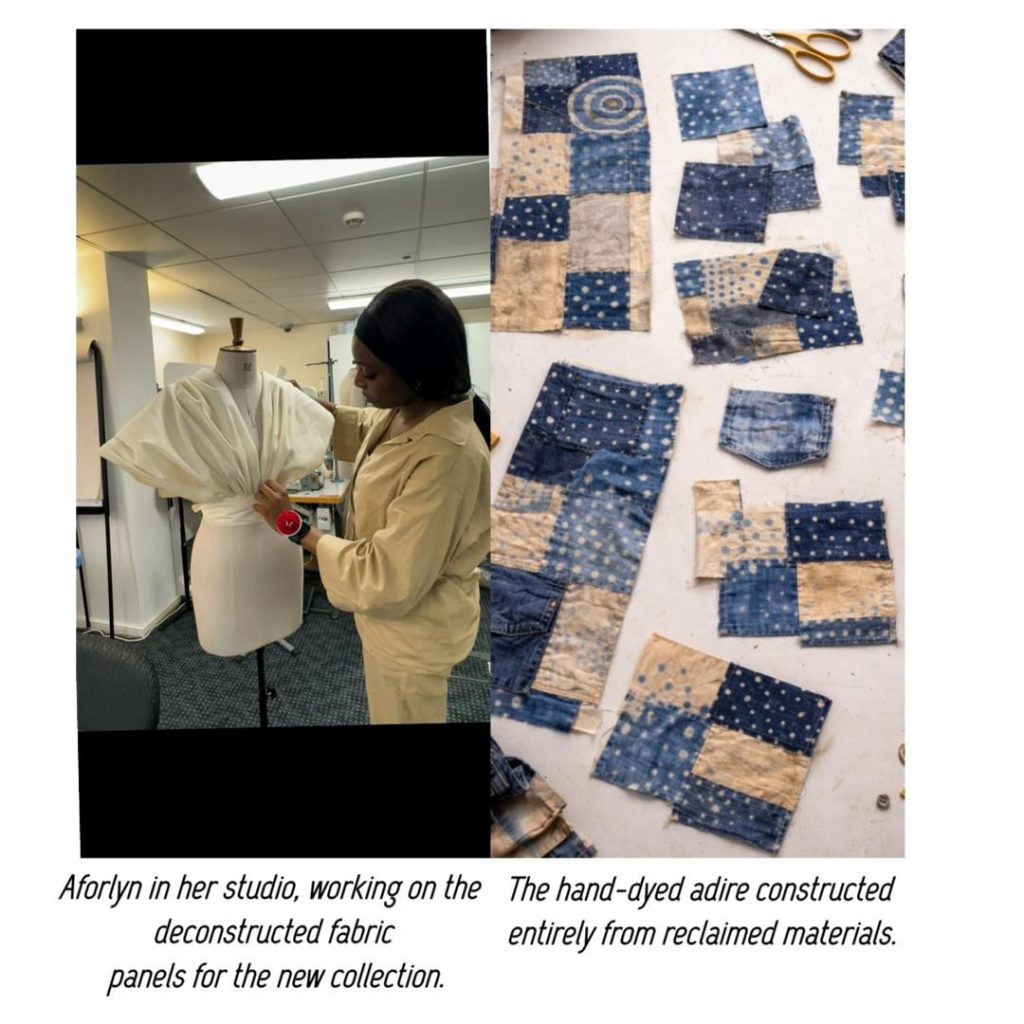
A study in structure the technical difficulty of this approach should not be understated, rather than cutting from fresh fabric, Aforlyn’s frequently works with reclaimed denim, deconstructing dead-stock garments and rebuilding them with architectural intent. This approach demands more than sustainability rhetoric; it requires a deep technical understanding of grain, tension, and balance.
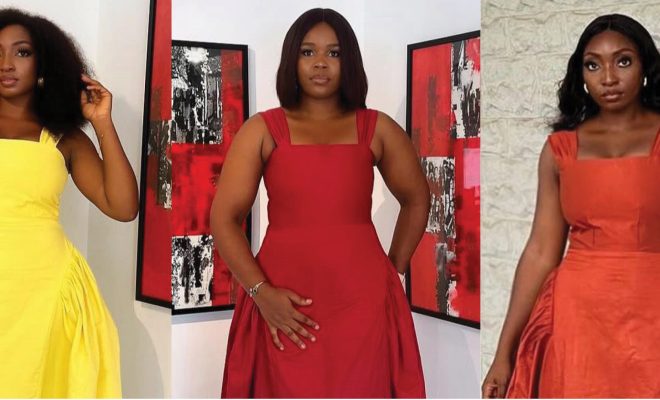
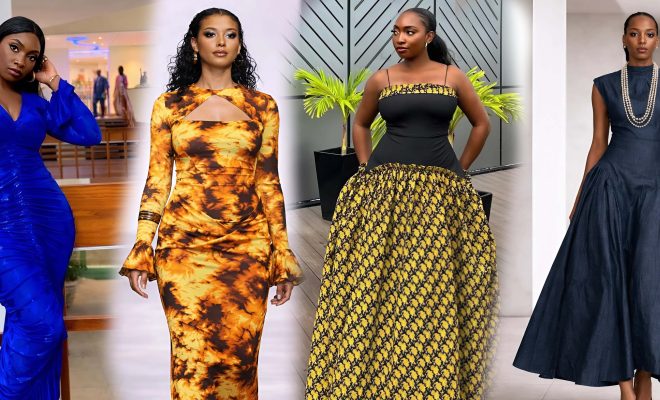
That technical confidence is visible in one of her best-sellers. The plunging neckline dress for instance avoids the rough, improvised look, DIY aesthetic often associated with up-cycled fashion. Instead, the seams are reinforced, and the silhouette is sharp. It is sustainable fashion that refuses to look “homemade.”
Bridging Culture and Utility Aforlyn also integrates local craft into the rigid structure of denim. By inserting panels of hand-dyed Adire into high-stress areas of the garment, she increases the flexibility and extending wear life. The result is denim that adapts, rather than deteriorates.
“It is about longevity,” Aforlyn explains. “Denim improves with age, and our design process is built to support that ageing process, not fight it.”
For the wider fashion industry, Everytindenim offers something increasingly rare: a scalable model built on value, not volume. Under Unwuchola’s direction, sustainability becomes not a limitation, but a design advantage.