
Favour Erere Eyeoyibo: Many hats one calling
By Jemi Ekunkunbor
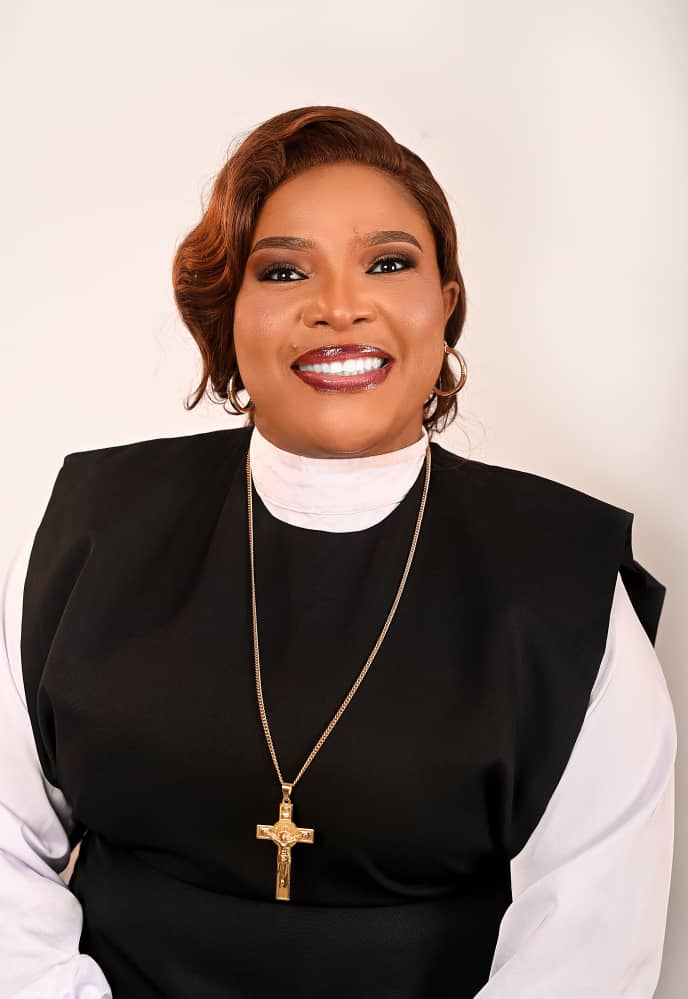
Dr. Mrs. Favour Erere Eyeoyibo is a woman of many parts, seamlessly wrapped into one. A dedicated educationist, behavioural therapist, and community development advocate, she also serves as a pastor with the Church of God Mission, Lekki, Lagos.
She also serves as a director of the Teens and Children’s Directorate of Pentecostal Fellowship of Nigeria, PFN, Ibeju Lekki province.
A trained educationist and proprietress of Sapphire Hall School, she holds a first degree in Religious Education from Delta State University, Abraka, and a Master’s in Adult Education (Community Development and Social Work) from the University of Lagos. She is currently pursuing a PhD.
With over a decade of experience in teaching, leadership, and counselling, she leads Sapphire Hall School while also offering therapy services for neurodivergent individuals as the Founder and Lead Therapist at Evaspace.
An author of three books—The Couple’s Corner, The Female Minister (2025), and Decree and Declare (2025)—she is a marriage and family counsellor who provides faith-based guidance to couples, families, and individuals.
A recipient of a Doctorate of Divinity and a member of the Association of Christian Theologians (ACT), she is a woman of the Word, both on and off the pulpit, guiding her congregation with compassion and sound doctrine befitting her calling.

On this special Easter Sunday, we sat down with her to unpack the state of the Church and reflect on the significance of Easter to Christians all over the world.
It’s another Easter Sunday, a very important date in the Christian calendar. How significant is this day to you and to Christendom?
Without Easter, there is no Christianity. It clearly shows the difference between Christianity and other religions whose leaders died and never rose—but ours rose. Easter is not a ritual; it is the proof that Christ rose from the dead.
The significance for us is that if the grave could not hold Jesus, it shows that we cannot be stopped. Without Easter, there is no gospel. Easter gives us victory over sin, victory over death, and victory over poverty.
What are your favourite Easter memories?
It has to be when I preach about Easter, because it comes with so much joy. When you consider what Christ has done, you realise that Easter is not a casual ritual where you eat eggs and wear new clothes—it is a sacred celebration.
One of my favourite Easter songs is In Christ Alone. It’s a powerful song for Easter. Towards the end, it says, “No power of hell, no scheme of man can ever pluck me from His hand.” That captures the essence of Easter.
Easter reminds us that we have been translated from the kingdom of darkness into the kingdom of His dear Son. It is also a time to be conscious of the cross—its importance and what it means to me.
It is not just a symbol; it represents a life that was given on my behalf, and now I have access to God. I do not need anyone to take my prayer requests to Him.

People of your generation took Easter very seriously, but do you think the younger generation is still connected to its meaning and significance?
To be honest, many of us have lost the significance of Easter. We need to keep reminding the younger generation not to remove the ancient landmarks.
Most times, we focus more on excellence in our churches than on the true teachings of Christ. There is distraction, there is entertainment, and spirituality is being diluted.
Easter should be a time to remind the younger generation of what Christ has done and how He rose. Otherwise, they may begin to feel that Christianity is boring—but it is not. We need to return to teaching the truth consistently.
Who is to blame?
There is a disconnect in our responsibility towards our children. Many of us are not as accountable as we ought to be.
This is a time for reflection—to go back and stay true to who we are. The preaching of Christ is not entertainment; it is a transformative message. It is about raising disciples and building people with the Word.
In my church, in March, we focused on reading the Bible. Teenagers were assigned the book of Ephesians. That way, the Word of God takes root in their hearts.
The festivities around Easter these days make it seem more like a commercial exercise than a religious one. Do you agree?
Yes, but Easter is a spiritual time. It is sacred, not just commercial. It is a time to reflect on all that Christ has done—blotting out our transgressions so we can have a clean slate.
How can clergy like yourself keep the message of Easter alive and relevant?
By refusing to dilute what God has taught us and by not removing the ancient landmarks. We may present the message in a way that is relatable to younger generations, but we must not lose its essence.
Christ was born, Christ died, Christ has risen, and He is alive—that is the message. Not motivational speaking, not performance, but Christ.
Easter teaches us about consecration and identity in Christ. At its core, it is about His sacrifice for humanity and redemption. It teaches us to love, to forgive, to give, and to stand for one another.
One key lesson of Easter is God giving His Son for the redemption of mankind. How can this be practiced in communities to foster bonding?
First, we must remember what Christ has done. Easter is a time to come together, reflect, and reconnect.
I remember during the COVID period, we celebrated Easter at home. It was a time to reflect, sing, pray for one another, study the Word, and share our burdens. That kind of fellowship strengthens bonds within communities.
How would you assess the current state of the Church?
It depends on the aspect you are assessing. The Church is not the building—the Church is the people.
It is time for us to remind ourselves of our essence. Hebrews 12 speaks about who we are called to be. We should not be shaken; we should be united, regardless of denomination.
The Church has its shortcomings, but we can be better and stronger. We must avoid pretense and stop tearing one another down, especially on social media.
Also, in many places, we talk more about “our papa” and “our mama” than about Christ. That should not be so. The Church must preach Christ—His death and resurrection.
We must also encourage believers to grow spiritually, not become dependent on others to pray for them. The Church can and should do more.
Are people still responding to the command to “Go ye”?
Yes, some are—but not as much as before.
Growing up, we had crusades, morning cries, bus evangelism, and street evangelism. There is still so much to be done. It goes beyond sharing tracts—we must actively tell people about Christ and take the message to the world, as Jesus commanded.
In recent decades, the Church has suffered at the hands of false prophets. What is being done to address this?
There is a need for accountability. Many challenges in the Church today stem from leaders who are not properly discipled or trained.
Just as we were trained for our professions, ministry also requires training. Some people enter through the back door, and it shows in their actions. There is a need for continuous training and retraining.
I also appeal to spiritual fathers and mothers to guide and correct their spiritual children when necessary. Truth must be spoken.

How rewarding or challenging is it for women in ministry?
It is both rewarding and challenging. Being a female minister comes with unique pressures.
At times, counselling men can be difficult due to ego. Some feel uncomfortable being guided by a woman. But despite the challenges, we keep pressing on.
My book, The Female Minister, addresses how women can find balance—making time for themselves while fulfilling their calling.
As the author of The Couple’s Corner, what would you say is the biggest challenge couples face?
There are many—lack of alignment, poor communication, assumptions, and the influence of social media.
Couples must first understand themselves before they can understand each other. Communication is key—time to talk, pray together, and hold honest conversations.
We also encourage structured family meetings where real issues are discussed openly. Intimacy is another critical area couples need to work on.
What do you think is largely responsible for the high rate of divorce among Christians today?
A lack of preparation before marriage. Many prepare for the wedding, but not for the marriage itself.
Marriage is a covenant, not a convenience—it involves you, your spouse, and God.
The Church also needs to address practical issues such as romance, intimacy, and expectations within marriage. These conversations are important.
Most churches lack professional counsellors. Why is this so?
It is a valid concern. Counselling requires proper training. Without it, people may counsel from personal bias or pain, which can be harmful.
The Church should invest in training and equipping counsellors. It is essential for healthy communities.

As a female minister, what challenges do you face?
There are many. One is receiving inappropriate messages from people who overlook the fact that I am a pastor.
There are also societal expectations—things you cannot do because of your role.
Additionally, ministry comes with both visible and unseen battles. After praying for or ministering to people, you may face spiritual or emotional backlash. At the same time, you still have to care for your family and manage daily responsibilities.
What message do you have for the Church at a time like this?
The Church must rise and not be lukewarm.