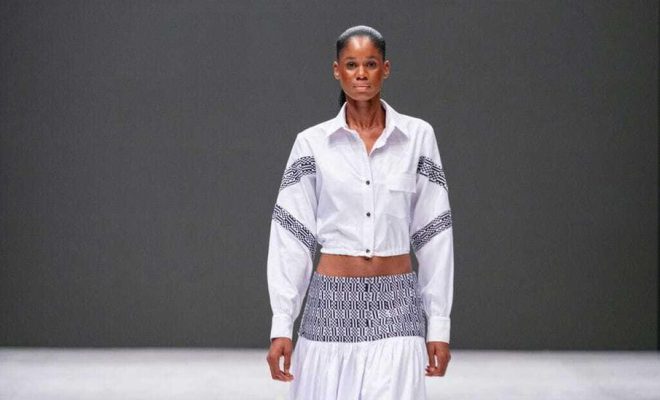
MALIKO – LOVING AFRICA FROM YOUR SOLE
In Africa, fashion has always been more than clothing. It is an identity and a storytelling technique. And among the many ways through which African fashion can be expressed, shoes hold a special place. Footwear carries us, I mean this literally.
From the luxury of the materials to the deep creativity of the makers, you have to love Africa through shoes.
And while footwear brands continue to push the boundaries of African sole crafts, one of them is boldly forging ahead to a global level. Maliko has consistently elevated indigenous craftsmanship since 2018.
The work of this brand is reflected through the perfect balance between footwear artistry and practicality.
In the latest SS23 collection, Maliko continues to explore the different ranges of African creativity through eco-friendly production methods and quality material sources. After seeing the pieces in this collection, it is quite easy to tell that the designer has a keen eye for detail. On a closer look, the strengths, weaknesses, and considerations for this collection will be explored.
If you haven’t learnt yet, this article is about to bring you closer to how footwear can honour tradition. What this means is that there’s more to shoes than protecting your legs through different landscapes. Let’s take a look at each piece, as each piece brings a unique perspective to this collection.
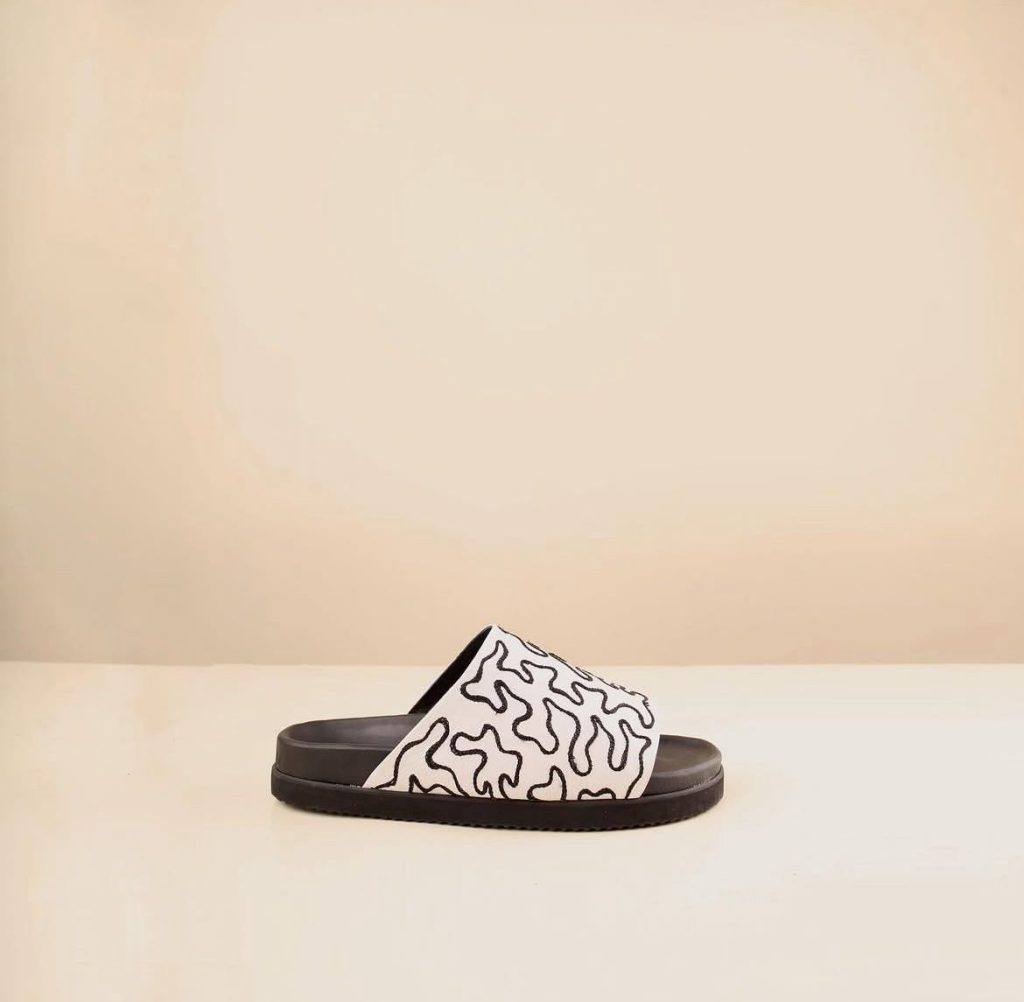
This sleek slide is a bold feature of a wavy black motif on a white background, paired with a solid black platform sole. The beautiful contrast of black and white makes this a versatile choice for footwear in streetwear fashion. With this simple design, this slide is timeless and easy to wear. Also, the platform soles add more weight for the wearer without making the feet ache.
One more thing that must be noted is that the wavy motif lines were most likely inspired by African aesthetics, where curvy lines symbolise energy or the flow of water. This is a fashion statement that proves that the brand is deeply inclined towards its heritage. Also, the brand’s production method is evident in the choice of materials. Each layer, that is, the strap and the sole, has a potential for being recycled as only eco-friendly materials were used.
Although the design is eye-catching, it still looks like something is lacking, especially in cultural depth. Aside from the motif design, there is no other resemblance to African patterns. If inspiration sources were traced, this footwear would fit more into a contemporary style.
I’ll suggest that for the straps, an African textile should be used. This will even make it a great choice of footwear for summer festivals and urban events.
Also, collaborating more with local creators, especially those who deal with Bogolanfini fabric, will make this a stronger representation of Africa.
Overall, this is a beautiful piece of footwear that has a long-lasting potential.
One person came to mind upon seeing this, Moses.
This second footwear in the Maliko collection is definitely not a recent design, but it is an upgraded one. With the orange leather and wide straps, this is a traditional design. As previously said, this is not a recent design, which proves that this footwear has the potential to be timeless. From the way the straps are neatly cut to the flat-heeled soles, the wearer will definitely feel very confident in this.
If you dig up a bit of history, the roots of this design can be traced back to African countries, such as Morocco, Ethiopia, and West African countries, especially Nigeria, where Hausa leather crafts are common. The orange leather has an earthy tone that makes it a perfect footwear for African lands. Kudos to the designers for blending nature with craftsmanship so beautifully.
From the looks of it, it is quite easy to tell that this is genuine leather. Also, the simple hand stitches show that the designers supports local leatherworkers who are still using traditional but efficient methods of footwear production. However, the wide straps might make it hard for people with narrow feet to enjoy wearing this. Moreover, the sandal can have more cultural depth by not being much like Birkenstock footwear.
To avoid this, I’ll suggest that subtle African details can be imprinted on the straps, and more natural elements like traditional jewellery can be added to highlight the beauty of this piece. Nonetheless, this sandal is bold and has a simplicity that positions it as a signature piece in an African-themed exhibition.
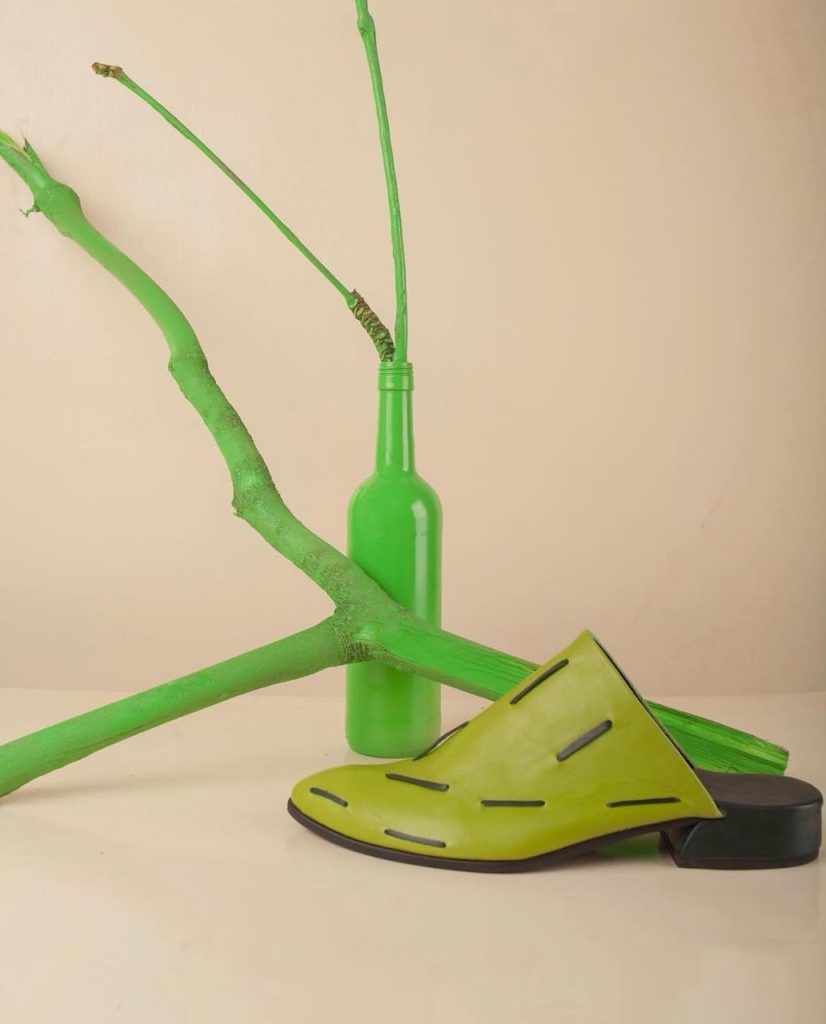
This lime-green mule is like a shining star in this collection. Crafted from leather with a solid low heel, this is the type of footwear that shows male sophistication. The colour is so vibrant and capable of making the wearer stand out in any gathering. The best part is that it is not limited to only one type of dressing; whether formal or casual, this footwear ticks every box.
The designers was obviously able to subtly reference traditional African carving with the line on the leather.
This is a raw cultural connection. Although mules are a Western trend, this one looks deeply rooted in African culture, and rather than looking trendy, it looks like something specially placed in a heritage museum. But the designers can make it better, especially in the area of comfort. While it’s visually appealing, a slight padding inside will create a good balance between comfort and aesthetics.
For this, the designers may choose to be inspired by other African brands, such as Dye Lab or Hamaji Studio.
There’s something playful about these choices of colours. Orange and red evoke joy. While the leatherwork itself is commendable, these colours make the footwear super attractive. However, it might look overwhelming if not properly styled with the right clothing.
And while the designers has decided to lean towards tradition with the line patterns on the design, this design is very minimalist. There is no real effort from the designers to tell an African story with this piece.
There are also no elements of this footwear that can be easily recycled. However, to make the piece more African, the designers can collaborate with local artisans from places like Senegal, where they have the Ngaye leather tradition. It is in this kind of craftsmanship environment that natural motifs can be added to represent the African energy.
After reviewing this collection, one thing is clear: the brand is creating something really special. Each pair of footwear looks intentional and carefully put together. This collection by Maliko shows that they have strong potential in the fashion industry. If the brand is putting this out now, in a couple of years, Maliko will be head-to-head with Nike and Sawa Shoes. I’m honestly excited to see their future ideas.