The Trouble with Simplicity: A Critical Look at Legit 03 Fashion’s “Elegance Design” Collection
By Yemisi Suleiman
When Legit 03 Fashion unveiled its Elegance Design collection back in December 2023, the fashion community held its breath.
The brand’s creative director and CEO, Chukwudi Okafor, has long been a quiet advocate for restraint in design, a man who believes that real sophistication lies not in abundance but in refinement.
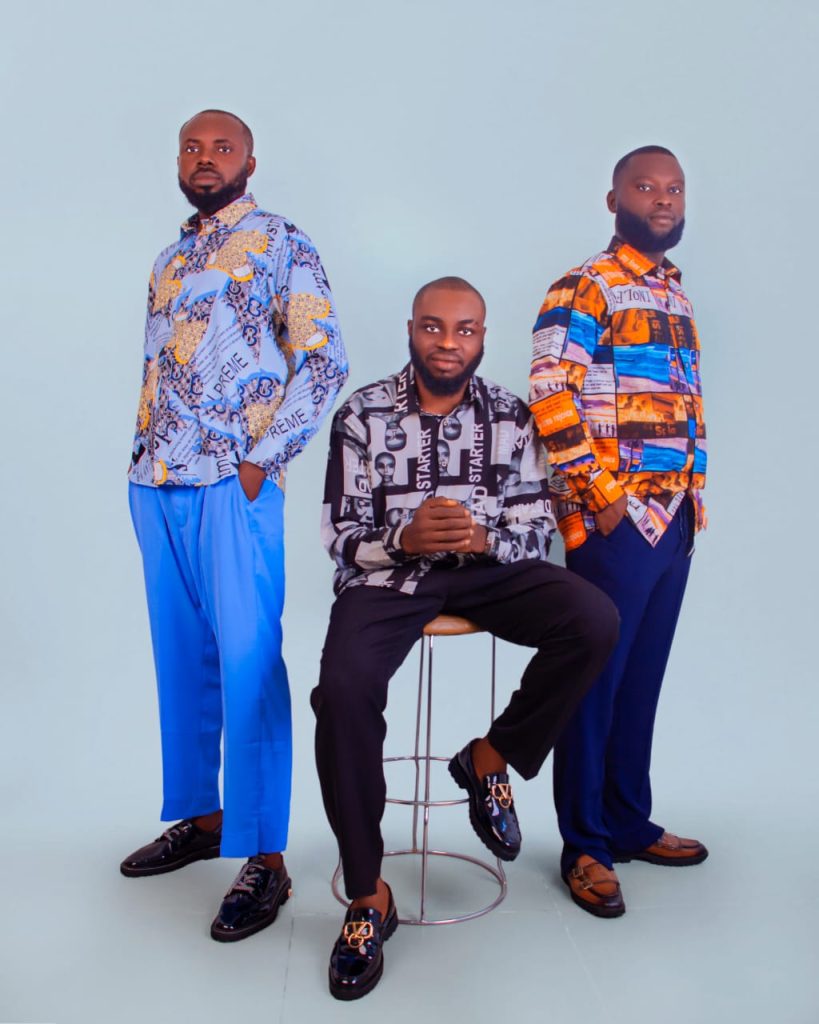
His latest offering, a capsule of six garments consisting of three shirts and three trousers, was presented as an ode to uniformity with distinction: one colour palette, six interpretations.
It sounded poetic, a meditation on simplicity and self-expression in equal measure. Yet what emerged on the runway was a collection caught between discipline and desire, technically sound but emotionally muted.
Okafor’s guiding principle, “singularity in diversity,” carries an undeniable intellectual appeal. In a fashion landscape overwhelmed by visual noise, his decision to build an entire collection around a single tone was both audacious and refreshing. It recalled the clean modernism of early Helmut Lang and the purity of Jil Sander, designers who understood that silence can sometimes speak louder than spectacle.
The problem, however, is that silence also demands precision, and in Elegance Design, the quiet sometimes tips into monotony. Each garment, from the tailored wide-leg trouser inspired by Nigerian menswear traditions to the structured formal shirt influenced by Western minimalism, is beautifully executed on its own. Together, however, they begin to blur, their subtle distinctions swallowed by the uniformity that was meant to define them.
There’s no questioning the craftsmanship. Legit 03 Fashion’s Nigerian roots are evident in every seam and stitch. Local artisans were enlisted to add hand-finished details to cuffs and waistbands, and the fabric, a mid-weight material chosen for both drape and durability, reflects Okafor’s ongoing commitment to sustainability.
The pieces move with quiet dignity, designed for longevity rather than trend. But as each look glided by, one couldn’t help feeling that something essential was missing. The garments spoke a language of restraint but lacked accent, the kind of detail that makes minimalism feel magnetic rather than merely polite.
The concept behind Elegance Design is clear and commendable: a capsule wardrobe distilled to its purest form, six garments meant to be worn interchangeably and infinitely restyled.
In theory, it is a statement against fashion’s relentless churn, a thoughtful nod to sustainability and intentional consumption. Yet concept alone cannot carry a collection; execution must provoke emotion as well as admiration.
Here, Okafor’s pieces risk veering too close to the academic. They read like a thesis on design discipline rather than a passionate declaration of style.
One can sense the intellect behind the work, the sketches, the prototypes, the measured thought, but not always the impulse, the instinct, the unexpected twist that transforms a garment from well-made to unforgettable.
And that is the paradox at the heart of Elegance Design. Its strength is its focus, but that same focus becomes its constraint. The trousers, particularly the slim and tailored wide-leg cuts, suggest a designer capable of balance and nuance, but the shirts never quite match their vitality.
Even the much-discussed hybrid style, half casual and half formal, feels tentative, more like a study in proportion than a confident statement.
The colour palette, consistent to a fault, begins to smother rather than unify, robbing the collection of contrast and rhythm. Minimalism, after all, is not about sameness; it is about refinement through difference.
Still, to dismiss Elegance Design as a misstep would be shortsighted. Okafor’s intentions are noble, and his vision for Legit remains clear: to create globally relevant essentials grounded in Nigerian craftsmanship and ethical practice. In an industry still wrestling with overproduction and cultural homogeneity, his insistence on fewer, better pieces is both timely and necessary.
What he needs now is not a new philosophy but a sharper edge, a willingness to let precision coexist with play, to let a touch of imperfection humanise the polish. The designer himself once described elegance as “a conversation between form and feeling.” With this collection, the form is immaculate. It is the feeling that needs to speak up.
Elegance Design, then, stands as both a success and a caution. It is an intelligent, carefully considered body of work that stops just short of transcendence. It showcases a designer with vision, discipline, and respect for tradition, one who is still learning to trust his instincts as much as his sketches. Perhaps that is why the collection lingers in the mind not as a statement but as a question: can simplicity ever be too simple? For Legit 03 Fashion, the answer may lie in what comes next.