IDUNNU TOMORI: Upskilling Nigerian Artisans
Words by- Josephine Agbonkhese
In the vibrant epicenters of American and Nigerian fashion, Idunnu Tomori stands as a beacon of relentless vision— to reposition Nigeria as a luxury production hub.
A licensed therapist with a BSc. in Psychology from Florida State University and an M.S. in Professional Counseling from Georgia State University, she dedicated over a decade to mending minds before channeling that ingenuity into building empires for Nigerian local artisans.
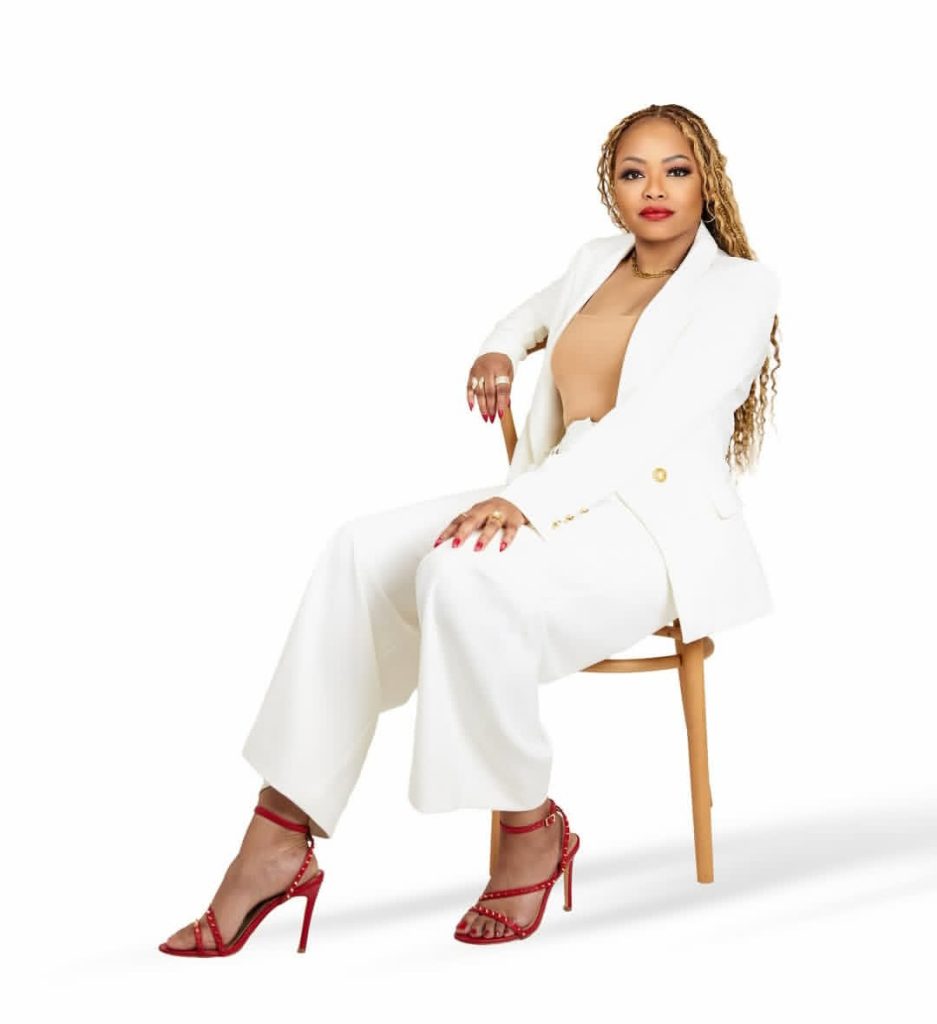
As CEO and Founder of Misayo House Jewelry, Tomori has styled luminaries like Rosario Dawson for Studio 189, curated runway spectacles at Atlanta Fashion Week 2023, and advised designers spanning Lagos to New York, including Ade By Femi and Harlem Fashion Row. Today, as Brand Advisor, Chief Experiential Officer, and the visionary force behind Maison T Consulting, she bridges continents with bold, unapologetic ambition.
Through Maison T’s bold “Made In Nigeria” initiative, Idunnu is forging a two-way bridge between U.S. luxury giants and Nigeria’s manufacturing brilliance. This initiative presents a rare opportunity to position Nigeria as a global hub for luxury production and to redefine how the world experiences African excellence. You can call it a movement for job creation, skills transfer, and wealth-building from within.
In this interview with Allure, Idunnu, who is also Founder of Oṣé Butter, a sustainable luxury body-care brand, speaks of her mission to connect leading U.S. fashion brands with Nigeria’s rich creative and manufacturing potential– artisans precisely, and of a future where African excellence is demanded.
Many talk about “taking African brands global.” You’re doing the reverse: bringing American experts into Nigeria. Why is that two-way street so critical right now?
The goal is to ensure our raw materials are utilised here in Nigeria and not the other way round. I want people to see our finished products in the international luxury market, and not just our raw materials. As a nation, we are blessed with raw materials of every kind but still struggle to maximize that blessing. Thankfully, a few brands are beginning to utilise our cocoa here in Nigeria. Hitherto, the practice was to export these cocoa products and then we buy them in the form of chocolates and other forms of beverages. Amid this practice, we still continue to complain about the exchange rates and the economy. So, why continue taking our resources and talents out of the country? Why not bring those that need our resources and talents here. The data has proven we can do it!
Walk us through the exact moment you realised this bridge had to be built— and that you were the one to build it…
I have been in several incubator programmes with McKinsey, Macy’s, Harlem Fashion Row, and some of the biggest buyers in the world. This is a conversation we’ve been having for the past three years; about how we can start producing in Africa—primarily Nigeria. Also, I have helped and seen many Nigerian brands break into the US luxury market.
What I’m primarily doing now is work with Nigerian artisans who are already producing these products— textile, ready-to-wear, leather, shoe, bags, beauty and home accessories.
For example, there is a handbag brand—Sawasawa which has been working with local artisans in Kenya. There are also American brands working with artisans in Cambodia. So, if these brands can work with artisans that do not have the kind of prestige we have, why are we not also making products for them in like manner? Several American brands have already indicated interest to be part of this project.
You’ve styled Rosario Dawson for Studio 189, managed runway shows for Atlanta Fashion Week and consulted designers from Lagos to New York. What do you think the global fashion industry still gets wrong about African luxury and excellence?
Part of what makes a product ‘luxury’ and ‘excellence’ is consistency. We have the talent but haven’t been able to give the consistency. That is what I’m solving with the ‘Made In Nigeria’ initiative by providing solutions to those problems holding us back.
Let us into the initiative…
The Black Luxury Market – “Made In Nigeria” project will deepen the diasporic elegance and cross-cultural influence in Nigeria by connecting Western fashion brands with Nigeria’s rich creative and manufacturing potential; particularly artisans.
What Maison T seeks to do is equip brands with end-to-end support; from strategic guidance to turnkey manufacturing partnerships, lowering costs, diversifying supply chains, and delivering an authentic, ethical “Made in Nigeria” foundation backed by vetted artisans, quality control, and full logistical management. This initiative presents a rare opportunity to position Nigeria as a global hub for luxury production and to redefine how the world experiences African excellence.
Currently, we’re developing the pilot project.
How do you hope to navigate the complex issue of producing in Nigeria which has actually driven many manufacturers outside?
To all the issues we have with producing in Nigeria, we have come up with solutions. Work culture for example is already addressed because I’m actually working with artisans that produce these products. So, instead of them working for me, I am actually working for them. That awareness transforms mentality and influences work culture naturally.
Second is lack of consistency. I’m already sensitising these artisans. Remember, we are not doing mass production. No! The goal is ‘luxury fashion’. So, the number of products to be produced is heavily streamlined. This project is more about high quality production.
For power supply, we are utilizing solar.
Now, this is why I often emphasise the need for government’s intervention in the creative industry. We need solar panels. What is being done in Abia State with the 24-hour electricity can be done in Lagos, Ibadan and everywhere else in this country.
When is the first set of products expected to enter the American market?
The first set of products will be all set by March 2026. My goal is to have some major American brands display their made-in-Nigeria products during New York Fashion Week and Atlanta Fashion Week in September and November, respectively.
How many artisans are you working with for this phase?
Five US brands and ten Nigerian artisans. We have textile, ready-to-wear, leather, shoe and bags, beauty and home accessories as mentioned earlier. For three days each week, the selected artisans will be going to their designated factory to work and then the other days, they focus on their personal jobs.
So, what are the criteria for selecting artisans who would be part of this project?
These local artisans will be hand-selected. The process has already begun. Many of them are already producing around Lagos and within the South West. The main strategy is that we’re pairing one artisan with one American brand each. Let’s say Baba Jide makes shoes and bags in Lekki Market. Baba Jide will now be paired with a leather brand in America so that Baba Jide starts creating for this brand. We’re in the process of tightening with a factory so that the artisans can spend at least three days producing for their brand in a structure that we’ve created. We already noticed most of these artisans are sharing sewing machines.
What parts of the country are your target areas?
Ibadan, Abeokuta and Lagos State. I wanted to work with Abia State because they already have the structures, but Ibadan, Lagos and Abeokuta came across as more accessible.
But what’s the motivation for an American brand coming to Nigeria to ‘produce’ when in America you’ve got better enabling environment?
Production in America is really expensive. We have the raw materials and also the labour here more than they do. Labour isn’t cheap in America. We still have the advantage as far as these targeted products are concerned.
Cheap labour, you said. But doesn’t that sound like another enslavement strategy?
No. Nigerians are too smart for that. This is pure empowerment; not the other way round.
When being sold in the United States eventually, will Nigeria be credited as the source of these products?
Yes, definitely. The products will carry the label ‘Made in Nigeria’ alongside the names of these big brands we’re partnering. When you buy such bags designed in Kenya, you find written on them things like ‘Handmade with love in Kenya’. With this initiative, even Nigerians will be inspired to wear made-in-Nigeria. Personally, every single piece of art in my home here in the United States came from Nigeria. I also have several handbags made in Nigeria.
You talked about training these artisans but how effective can such short-term training be?
Remember, these artisans are already talented in their skills. It’s just about improving these skills; you don’t make one dress properly today and improperly the next day. They already have the skills; it’s just about teaching them quality control and consistency. You need to see the pieces these people are producing already. They only need improvement.
Ten years from now, when someone Googles “Nigeria” and “luxury” in the same sentence, what do you want the top results to say?
It’s not just about luxury but about perception. Nigeria will not just be looked at as the home of Afrobeats, and everything fun like Detty December. Nigeria, as a nation, will become a luxury destination in other avenues such as travel and wellness experiences. We have it all here already!
A word of advice for the Nigerian government…
To the government of this country, I would say: you’re sitting on a goldmine—the talents of our people. If you can invest in healthcare, transportation, and efficient power supply, the narratives will be different. Our people will not need to travel to China to produce.
Tell us about your childhood, what city you grew up in and how it has shaped your personality…
My childhood was quite interesting; I come from the Ademola family in Abeouka. I went from being born into wealth and privilege pretty much to living in a homeless shelter with my mother and my sister. That’s a story I’ll have to share another time.
As a woman who is unapologetically Yoruba and Atlanta-raised, how do you carry and protect your own identity while bridging two different worlds?
I have the best of both worlds. Both my parents came from liberal but traditional backgrounds; so, my culture could never escape me. I grew up being picked on for being “African” but now, I’m the cool kid in the room for being ‘Nigerian’. I have gladly passed on that national pride to my kids.
What’s your most memorable experience so far in life?
My most memorable experience in life so far is a bittersweet one. My younger daughter, Tony, had a bone marrow transplant as a cure for her sickle cell. That’s a story for another time.
Who would you call your biggest inspiration and influence in life and business right now?
My biggest inspiration and influence right now is Emma Grede. She went from very humble beginnings to be one of the richest women in the world. For me, it’s not even the wealth (that’s the plus)—it’s her passion; so bold and fearless.
Can you tell us the best advice you’ve ever got and from who?
Best advice is from my father—“There’s no time, only opportunity”.
Describe your style?
Classic chic—sometimes with an urban twist. My go to is Black. I also like to switch up my hair depending on where I am in life.
What’s the most expensive fashion item you’ve ever bought?
My Cartier bracelet, which was a push present to myself after having my second daughter who’s now 13.
How do you relax?
I listen to music all the time; CeCe Winans has been on rotation. It’s been a rough few years, but I’m glad to be on the other side.
What are your top three travel destinations and why?
Anguilla; I call that my happy place. It’s so peaceful and beautiful. Marseill; it’s so rich in culture. Jamaica; the culture reminds me of home but only two-hour flight.
What is the most luxurious thing someone can do for themselves— not only with money?
Stay true to you and hold on to your peace of mind—it’s priceless.
What do you look forward to in five years?
For Nigeria to be one of the number one luxury destinations for everything!