Three Businesses That Won the Jerry Eze Foundation Grant—and Why They Deserved It
By Josephine Agbonkhese
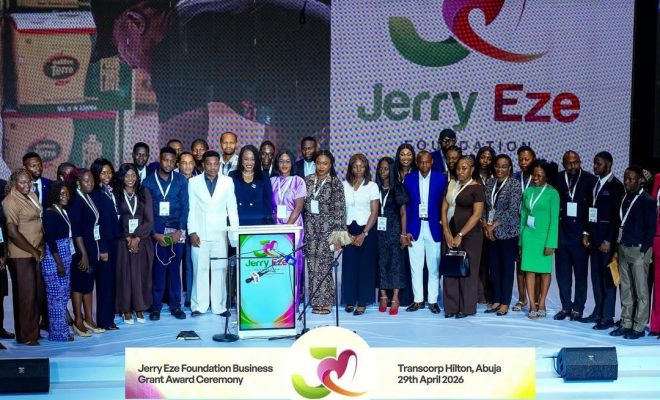
On the 30th of April, at the Transcorp Hilton in Abuja, the Jerry Eze Foundation disbursed one billion naira to two hundred and forty Nigerian entrepreneurs.
Over sixteen thousand had applied and were screened by KPMG. Less than one and a half percent made it through.
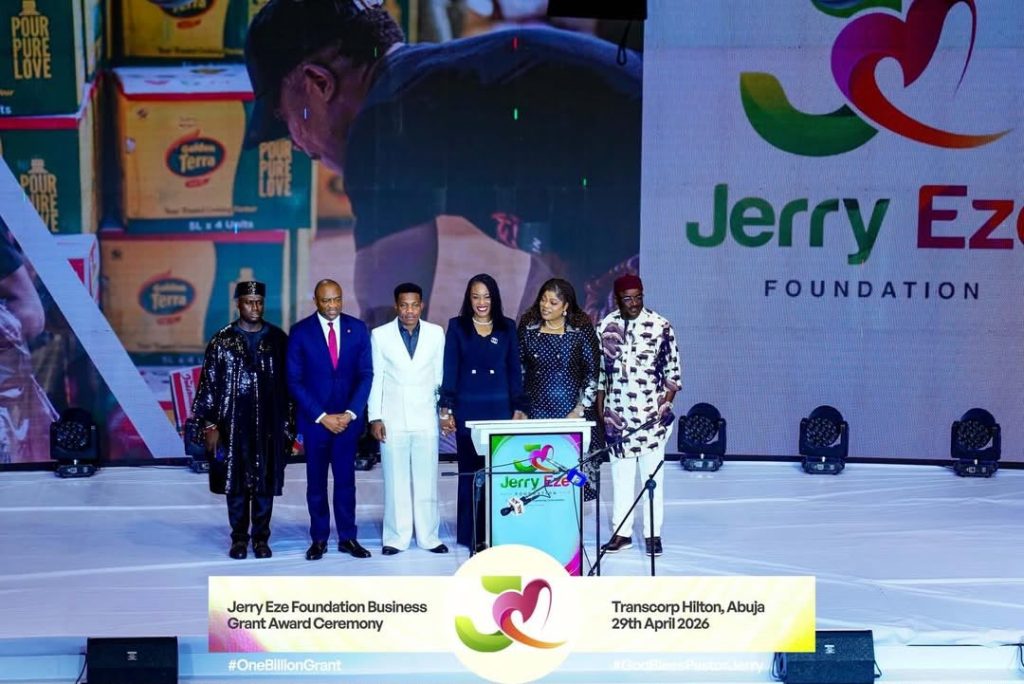
The ceremony was not a quiet event. The EFCC Chairman was present. Dr Oby Ezekwesili spoke. Business leaders and government figures filled the room. But the most interesting people in that room were not the ones on the stage. They were the two hundred and forty sitting in the audience, representing a business that a rigorous independent process had just confirmed as serious.
We spoke to three of them in the days following the ceremony. Across three different industries, three different cities, and three different ideas of what it means to build something truly valuable, their stories offer a deeper picture of Nigerian entrepreneurship. This one, the grant’s headline figures alone cannot capture it.
Adunola Farms, Ibadan — Agricultural Processing
Adunola Coker has been processing cassava in Oyo State for six years. Cassava processing is the part of the agricultural value chain that Nigeria has historically exported rather than developed domestically. Her operation takes raw cassava from smallholder farmers in the region and converts it into high-grade cassava flour, starch, and processed chips for both domestic food manufacturers and export markets.
The grant, she says, goes into cold storage infrastructure, the specific gap in her operation that limits how much raw material she can process before spoilage becomes a factor. It is an unglamorous investment. It will not produce a photograph or a press release. It will increase her monthly processing capacity by thirty percent.
This is what serious agricultural businesses need and rarely receive, the specific capital for the specific infrastructure gap that limits the next stage of growth.
Paciencia, Lagos — Luxury Leather Accessories
Joy Fache James founded Paciencia in 2021 and named it after the Portuguese word for patience. Five years later, the name has proven to be less a brand identity and more a prophecy.
The brand makes handcrafted leather bags in Lagos, real leather sourced in Nigeria, woven by hand using a signature detailing technique that runs across the collection as its visual mark, lined inside with leather rather than the cheaper fabric alternatives that most brands substitute quietly. The silhouettes are minimalist and architectural. The colourways are committed. The production is slow by design.
In five years, Paciencia has walked the Emmy Kasbit runway at Lagos Fashion Week, shown at fashion weeks in Scotland, Chester, and London, won the Wema Bank MSME Grant at Lagos Leather Fair 2025, one of three from sixty-six competing brands, and built a direct-to-consumer customer base across Nigeria, the UK, the US, Canada, and the UAE. Joy has also, alongside all of this, established She Creates Fashion Initiative, a women-centred fashion empowerment platform for emerging female creatives that she launched in January 2024 and has been running without fanfare alongside everything else.
The Jerry Eze Foundation grant is the most institutionally significant financial recognition the brand has received. It arrives in the brand’s fifth year, when the foundation is solid enough to support what the next phase requires.
Joy Fache James, reached the day after the ceremony, said what she always says after a recognition: the focus is on what comes next. The grant goes into production and development. The work continues.
Five years in, the record confirms what the work has been saying since the beginning. The KPMG process simply confirmed it more formally than most.
Kairos Tech Solutions, Port Harcourt — Software Development
Emmanuel Bright founded Kairos Tech in 2022 to build inventory management software for small and medium retail businesses in the Niger Delta region. His specific insight — that the inventory challenges faced by a pharmacy in Port Harcourt are structurally different from those faced by a pharmacy in Lagos, and that the software solutions built for Lagos businesses frequently fail to account for those differences, has produced a product with a growing client base across Rivers, Bayelsa, and Delta states.
He is twenty-eight years old. He has forty-three paying clients. The grant goes into expanding his development team from three to seven engineers over the next twelve months.
What Kairos represents is a deeply locally specific technology built for the particular conditions of a particular geography. This is the kind of business that the national technology conversation frequently overlooks in favour of the Lagos-centric platforms that attract the bulk of the sector’s press attention. The Jerry Eze Foundation process, which assessed across sectors and geographies rather than within them, found it anyway.
Three businesses from three different industries. Two hundred and forty total. What connects them is not sector or geography or stage of growth but the specific quality that a rigorous independent process tends to find in the businesses worth finding, the combination of a genuine proposition, the operational discipline to sustain it, and the clarity of direction to know what the next stage requires.
The Jerry Eze Foundation grant does not create businesses like these from scratch. Long before the applause, the headlines, or the funding, these founders were already doing the difficult, uncertain work of building something real.
What the foundation does is recognise them.
And in a sea of sixteen thousand applications, recognition becomes its own kind of labour is the careful process of identifying the few whose work carries both substance and possibility. This year, that process led to two hundred and forty entrepreneurs. These are three worth knowing.