Ezekiel Adamu: Beyond The Ring
By Yemisi Suleiman
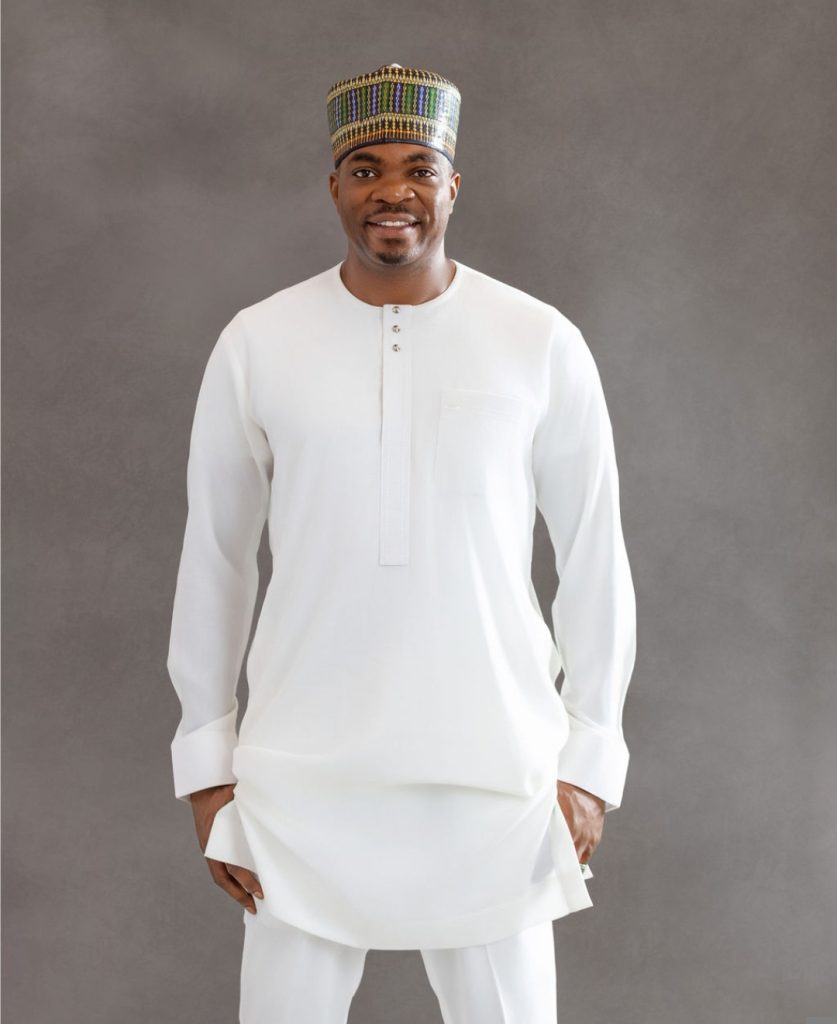
Dr. Ezekiel Adamu is an entrepreneur, events and hospitality executive, and founder of The Balmoral Group. A graduate of the University of Luton and the University of Portsmouth, he also holds a Doctor of Science (Hon.) in Business Administration and Corporate Governance. With more than two decades of experience in creating world-class experiences, Adamu has built a reputation for turning ideas into platforms that bring people, businesses and communities together.

For him, success has never been simply about building businesses. It has always been about creating opportunities, developing people and building institutions that can stand the test of time.
Today, he is taking that vision into boxing through “Chaos in the Ring,” a platform created to give Nigerian fighters greater visibility and opportunities while positioning Nigeria as a global destination for the sport.
In this conversation with Vanguard Allure, Adamu reflects on his entrepreneurial journey, the inspiration behind Chaos in the Ring, the need to build a stronger ecosystem for Nigerian boxing and more.

What first drew you to boxing, and when did you decide it was something you wanted to invest in beyond being a fan?
People often assume my journey into boxing began with boxing, but it actually began much earlier, with sports itself.
I grew up in a sports-oriented family. My father dedicated a significant part of his career to sports administration in Nigeria, so from a very young age, I was surrounded by athletes, administrators and conversations about sports. It wasn’t something I watched occasionally; it was part of my environment and upbringing.
Looking back, I realise those experiences shaped how I viewed sports, not just as competition, but as a platform capable of transforming lives.
Even before Chaos in the Ring, we had organised football events and built football viewing centres because I’ve always believed sports have the unique ability to bring people together. It creates shared experiences, builds communities and inspires people in ways very few things can. But boxing was different.
The more time I spent around boxing, the more I appreciated the discipline, sacrifice and resilience it demands. Every fighter who steps into the ring carries years of unseen preparation, setbacks and determination. In many ways, that mirrors entrepreneurship. You prepare relentlessly, face adversity, adapt and keep moving forward.
Over time, I stopped looking at boxing simply as a sport and began seeing it as a platform for something much bigger. I saw an opportunity to create an ecosystem that could develop athletes, attract international partnerships, stimulate tourism, create employment and reposition Nigeria as a serious destination for world-class boxing. That was the turning point for me.
What inspired the creation of Chaos in the Ring?
Interestingly, Chaos in the Ring wasn’t something I planned years in advance. It grew out of curiosity and a desire to create a different kind of fan experience.
Coming from an experiential events background, I wanted to organise a premium viewing experience around one of boxing’s biggest nights, the Anthony Joshua versus Daniel Dubois fight. Rather than simply putting up a large screen and showing the fight, I wanted fans to feel the excitement of live boxing before the broadcast.
To achieve that, we decided to stage professional boxing bouts before the main event. That meant obtaining a professional boxing licence and working with officials and fighters to bring the experience to life.
What happened that evening changed everything. Watching those fights, I was genuinely surprised by the quality of Nigerian boxing talent. Some of the fighters displayed extraordinary technical ability, incredible discipline and tremendous potential.
I remember thinking to myself that many of these athletes deserved to be performing on much bigger stages. But what shocked me even more was discovering how little they earned. These were men dedicating their lives to their craft and making enormous sacrifices, yet the financial rewards were nowhere near commensurate with their talent.
That stayed with me, and I realised the problem wasn’t talent. The problem was the ecosystem.
There wasn’t enough commercial investment, media attention, sponsorship, storytelling or international exposure to support these athletes in the way they deserved. That was the moment boxing truly captured me. What began as an experiential viewing event became something much bigger.
Today, Chaos in the Ring isn’t simply about organising fights. It’s about building an institution that elevates athletes, attracts investment, creates jobs, strengthens tourism and demonstrates that Africa can produce sporting experiences that rival the very best in the world.
We didn’t create Chaos in the Ring because Nigeria lacked great boxers. We created it because great boxers deserved a great platform.
The maiden edition generated significant buzz. Looking back, what moments made you most proud, and did the event meet your expectations?
The buzz around the maiden edition was certainly encouraging, but it wasn’t entirely unexpected. At Balmoral, we’ve spent years producing world-class experiences. Creating memorable events is part of our DNA, so we already had the team, systems and expertise required to deliver a premium production.
For me, however, the production wasn’t the biggest takeaway. The fighters were.
Going into that first event, I expected to learn about the boxing business, not to witness such an incredible level of talent. There were fighters displaying exceptional technical ability, remarkable discipline and genuine world-class potential.
As I watched them compete, I kept asking myself, “Why aren’t more people seeing this? Why aren’t these athletes receiving the recognition and opportunities they deserve?”
That became the defining moment for me. The lights, stage and production were important, but they weren’t the peak for me. The talent was.
That evening reinforced something I now believe deeply: Africa has never lacked talent; what we’ve often lacked are platforms that consistently elevate that talent to the global stage.
So yes, the event exceeded my expectations, not because of the audience numbers or production quality, but because it confirmed there was something far bigger to build than a successful boxing event. It confirmed there was an entire ecosystem waiting to be transformed.
What were your biggest takeaways from this year’s edition, and what improvements should fans expect in future editions?
One of the biggest lessons this year’s edition reinforced is that excellence is never a destination, it’s a continuous process. Every event gives us new insights, new data and a clearer understanding of how we can improve.
One thing we’ve learned is that today’s audience wants more than great boxing. They want a complete experience. That means deeper storytelling around the fighters, stronger fan engagement, enhanced digital experiences, better broadcast production and more international participation.
Our ambition isn’t simply to organise bigger events. It’s to build a platform that continuously raises the standard of African boxing and demonstrates that Nigeria can consistently deliver sporting experiences at a truly global level.
Many believe boxing has not received the attention it deserves. What needs to change to develop the next generation of champions?
I believe the conversation has to move beyond producing champions in the ring to building champions through the right ecosystem. Talent has never been Nigeria’s challenge. We possess extraordinary athletes with the discipline, determination and ability to compete anywhere in the world. The challenge is creating an environment where that talent can be consistently discovered, nurtured and rewarded.
Developing champions starts at the grassroots, and this is where institutions like the Bank of Industry come in. Partnering with BOI has helped us discover amateur talent, create training programmes, provide better coaching, improve sports science and create pathways for young fighters to progress into the professional ranks.
An excellent example is Michael Babalola, who, before making his professional debut on the Chaos in the Ring platform, had already built an impressive amateur career, competing in more than 70 amateur bouts and winning a gold medal at the National Sports Festival.
Through the support of this ecosystem and our partnership with BOI, his professional debut at our recently concluded event ended in victory. He continues to build a promising career that can only go up, so let’s watch that space.
If we get the ecosystem right, champions become a natural outcome.
One of the earlier highlights was the ‘Peace Fight’ initiative. Why was it important to use boxing as a platform to promote peace, unity and social impact?
I’ve always believed that sports are one of the greatest unifying forces in the world. It has an incredible ability to bring together people who may differ in culture, ethnicity, religion or background, yet for a few hours they become one audience, united by a shared experience.
There are very few platforms that can do that as powerfully as sports.
For us, the Peace Fight Initiative wasn’t simply another segment of the event. It reflected the values behind Chaos in the Ring.
Boxing is often viewed purely as a contest of strength, but I believe its greatest lessons extend far beyond the punches. It teaches discipline, resilience, respect, self-control and perseverance—qualities that build stronger individuals and, ultimately, stronger communities.
Nigeria is blessed with extraordinary diversity, and I believe that should be seen as a source of strength rather than division. If sports can create moments where people celebrate together, support one another and see each other first as fellow Nigerians, then it is already contributing to something much bigger than entertainment.
What practical steps are needed to positioning Nigeria as a global boxing destination?
The first step is changing our mindset. We have to stop thinking in terms of isolated events and start thinking in terms of ecosystems.
A global boxing destination isn’t built because one successful event takes place. It’s built through consistency, infrastructure and long-term commitment.
We need stronger grassroots programmes to identify talent early, better training facilities, continuous education for coaches, referees and administrators, greater private-sector investment, stronger government support, world-class venues, improved sports science and consistent media coverage that tells African stories to global audiences.
Most importantly, we need to create sustainable commercial opportunities for athletes. No athlete should have to choose between pursuing excellence and earning a decent living.
International collaborations, including your partnership with former world champion Amir Khan and DAZN, have elevated the profile of Chaos in the Ring. How crucial are such partnerships to the future of African boxing?
They’re absolutely essential because no industry reaches its full potential in isolation. The future belongs to collaboration.
Working alongside respected figures like Amir Khan and global organisations such as DAZN is about much more than prestige. It’s about exchanging knowledge, raising standards and creating opportunities for African athletes to compete on bigger stages, while also inviting the world to recognise the incredible talent that already exists here.
Celebrity boxing has become a global trend. How do you balance entertainment value with preserving the integrity and competitiveness of professional boxing?
Entertainment has always been a huge part of sports. If you look at the biggest sporting events in the world, they are successful because they combine elite competition with unforgettable experiences.
I don’t think entertainment and professional boxing are in conflict. The key is understanding that they serve different purposes.
Celebrity boxing can introduce new audiences to the sport, creating curiosity, attracting sponsors and ultimately increasing viewership. Professional boxing, however, must always remain the foundation.
If you had the opportunity to bring any three boxing superstars—past or present—to headline Chaos in the Ring, who would they be and why?
If I had to choose three, my list would be Muhammad Ali, Mike Tyson and Anthony Joshua.
Together, they represent three qualities that define great sporting platforms: purpose, excellence and inspiration. Those are the exact values we want Chaos in the Ring to embody.
Take us back to your early years. What was young Ezekiel Adamu like growing up?
I was actually a very quiet and reserved child. I enjoyed being around people, but I wasn’t the loudest person in the room. I was naturally observant. I spent a lot of time watching, listening and learning.
In retrospect, I do believe it’s shaped the leader I’ve become today because you learn more when you listen than when you speak.
I also grew up in a home where education and hard work were non-negotiable. My mother was a teacher, and my father was a lecturer before moving into sports administration. They believed deeply in creating opportunities, not waiting for them.
Although they both had professional careers, they also ran businesses on the side to provide the best life they could for our family. They involved us from an early age and, without realising it then, they were teaching us entrepreneurship.
That mindset stayed with me.
How did those formative experiences shape the man you are today?
There are a few defining moments that shaped me. One was watching my father’s journey. Moving from being a lecturer to taking up leadership role in sports administration, taught me that discipline, consistency and service can completely change the trajectory of a family’s life.
Another defining experience was going to boarding school. As someone who was naturally quiet and reserved, leaving home was difficult. I struggled to adjust and, like many young people, I experienced bullying.
Eventually, I had to leave that school because I simply wasn’t coping. At the time, it felt like failure, but now I see it very differently.
While it was indeed a study in resilience, it also taught me empathy at a foundational level. Today, whenever I meet a young person struggling to find their place, I understand that feeling because I’ve lived it.
Books have also played a significant role in shaping my thinking. I’ve always been an avid reader, particularly autobiographies and books on leadership, business and personal development.
I realised early that you don’t have to make every mistake yourself. You can learn from people who have gone before you.
When I connect all those experiences together—my parents, entrepreneurship, boarding school and reading—I realise they all pointed me towards the same lesson:
Growth isn’t something that happens to you. It’s something you intentionally pursue.
Where does your creative drive come from?
For me, creativity begins with God. That’s my personal conviction. I believe the Creator has placed within every human being the capacity to create, innovate and contribute something meaningful to the world.
Our responsibility is to discover that gift and use it in service of others.
When you’re not planning events or promoting boxing, how do you relax?
Because my work is so people-oriented and fast-paced, I value moments of stillness.
The best way for me to relax is to travel somewhere completely unfamiliar—places where nobody knows me, where there are no meetings, schedules or expectations.
Those moments allow me to disconnect from the noise and reconnect with myself.
I also enjoy spending time with my family. They keep me grounded and remind me that success means very little if you don’t have meaningful relationships to share it with.
Beyond that, I genuinely enjoy my own company. I don’t always need activity to feel fulfilled. Some of my best ideas come in moments of solitude, whether I’m reflecting, walking or simply sitting in nature.
Nature has a remarkable way of putting everything back into perspective.
What does an ideal weekend look like for you?
An ideal weekend is actually very simple. If I’m not travelling, I enjoy spending quality time with my family, reading a good book, enjoying great Nigerian food and creating space to think.
So my ideal weekend isn’t necessarily about doing more, but creating the mental space to see further.
What habits or routines help you stay focused while managing multiple businesses and large-scale events?
The first habit is protecting time to think in order to make the right decisions. That requires reflection, clarity and discipline.
The second is continuous learning. Finally, I try to keep every decision connected to a larger purpose.
What passions keep you inspired—travel, music, books, food or something else entirely?
If I had to choose one word, it would be curiosity! Ultimately, though, what inspires me most is learning.

Years from now, what legacy do you hope to leave?
If, years from now, people remember me as someone who made a meaningful difference, I would consider my life well lived.
I want to be remembered as someone who changed the way the world sees Africa—not through speeches or slogans, but by building institutions that demonstrated what is possible.
I want my work to stand as evidence that African organisations can create experiences, platforms and businesses that compete with the very best in the world while remaining deeply rooted in our values and identity.
More importantly, I want to be remembered for creating opportunities.
If my life’s work inspires even one generation to think beyond limitations and build with courage, integrity and excellence, then I would consider that a worthwhile legacy.
At the end of the day, legacy isn’t about what you accumulate. It’s about what continues to create value long after you’re gone.