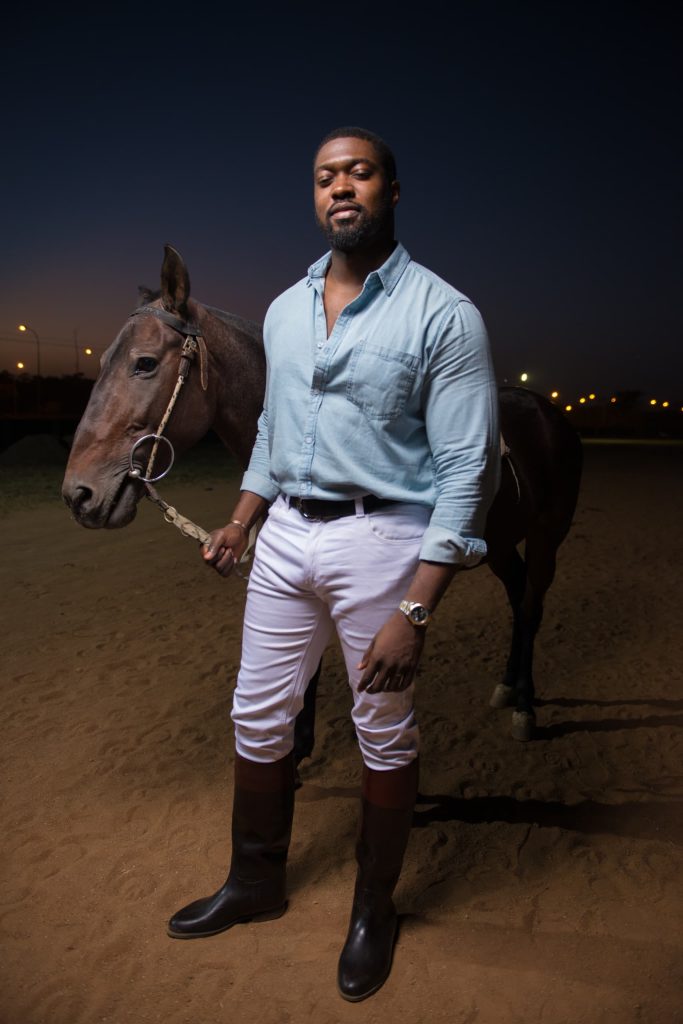
BUFFY OKEKE-OJIUDU: Eye on transforming agriculture
By Josephine Agbonkhese
Award-winning social entrepreneur and the Chief Executive Officer of the Zebra Group—an organisation with interests in agriculture and media, Buffy Okeke-Ojiudu, identified the age-long challenge of sustainable income crippling small-holder farmers in Nigeria,
and set out, passionately, to rewrite the narratives.

To drive this mission, he founded the Zebra Agro-Industries, an agro-innovation and technology company aimed at creating sustainable jobs, building rural economic development, and expanding the income of small-holder farmers.
Buffy has since clinched several awards for his contribution to the agricultural industry. This includes the prestigious United Nations Food and Agriculture Organisation (FAO), ‘World Food Forum Global Innovation of the Year’ award. In 2023, he also received the Startup Innovation Award (Better Production category)from UN World Food Forum in Rome.
Publisher of the Abuja Times Newspaper, the devout philanthropist also sits as the Chairman of the Ojiudu Foundation– a philanthropic organisation focused on creating opportunities for underprivileged youths in West-Africa.
He holds a degree in Law from the University of Sheffield and a Master’s from Harvard University, both in the United Kingdom.
In this interview, Buffy proffers solutions to Nigeria’s current food insecurity, reflects on work, childhood, style and much more.
What influences and experiences contributed to shaping the man you are today?
My family background had a significant influence on me. My family origins are strongly connected to entrepreneurship and public service. Besides being very successful businessmen, both my paternal and maternal grandparents also served in public positions. My paternal grandfather served as Minister of Agriculture in the 50’s – 60’s, while my maternal grandfather served as a Director within the Ministry of Agriculture in the 60’s. As a boy, I grew up under the umbrella of the family business, and as a first son, I often followed my father to business and community meetings from a very early age. I learnt quite a lot from simply tagging along. In particular, I learnt the importance of communal success. My father and grandfather alike would often say “Success in isolation is no success at all”.
Nigeria is supposed to be an agro economy aside an oil-producing state. Are we supposed to be suffering food insecurity like we now do?
Frankly, there is no good reason why we should be experiencing food related challenges. We are gifted with a young energetic population and vast arable land. However, we have not adequately invested in our foundational agriculture infrastructure.
As you may know, it wasn’t always this way. In the 1960s, we took agriculture much more seriously. For instance, back then, Nigeria accounted for 40 percent of the world’s palm oil, making it the world’s number one producer, and 18 percent of world’s cocoa, placing it amongst the top three producers in the world. But today, the country is the sixth largest producer of cocoa and accounts for just five percent of global production.
In 2022, Malaysia earned about $29 billion from palm oil; whereas, Nigeria remains a net importer of palm oil. In the same year, Cote d’Ivoire earned $3.3 billion from cocoa, while Nigeria earned less than $500 million.
We just need to retrace our steps. We can do it again; and even better this time, leveraging modern technology and patient capital (Impact Investment).
In retrospect, what could have contributed to the food crisis we have in Nigeria today?
Aside from the insecurity challenges in certain regions that hinder farmers’ productivity, we have not adequately established the necessary last-mile value-chain systems and infrastructure that create access for smallholder farmers (who produce approximately 90% of our food) and processors alike. As a result, farmers experience low efficiency and profits, while food processing factories struggle to meet their raw material requirements. So, the underlying systems-based infrastructure on which we can build is almost non-existent; everything from accessible storage and logistics systems, to market transparency and access channels, etc. The gaps resulting from this infrastructure deficit worsens as our population rapidly expands, leaving us with more mouths to feed.
As an expert, how best can we address the current food crisis?
Amongst other things, we need to understand that large centralised solutions might not always be the right model for our unique situation. In reality, our farmers are vastly spread and operate in small groups within rural provinces across the country. So, we need to build systems that accommodate these realities.
Our solutions and systems need to be somewhat decentralised and closer to them, to allow easy access at least on a local government level. Such systems will also be easier to manage and maintain.
We can see the current challenges with our existing national storage and processing infrastructure, which in some cases have been found to be both poorly located and proven rather expensive to operate. As a result, we continue to experience significant post harvest spoilage, compounding our existing production challenges. Experts estimate that Nigeria loses between 4 and 9 billion dollars per annum to spoilage, and yet, we are struggling to feed ourselves.
Could you tell us more about Zebra Agro-Industries and its operational philosophy?
Zebra Agro-Industries is an agro innovation company focused on building modern innovative and scalable solutions to address persisting food-systems challenges on the continent. Our efforts have seen us develop and operate food processing factories and supply chain systems as well as advisory to government, international development and Impact Investment partnerships partners. The ‘Zebra CropBank’ solution is one of the recent solutions to be birthed by these efforts.
Tell us about the Zebra CropBank, its structure and success so far…
Yes, in response to some of the challenges we have discussed, Zebra established ‘Zebra CropBank’ which is constructing the last-mile infrastructure needed to help tackle food waste, improve farmer fortunes, and hopefully, help transform agriculture in Nigeria and beyond. We are building tech enabled storage and processing facilities at farmgate in dozens of locations in Nigeria and Cameroon at first. These storage facilities, which we call “Banks,” make it more efficient, accessible, and transparent for farmers to manage, store, and monetise their produce. It has gone well so far, with the average engaged farmer experiencing between 60% and 90% increase in earnings. Our aim is to build a localised system that works even better than it did back in our golden era.
The Zebra CropBank initiative was awarded two prestigious United Nations awards; how did these make you feel?
Oh, I and our entire team were quite proud; especially to have won the overall ‘Innovation of the Year’ award, in an event hosted by the world’s largest agriculture organisation. It was even more significant because the other nominated companies were very strong and executing fantastic solutions globally. We were proud to have won the top spot as a Nigerian company, in a process that considered over 400 great agro companies from over 69 countries across the world. It was/is an incredible validation of our efforts.
What key policy changes can transform the Nigerian agricultural sector?
Well, transforming the Nigerian agricultural sector would require a multifaceted approach that addresses various challenges and opportunities within the sector; touching on infrastructure, finance, market development and technology adoption, etc.
However, in my view, one key challenge is that most operators in the space are marching only to the beat of their own drum. We need a clearly defined set of national agricultural priorities and goals/objectives into which players and international partners can easily plug into; an inclusive master plan, if you like. At the moment, a lot of new food-systems companies are springing up, raising significant international funding; but in most cases, they are not plugged into any national plan or set of goals. As a result, there is typically no synergy with the government; those that thrive do so, in spite of the government’s policies and not because of it.
If we retrace our steps, we can recall a time when we had clear policies that established systems from farm settlements to licensed produce buyers and marketing boards. It was efficient, inclusive and easy to plug into.
You are passionate about the media as much as agriculture. Is there a connotation to these two interests?
Yes. Agriculture and media both offer wider societal/social benefits alongside profit potentials. Media plays a pivotal role in shaping the mindsets of a nation, offering a lens through which people perceive the world around them. By showcasing various backgrounds and perspectives, media helps break stereotypes and fosters empathy and understanding among different groups within society, leading to more inclusive mindsets. It also fosters transparency and access. For these reasons, I have always been interested in the media.
These considerations motivated me to establish a free newspaper back in my twenties— ‘The Abuja Times’ Newspaper, within the Zebra Group umbrella.
Tell us about you; what was your childhood like and in what city did you grow up?
I spent a bulk of my early childhood in Enugu, the former capital of Eastern Nigeria. I also occasionally spent time in Lagos where we had some of our family businesses. It was a glorious childhood, centered around a very large and close-knit family. I moved to England in my teens for college and eventually university. I moved to the United States in my twenties where I set up a business and attended graduate school.

Name one Nigerian female icon you admire and why?
Okonjo Iweala! I think she exemplifies what an intelligent and hardworking African woman can achieve. She seamlessly switches from national coordinator, engineering local economic systems, to global player addressing a multitude of nations, all while maintaining her Nigerian essence and foundations. On her part, she has kept the flag flying high and free of stain or blemish. I reckon she is an excellent role model for young African girls to emulate. There are others I would place in the same category, such as Amina Mohammed, the UN Deputy Secretary-General.
What would you rather spend a two days holiday off work doing?
Hanging with family or traveling. I love to travel and explore. I do so quite often.
How do you love to hang out; alone or with friends?
I do enjoy my own company, but I also love being in the company of close friends and family. Actually, I think it’s fifty-fifty.
What’s style to you?
Style to me is more than how you dress. It is how you carry yourself, and how this in turn reflects your values. It’s everything from your manners, your gait to your pattern of speech.
Name one fashion item you can’t do without…
I think that would be ‘Watches’.
What football club do you support?
Funny enough, I’m not the biggest football fan or at least, not the international/European football clubs. I support Nigeria when we play though.
What do you look forward to?
A great and awakened Nigeria and a United Africa.