Shade Thomas-Fahm@91: The Beat Goes On
By Jemi Ekunkunbor
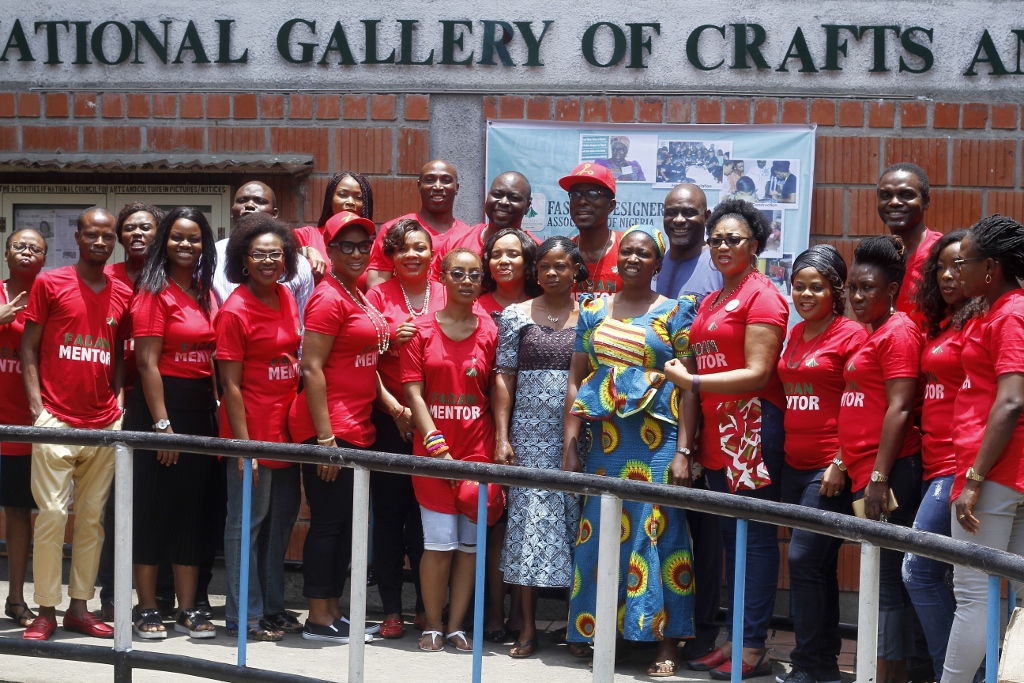
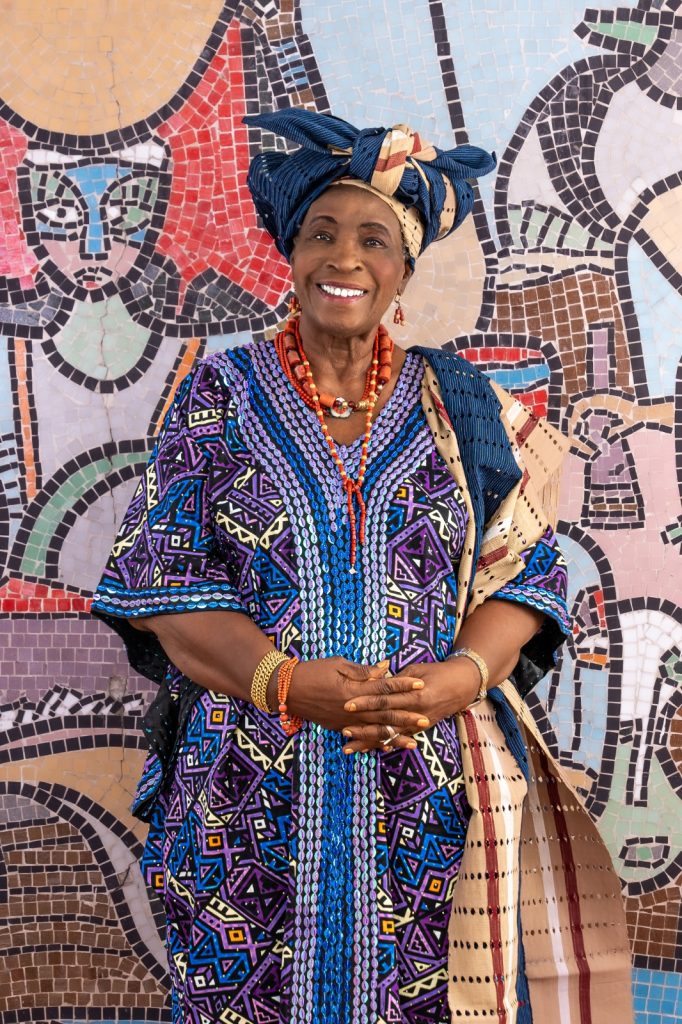
Mrs. Shade Thomas-Fahm, the woman credited with opening the first boutique ( Shade’s Boutique) in Nigeria, the first professionally trained fashion designer in Nigeria and the first and founding president of Fashion Designers Association of Nigeria, FADAN, turns 91 today!
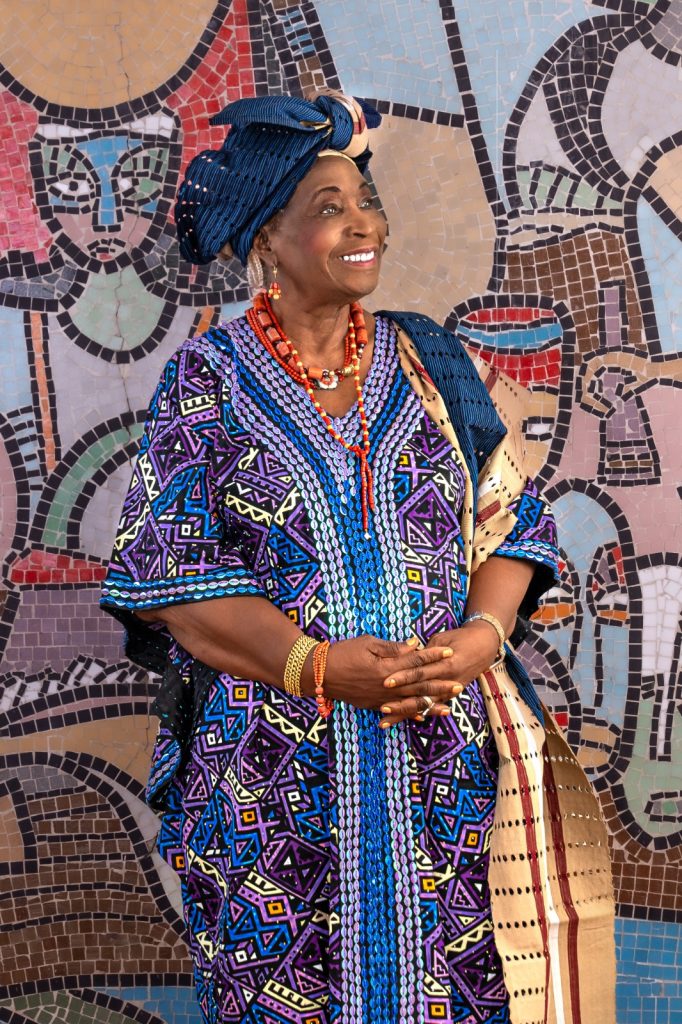
Although her love for fashion started at age 12 when she started learning how to sew from local dressmakers in Lagos, arriving London in 1953 to study nursing and seeing all the glam trends that beckoned from shop windows, left her in no doubt as to where her true calling laid.
Qualifying from St. Martins College of Art and Design, London, in 1959, she returned to Nigeria to preach one gospel—to convince Nigerians to wear clothes created from indigenous Nigerian fabrics.
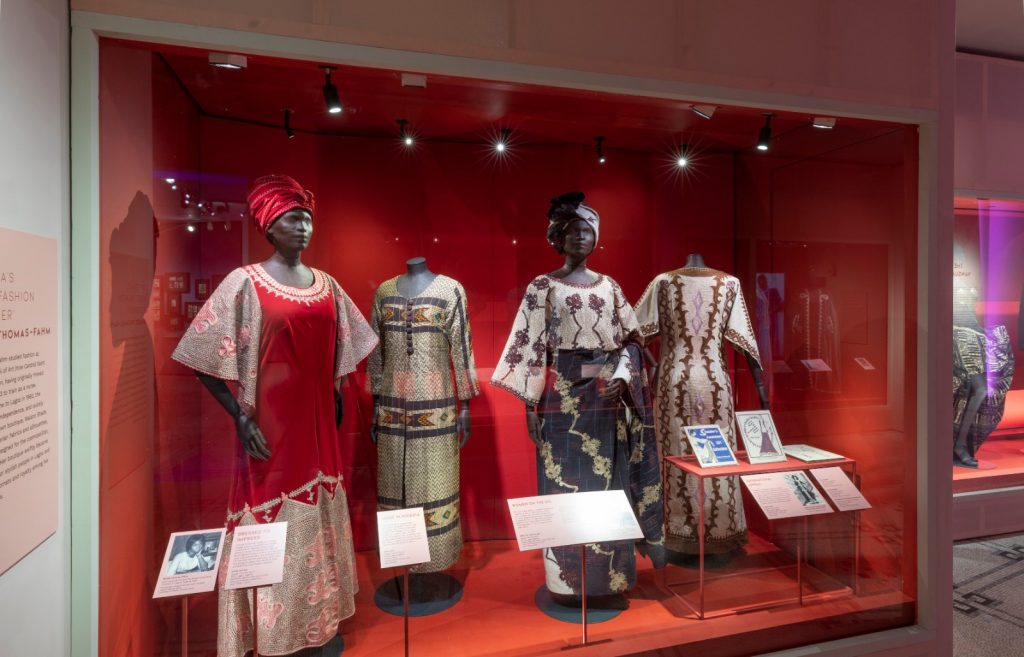
She pioneered the innovation of traditional classic pieces such as Iro and buba as well as agbada into more contemporary versions suitable for urban women.
In 2022, her fashion legacy was celebrated at The global “Africa Fashion Exhibition by the Victoria & Albert Museum” where Shade Thomas-Fahm has 6 pieces stored in their permanent collection.
Her love for promoting Nigerian fashion cannot be overemphasised. She walks the talk as she stands as a walking advertisement for that which she promotes.
Nigeria’s fashion icon in this interview talks on life at turns 91, and her fashion journey that began way back in the year Nigeria got her Independence.
What has life been like?
It’s been a full life, with ups and downs, but I always overcome. Life has been exciting, disappointing, but very fruitful. Earlier on, there has been envy from some women that brought a lot of shame, but I survived. As a matter of fact, I put most of those things behind and never allowed anybody to pull me down.
What landmark event like COVID did you witness in all these years?
In our own time, there was famine. I was around age ten at the time. We practically had no food in this country and we were all using millets for swallow instead of gari. I remember that most people didn’t realise you have to cook millet a little longer; and as a result, we were all going to the toilet. I also remember that there was a storm that brought down all electric poles and a lot of people died; especially young ones.
Could that have been a hurricane or tornado?
Yes, like a tornado. At that time, the electric wooden poles with wires fell down. My school, Saint Peters had to be shut down.
What lessons have you learnt about life?
One key lesson I have learnt about life is that you have to believe in yourself, be convinced about the things you want to do. You will have friends but not many want you to succeed. Not because they hate you, but because they don’t want you in that position. If you want to do something you really believe in, don’t expect too much from anyone. Your mother may support you; but, usually, most friends will like to be the one doing what you are doing. That is why, most of the times, they dissuade you; but I have never listened to them. If I have to do something, I go ahead and face it.
For instance, when I was Rotary President and needed to share my intended projects, which I had to do before a whole gathering of all in-coming presidents convened in Abeokuta in Ogun State, I remember telling them about dialysis. Two days before that convention, I saw in the news a little boy in need of N10million for kidney transplant and regular dialysis. I was moved.
You needed to see the reactions on the faces and lips of everyone. I thought I had said the wrong thing.
The next day while having lunch with friends— because we used to have ladies’ lunch, I suddenly began to regret saying so due to the perceived magnitude of the project. I remember Prof. Oyin Elebute also came in.
Suddenly, I just began to lament that I didn’t know what happened to me that made me mention dialysis at the Rotary Convention. Then she said, “so what?”
I said I knew nothing about dialysis and then she told me to go learn about it. She took her phone, called somebody at Saint Nicholas Hospital and asked me to go straight from that lunch to meet with Dr. Bamgboye who was already waiting for me. By the time I got there, Dr. Bamgboye had already prepared a room for our meeting. Fourteen years now, the dialysis centre which that vision culminated in, is still standing strong at Island General Hospital with the names of those who contributed. Dangote gave me over 50 million at that time. All my friends contributed one million each and all their names are right there in front of the centre.
Let’s talk about life as you have seen it evolve, and how did we begin to lose our value system?
Growing up, we had a communial life; a sort of family life. You go to school, come back, and we all sit down to eat together. We had an upbringing then that required each one of us must grind the pepper used for stew each day. This was despite the fact that we had the custom of Iyawo Ile (the family wife), who would want to try and help you. If my mother sees anyone helping you, she won’t say anything but will ensure she reduces the portion of your stew and meat for not grinding the pepper yourself.
Changes started when teachers were not allowed to punish pupils anymore. First of all, they cancelled the use of cane. This no-cane rule was extended also to homes.
People argue that this culture against use of cane came from those who came back from abroad; what is your own position?
I agree capital punishment has to stop but right now, the behaviour of students is very appalling. Now, they can do anything; which wasn’t possible in those days. Probably if flogging had been enforced up to a certain level, we wouldn’t have had all these awful behaviours amongst our young ones.
Let’s talk about your life in fashion; when you came back in 1960, what did you meet on ground?
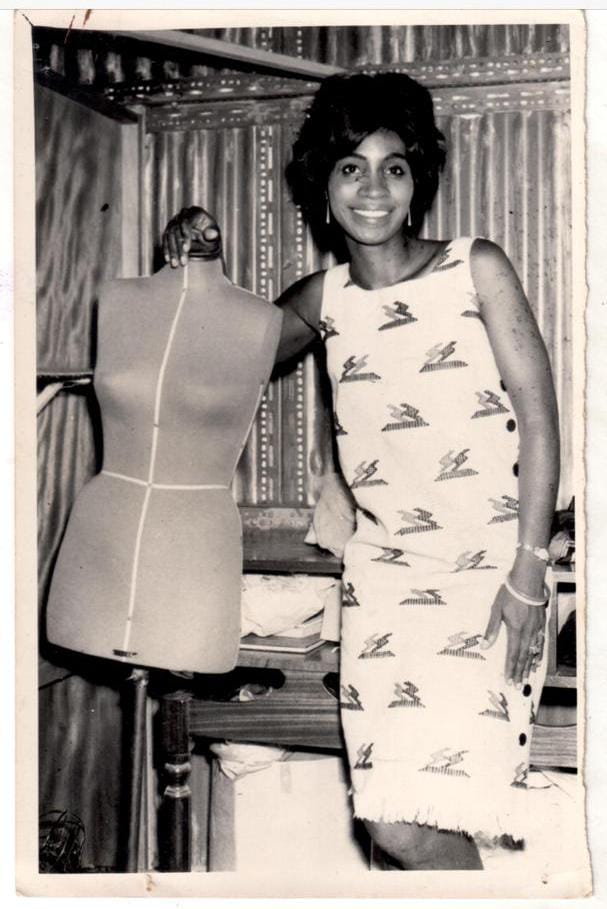
When I came back, I was looking for a place to set up my factory because I had shipped my machines and all the gadgets to work with. I was walking all over the place and it was tiring. The sole of my shoes were gone. Then somebody told me that the government had put down an industrial estate at Yaba for new comers who with a trade. I was also told that the ministry of Industry on Broad Street was in charge. I went in and met Mr Rogged. I got it that day and started the factory from the industrial estate.
How did the name Shade Boutique come about?
It was jokingly formed when I was modeling in England. I modeled for a motorcycle brand that they were taking to Africa. During that time, we usually had tea break and talk about the event and friends asked what I’ll do after that time. Will I be going back to Africa? I said, yes, I’ll be going back to Nigeria and set up a shop. They asked if it would be a boutique, I said yes. Then they asked if it will be Maison Shade. You can’t call it Maison Shade because in French, it means a place where women can come to talk about fashion. So, I said no, then they said Shade Boutique and I said yes. And it stuck!
How did you go about setting up the boutique?
Well, after I set up factory, they were building Federal Palace hotel at that time, I was a little bit of a noise then. I went to buy a car from Leventis motors; my first car and they were talking about Federal Palace and I said I have two shops there. God put me there. Shade Boutique.
What did you stock there?
Ready-made Okene and oso-oke dresses. I introduced them to the diplomatic women. You know they always have tea parties so I made things for them.
How would you assess fashion then and now?
My teaching has always been to use our fabric to create whatever you want to do. I’m not saying use that only, but to include that: like I used to preach then, let your wardrobe contain clothes made from locally made fabrics. I’m not saying don’t use western wears because western wears are probably cheaper than our own but we have to develop our own.
It looks like the sermon you preached is being accepted and implemented now…
At that time, I didn’t find it easy. The Western world backed me up. The wives of the diplomats were the ones buying my things. It was when they were buying my designs that Nigerians started buying them. When one of them wore my outfits to those meetings, then they say, so you have been to Shade’s boutique?
Most of your designs had very intricate details; how did you do it?
We spent time creating these pieces. If you attend university now at St. Martin’s, you go to the museum to learn history. If you study arts, you went to the museum every Friday and learnt about colours that relate to each country. That was where I learnt that yellow auker is a Nigerian colour. All these things I picked from history in England.
What do you look forward to now?
There is one special one I’ll not talk about because I’m still praying to God and I’m sure he will give it to me soon. But I’m satisfied. I also look forward to going to church if God permits because I can’t stay for too long.
What are you most grateful for?
I am so grateful to God that I still remember my childhood days as if it was yesterday. Sometimes, I shy away from letting people know how I well I remember things because they expect that because I am old, I will forget. But I’m praying to God that He won’t turn off my memory one day.
If you were not a designer what would you have been?
A preacher!
Were you in the choir?
I was in the choir but my voice was like a man’s voice so, I was kept at the back at that time.
You have put together a book of Proverbs–Iwe Owe; what inspired it?
Well, I did it so that other people can read and learn from them. Proverbs are what people live by and build on. As a matter of fact, in our home, most things are addressed using proverbs. If you did something wrong, my mother will tell you the consequences in proverb. I have about 70 proverbs in all.