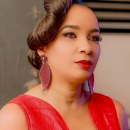
Imaan Sulaiman-Ibrahim: Committed to Reforms
By Jemi Ekunkunbor
Although her childhood dream was to become a police officer, she came close to realising this dream when she was appointed and broke records as the first female Minister of Police Affairs (State), leaving in her trail a record of significant reform efforts that have secured unprecedented revenue increases.
Imaan Sulaiman-Ibrahim, FSI, a distinguished international expert and leader in security, conflict resolution, and humanitarian management, has held several positions: Director-General of the National Agency for the Prohibition of Trafficking in Persons, NAPTIP; Federal Commissioner of the National Commission for Refugees, Migrants, and IDPs, NCFRMI, where she championed impactful programs for over two million displaced persons and facilitated the passage of the NCFRMI Amendment Act.
In October 2024, she was appointed Minister of Women Affairs, where she now leverages her extensive expertise to champion the rights and welfare of women, children, and vulnerable populations in Nigeria. A woman given to learning, her pursuit of knowledge is evidenced in her multiple master’s degrees and ongoing doctoral studies at the Nigeria Defence Academy. She is also a visiting lecturer at universities in Nigeria and Italy.
The Ministry that you now head was created to address the specific needs and challenges faced by women in Nigeria; but it does seem like the Ministry just exists for celebrating Women’s Day and not really addressing women’s issues. Why is that so?
That perception, while understandable, reflects a historical underutilisation of the Ministry’s full mandate. However, we are actively changing that narrative. The Ministry of Women Affairs is not a ceremonial institution; it is a national policy driver for gender equality, women’s empowerment, child protection, and social inclusion. Since assuming office, I have prioritised strategic reforms, large-scale programmes like the 10 Million Women Empowerment Plan, legal reviews, and cross-sectoral advocacy. For the first time in its history, the Ministry has received a significant increase in budgetary allocation, enabling us to plan, implement, and track meaningful results for women and girls.
Nigeria is signatory to some international agreements like CEDAW; how far have we gone in addressing those issues?

Nigeria has made substantial strides in domesticating global and regional gender instruments, including CEDAW, the Maputo Protocol, and UNSCR 1325, through national laws like the VAPP Act, the Child Rights Act, and the National Gender Policy (2021–2026). We have also institutionalised Gender Desks in over 30 MDAs and embedded Gender-Based Violence Desks in all police divisions nationwide. These mechanisms ensure gender perspectives are mainstreamed into sectoral policies and security systems. Additionally, we are advocating for gender-responsive budgeting and procurement frameworks at the sub-national levels, and one state –Kaduna–has already adopted these frameworks fully, and we are cascading lessons nationwide.
Of the many issues such as health, education, economic empowerment and even politics, where would you score Nigeria high?
Nigeria has excelled in economic empowerment and leadership in the private sector. Notably, female executives hold 22% of leadership roles in the private sector – above the global average of 20% – and over 40% of Nigeria’s top commercial banks are led by women. These achievements demonstrate the potential of Nigerian women when systems are inclusive. However, we must replicate this momentum in public sector representation, health equity, and political participation to achieve balanced development.
The position of women in politics dropped drastically in the last general elections; what can your Ministry do?
The decline in women’s political representation is a serious concern, and we are responding with strategic action. We are working closely with civil society organisations, who are leading advocacy for the Political Representation and Seat Reservation for Women Bill (HB1349). The Ministry is providing policy and technical support to this effort. Encouragingly, state-level affirmative action is gaining traction: in Niger State, all 25 vice-chairmanship seats in upcoming LGA elections have been reserved for women; and Kaduna State is implementing affirmative procurement to ensure women-led businesses gain access to public contracts. These efforts are laying a foundation for broader legislative change and political inclusion.
Since taking over from your predecessor, what critical areas of concern do you plan to address urgently?
My immediate priorities include: institutionalising gender-responsive budgeting at federal and state levels, expanding access to economic opportunities for grassroots women, reviewing outdated legal frameworks, particularly the Child Rights Act and the VAPP Act, scaling up protection services through Sexual Assault Referral Centres, SARCs, and strengthening data and monitoring systems to track impact across sectors. These areas are essential to addressing structural inequalities and enhancing service delivery.

Young girls are still being trafficked across Nigeria and beyond; what is your Ministry doing to address this?
Having led NAPTIP, I understand the intricacies of trafficking networks. NAPTIP is statutorily mandated to deal with issues of Trafficking. However, given that our focus constituents are the most at risk, the Ministry is engaging with NAPTIP, immigration, and community actors to deploy preventive education, intelligence coordination, and survivor reintegration services. Cross-border cooperation remains key, and we continue to engage international partners in building an integrated response framework.
What’s your assessment of some of the Federal Government’s current policies on women and children, and what would you say critically needs to be reviewed?
Several federal policies – like the National Social Investment Programme and the Safe Schools Initiative – hold great promise, but implementation gaps remain. A critical area for review is the coordination mechanism between MDAs and between federal and state actors. Fragmentation dilutes impact. We also need to urgently review the status of gender parity in digital access, land rights, and child marriage, to ensuring that all programmes are data-driven, inclusive, and enforceable. Under President Bola Ahmed Tinubu’s Renewed Hope Agenda and our Strategic Roadmap, we are prioritising gender-responsive programming, strengthening child protection systems, and scaling up economic empowerment initiatives to drive real change. We have commenced efforts to implement the National Strategy to End Child Marriage (2025–2030), and the review process for the Child Rights Act and the Violence Against Persons (Prohibition) Act (VAPP) has commenced to strengthen our protection frameworks for children and women, while also enhancing implementation.
What’s the situation with underage marriage now?
Underage marriage remains a serious challenge, particularly in rural and economically vulnerable communities. Although Nigeria has passed the Child Rights Act, and 36 States have domesticated it, implementation remains inconsistent across states. While I recently inaugurated a review Committee of the Act, we are also working with traditional leaders, state governments, and civil society to push for full implementation, strengthen enforcement, and promote girls’ education as a protective strategy. As you may be aware, ending child marriage is not only a legal issue, but also a development and human rights imperative.
How are you collaborating with Development Partners and Donors?
Our collaboration with development partners and donors is both strategic and impact-oriented. We work with a wide range of institutions —multilateral, bilateral, and philanthropic —to align resources and expertise with our national priorities for women and girls. For example, our partnership with UN Women is particularly robust, supporting key initiatives such as capacity building for gender-responsive budgeting, implementation of the National Gender Policy, and strengthening of gender data systems. Similarly, we are working closely with the World Bank on the Nigeria for Women Scale-Up Project, which targets millions of women across several states. Development partners have also been instrumental in supporting our efforts to combat gender-based violence, expand access to clean energy for women, and promote inclusive education and healthcare. These collaborations are helping us deliver on Nigeria’s commitments under Agenda 2030, the Beijing Platform for Action, and the African Union’s Agenda 2063, ensuring that our work is globally aligned but locally rooted.
Did you envisage serving in this capacity and what background would you say has prepared you for this?
While I didn’t envision this exact role, my professional and personal journey has always prepared me for it. From my academic grounding in sociology, business, and management, to my work in conflict resolution, humanitarian operations, and migration governance, I have always worked at the intersection of people, policy, and justice. Each role —from DG of NAPTIP to Federal Commissioner of NCFRMI and Minister of State Police Affairs —equipped me with the strategic, operational, and people skills I now bring to this Ministry.
What legacy do you hope to leave behind by the time you’re done with this office?
I hope to leave behind a reformed, responsive, and resilient Ministry that has catalysed structural change. My legacy will be rooted in: (i) the economic upliftment of 10 million women to contribute to the 1 trillion GDP Target of our adminstration, (ii) stronger institutional frameworks for child protection and GBV response, (iii) the full integration of gender-responsive budgeting across the federation, and (iv) the normalisation of women’s leadership in every sphere —political, economic, and social. I want to be remembered not just as a Minister who served, but as one who transformed the system for future generations.
What advice would you give to any woman seeking advancement in career and business?
Be strategic, stay grounded, and never underestimate your worth. Equip yourself with skills, networks, and purpose. Seek mentors, build alliances, and be bold enough to lead from wherever you are. You don’t need to wait for permission, just lead with integrity, and let your work speak volumes.
What was growing up like and in what city did you grow up?
I was born in Jos, Plateau State —a melting pot of cultures, and I grew up in a home where discipline, education, and empathy were deeply valued. My upbringing taught me the importance of perseverance, faith, and service. These principles continue to guide my leadership today.
What were your aspirations as a child?
As a child, I aspired to be a Police Officer, and it was a dream born out of a strong sense of justice and a desire to protect the vulnerable. So, when I was appointed the first female Minister of Police Affairs in Nigeria, it felt like a dream come full circle. The day I wore the ceremonial police uniform, it was deeply personal. It represented the fulfilment of a childhood aspiration, but more importantly, it was a reminder of the responsibility to reform and humanise our security institutions, and to inspire young girls across the country to dream without limits.
When you are not working, how do you relax?
I enjoy quiet time with my family, travelling, reading, and moments of personal reflection. These activities help me recharge emotionally and spiritually, allowing me to return to work with renewed energy and clarity.

Where is your favourite or best holiday destination?
I appreciate destinations that offer serenity, natural beauty, and cultural richness. I particularly enjoy UAE. Its blend of tradition and modernity, the warmth of its people, and the serenity of its landscapes makes it a perfect getaway.
What won’t you do for fashion’s sake?
I won’t sacrifice comfort, authenticity, or dignity for fashion. Style, for me, must reflect confidence and purpose, not trends. Fashion should enhance one’s identity and not redefine it.