WAJU ATE THE ENTIRE “CAKE” AT THE AFRO FASHION SHOW UK AND LEFT FEW CRUMBS
By Yemisi Suleiman
Sitting at the front row of the Afro Fashion Show UK, in Manchester, I did not expect to be impressed. I thought to myself, “this is just another afro-inspired fashion show featuring over- enthusiastic fashion designers with little or no knowledge of what true African or afro-inspired fashion is”.
I was tired of seeing collections hastily put together, anchored on unpronounceable native adjectives, to showcase to an equally enthusiastic audience eager to experience what fashion from the Black continent has to offer. These collections often lack cultural significance and disregard the colours and fabrics unique to African clothing.
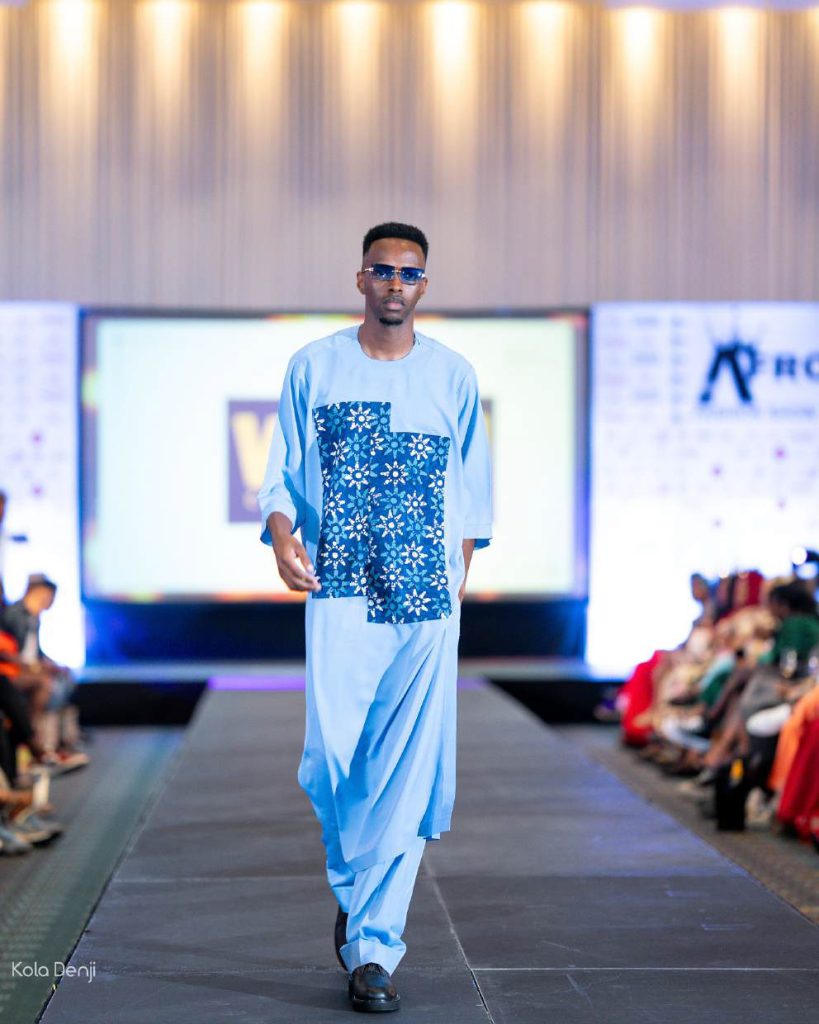
However, what I witnessed was Waju’s divine homage not only to the entire African continent but with a special tribute to the Yoruba culture. Through their collection showcased on the Afro Fashion Show UK runway, Waju demonstrated that what makes African fashion unique is not merely the adaptation of Western style but also using fabrics that are indigenous to Africa to appeal to western audience.
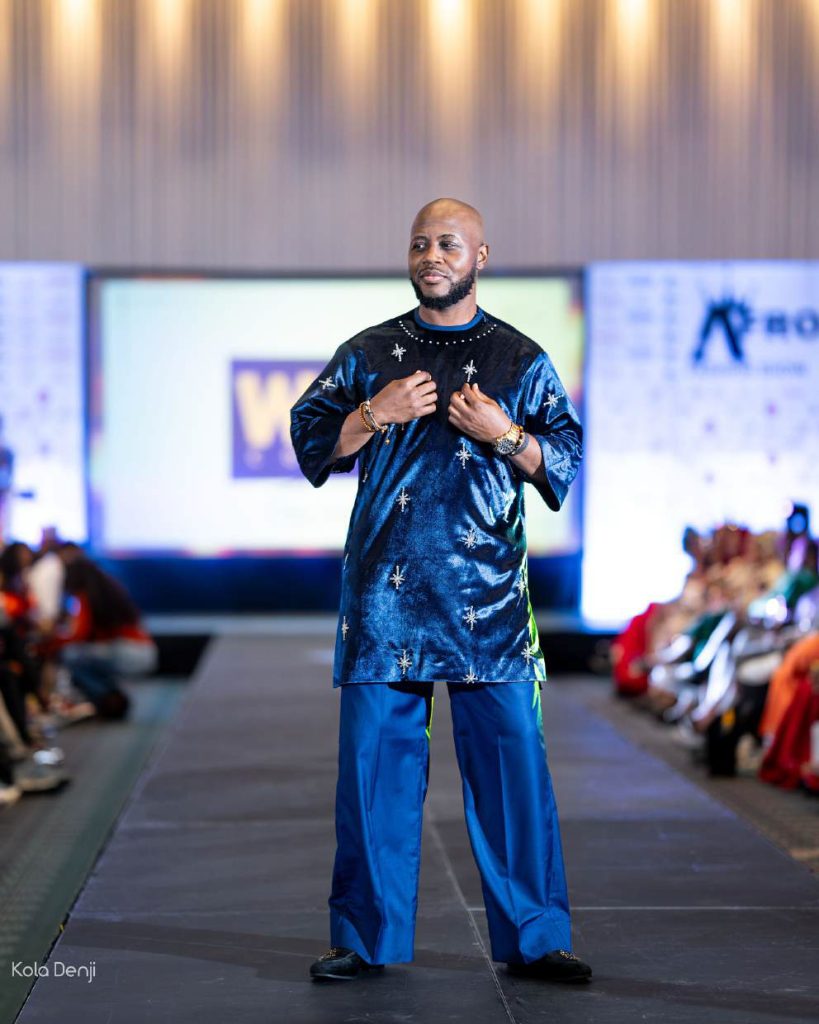
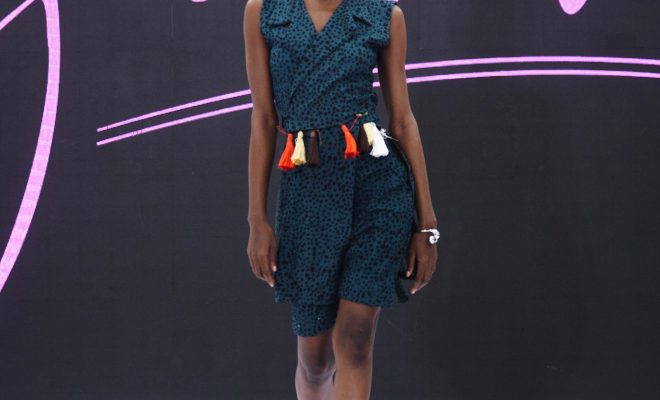
Waju’s collection, Ìlàjú, featured eight uniquely designed pieces, and together they seem to be a campaign embodying a redefinition of how distinct African fashion must be presented to the global fashion scene. I saw an interplay of the cultural significance of African/Afro- inspired fabrics and the colours that are unique and indigenous to the rich Yoruba heritage referenced in Waju’s collection. Pieces from the collection were not weighed down by unnecessary details; instead, each piece was defined by clean, thoughtful structure and effortless silhouette. This proved to me yet again that restraint, when done right, can be just as striking as extravagance.
Patterning and structure that defines true African clothing were pushed to the centre stage and if accessories were included, Waju made it about paying homage to what the forebearers must have used in the early days- authentic cowries considered as money, whose appearance on a piece of clothing signified wealth.
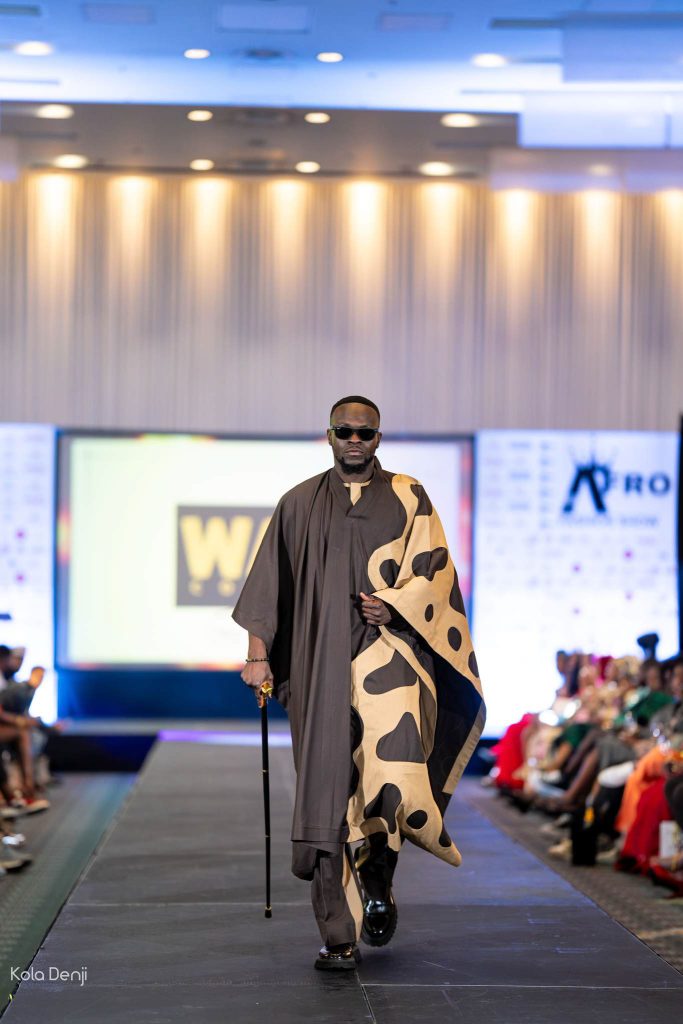
It will be an injustice to not reference Waju’s choice of colours. Since I understood the idea and concept Waju brought to the show, it didn’t take long to appreciate their use of colours that were natural in indigenous Yoruba fabrics. The importance of primary colours to the Yoruba people transcend fashion into the realm of spirituality, while colours such as indigo, beige or light brown were rich colours of pure elegance used for iconic fabrics such as the Adire and Aso-Oke (particularly sanyan).
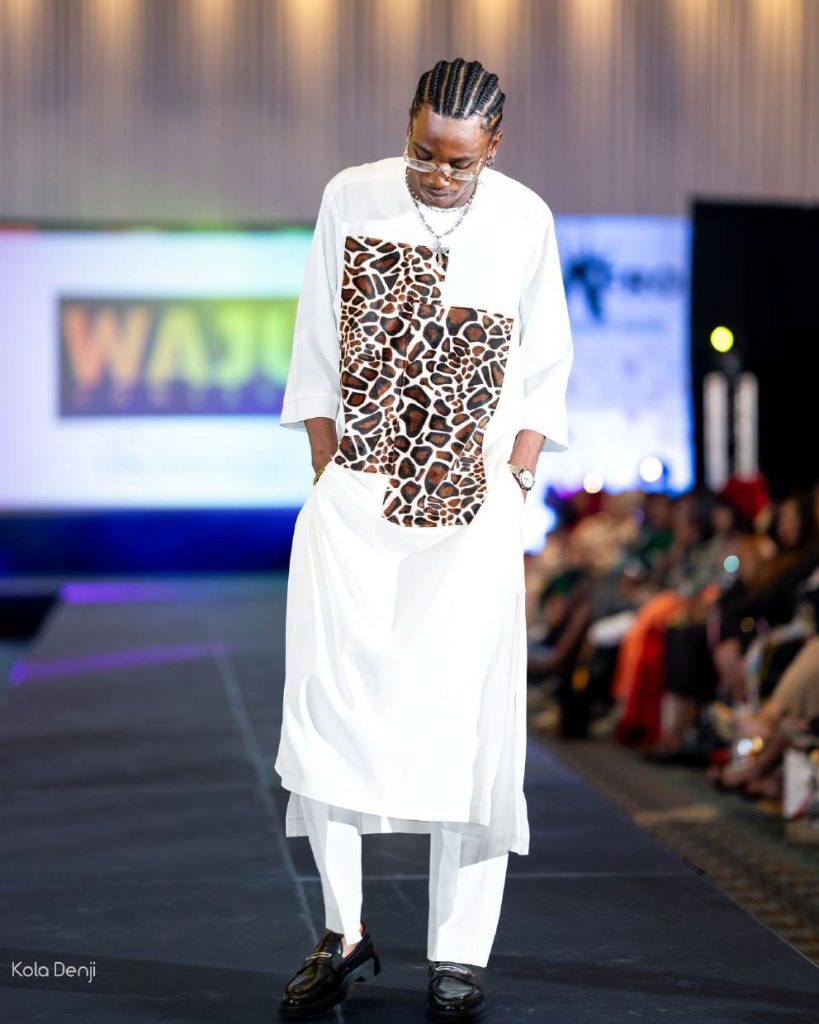
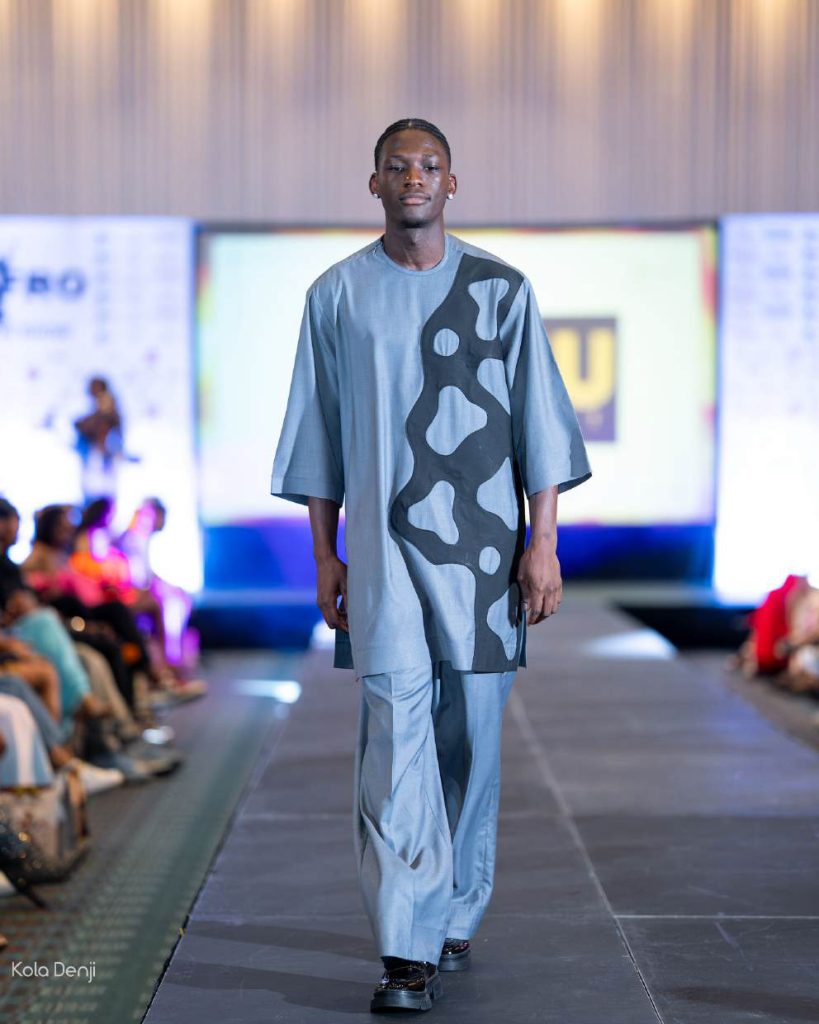
Waju’s improvisation of the leopard skin, using a mix of colours and fabrics, was a nod to their understanding of how important the leopard skin is to royals and people of power across the continent of Africa. I saw a tasteful redefinition of Agbádá, made into an abstract pattern reminiscent of leopard paws, asymmetrically structured into a brilliant example of Afro-modern minimalism with a playful conceptual twist. The piece is further elevated by the Sòkòtò Alábe, a treasured art in indigenous trouser-making peculiar to the Yorubas. Again, the Sokoto Alabe was far from a mere replication of the familiar form; Waju added his own inventive twist and transformed it into something entirely his own. In an era where fashion tilts towards western interpretation, Waju’s thoughtful return to their ingenious roots is deserving of all the applause the show had to offer.
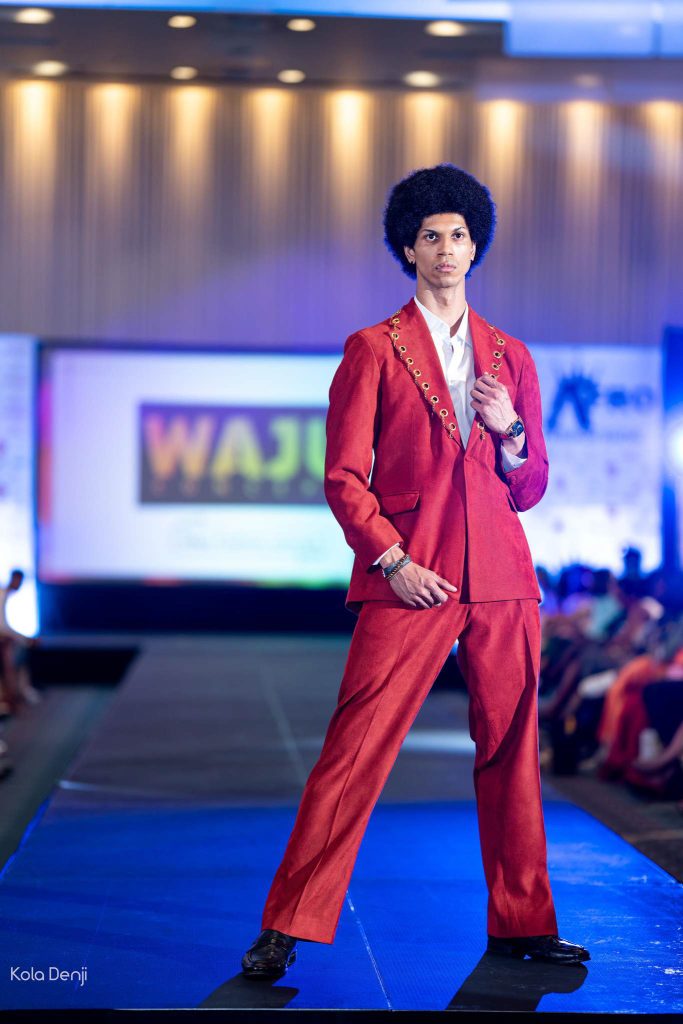
For a moment, I envisioned myself within the Òbàrà Méjì piece and experienced a sense of spiritual empowerment. Odu Obara, especially Obara Meji, is recognized as one of the most complex and layered Odus in the Ifá corpus of the Yoruba tradition, representing transformation, strength, and wealth. Waju’s interpretation skillfully leverages the distinctive qualities of the Opon Ifá, utilizing black cotton fabric to achieve sharp contrast and silhouette, thereby drawing attention to the fourteen assembled cowries that embody the essence of Òbàrà Méjì; a clever diversion from the fact that the piece is a Kaftan. Seeing that on the runway was a divine moment of fashion intelligence for any fashion enthusiast or critic with taste.
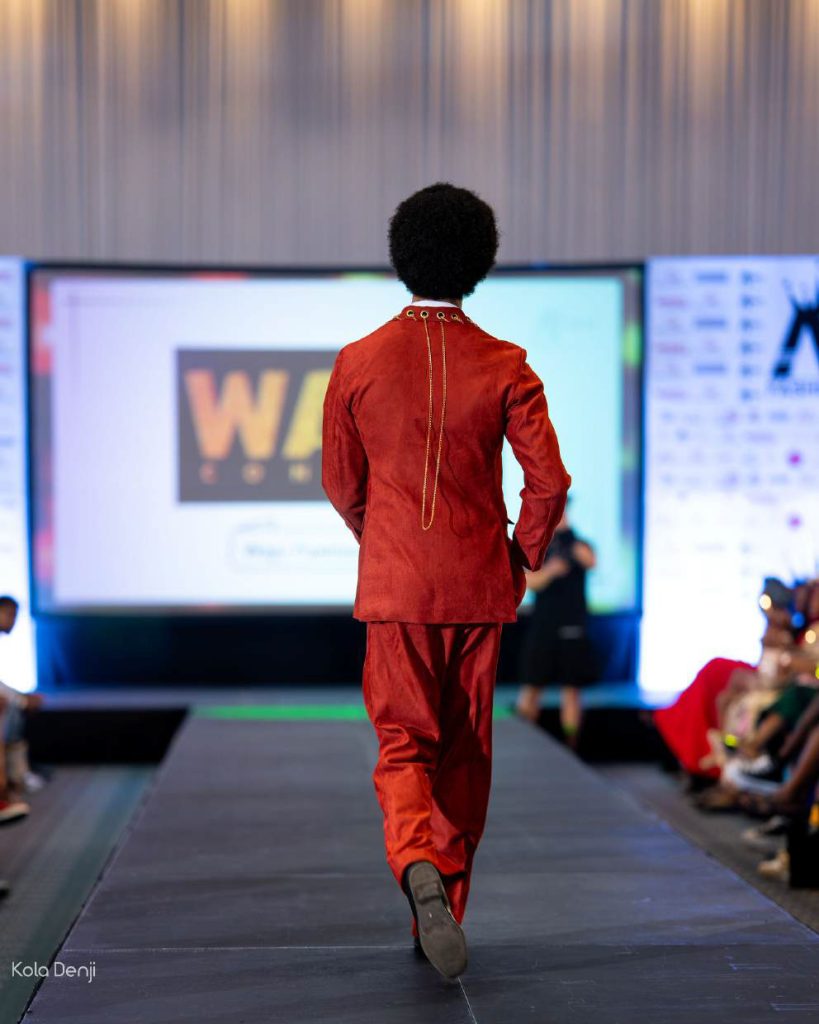
This is not to say Ìlàjú is a perfect collection and without flaws. While I understand the collection is Waju’s debut in the United Kingdom, it still appears to be a collection from a designer who has so much to offer to the global audience but yet playing safe and offering just enough to introduce his vision to a new audience rather than diving straight into the boldness and creative range I know the Waju brand is capable of.
I strongly hope that in the future collections, Waju will come to the realisation that in the world of fashion, playing safe does not always win the designer the centre stage in the global market. The world is over saturated with the flawlessness and allure of western fashion and the distinctiveness of true Afro-inspired pieces is the disruption that would introduce a breath of fresh air.