Ogiame Atuwatse III: Made by Grace
By Jemi Ekunkunbor
Four years ago, on August 21, 2021, His Majesty Ogiame Atuwatse III ascended the revered throne of the Warri Kingdom as the 21st Olu of Warri.
With the crown of his ancestors fitly in place, Ogiame has brought to leadership a rare blend of royal heritage and contemporary vision, guiding the Itsekiri people with wisdom far beyond his years.
Known for his commitment to peace, and a drive for socio-economic empowerment of his people, under his watch, the Kingdom has witnessed renewed cultural pride, and forward-looking agenda aimed at sustainable development.
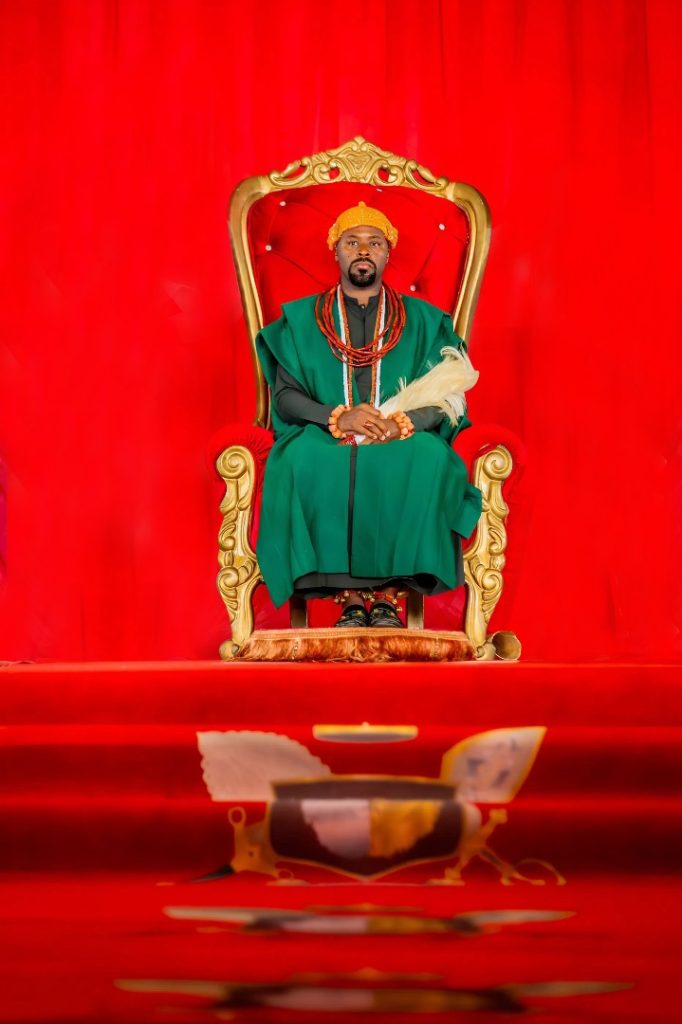
Educated in prestigious institutions in Nigeria and overseas, Ogiame Atuwatse III remains a vital voice in today’s Nigeria and the global community.
Widely traveled, he takes the good of tradition blending it with the elegance of modernity to make his tribe the envy of many.
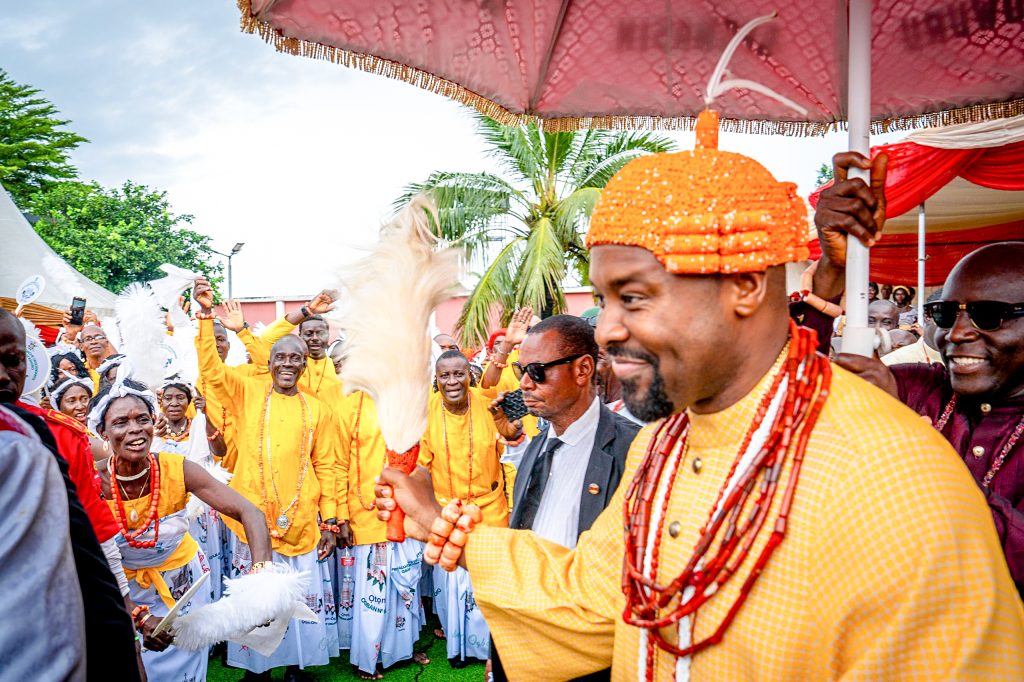
To mark four years of royal brilliance, activities kicked off on Monday with a praise and worship session that heralded other events such as Boat Regatta, Book launch, Award of Royal Order of Iwere, ROI, climaxing into a thanksgiving service today at the Palace Church, Aghofen.
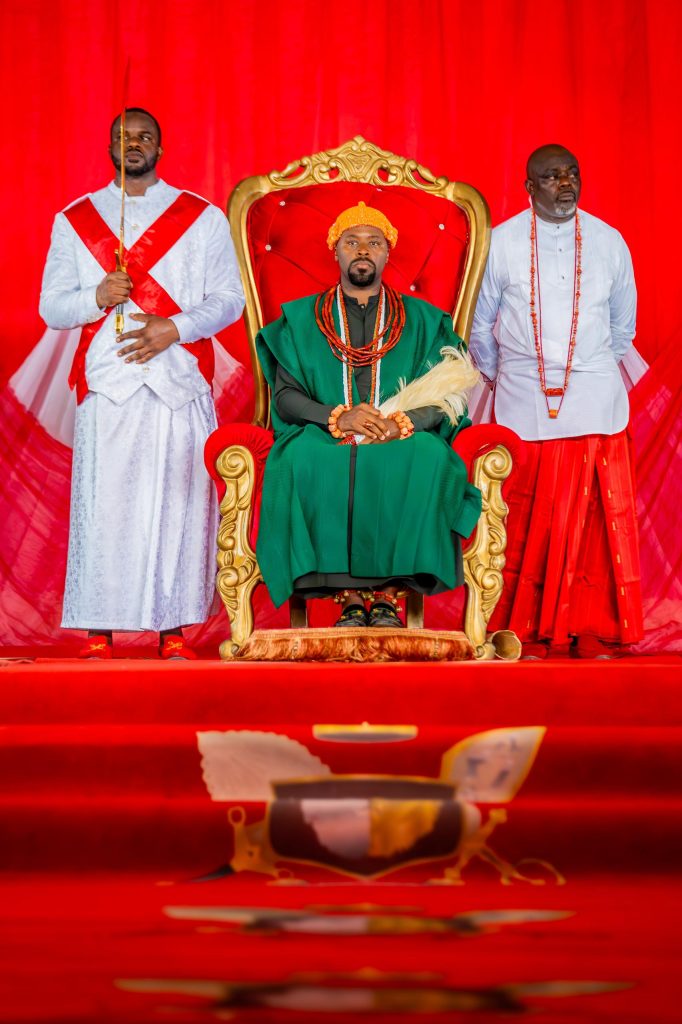
In this exclusive anniversary interview, Ogiame Atuwatse III reflects on his reign, his vision, and the remarkable journey so far—describing it all, with characteristic humility, as nothing but the grace of God.
It’s been four years since your coronation. How has the journey been?
It has truly been a journey of grace and transformation unlike any I have previously encountered. Each day is different, and God gives grace for everything that comes my way. These four years have deepened my understanding of what it means to serve as a custodian of our traditions, a father to my people, a voice for development, and a partner in charting a new course for the Warri Kingdom. I am grateful to God and humbled by how far we have come.
How does the crown fit, four years on?
Indeed, the old saying is true, “Heavy lies the head that wears the crown,” and that’s because the responsibility is weighty. With time, prayer, and God’s guidance, one grows into and gets used to it till it becomes a part of you. So, while the weight remains, it serves as a reminder of the responsibility I’ve been entrusted with, not a burden.
Your Majesty, what inspired your vision for the Itsekiri nation upon your ascension to the throne, and how is that vision being realised?
My vision for the Itsekiri nation is first and foremost divinely inspired by the images, impressions, and directions God gives to replicate His ways and His Kingdom here on earth. Beyond that, my education, travels, and life experiences have shaped my conviction that things can always be better, that our people deserve excellence, and that Warri must not be left behind.
That vision is being realised step by step. Every new seed is written and meditated on, but we don’t stop there. We – my wife and I, through the Royal Iwere Foundation – actively plan, execute, and seek partnerships that align with our values. Today, our initiatives cut across education, healthcare, women’s empowerment, and innovation. These programmes, which have already impacted thousands of lives, are proof that transformation is possible.
Your ascension was not without controversies. How well have those issues been resolved?
Indeed, my ascension, like many turning points in history, came with its share of controversy. But I have always stood on the firm foundation of truth and justice, and I believe that the earth itself does not sustain falsehood for long – eventually, truth prevails.
Yes, some voices continue to oppose and scheme, but just as those who seek to destroy do not rest, we who are determined to build and restore must not be distracted either. With God’s help, we remain focused on the work of healing, rebuilding, and uniting our people. Over time, the moral arc always bends towards justice, so my task is to stay steadfast, knowing that history will vindicate truth.
How would you describe your leadership style, and how has it evolved since becoming the Olu?
My leadership style has remained the same; becoming Olu has simply magnified what was already there. One area where I have grown stronger is in the area of decisiveness. Leadership often presents moments where caution can easily slip into paralysis or where over-analysis delays progress. I have come to see that it is better to take a clear, principled decision – even if not everyone agrees – than to be indecisive and allow opportunities to pass us by.
That said, I remain committed to listening, consulting widely, and valuing the wisdom of others. But ultimately, the responsibility rests with me, and I have embraced the need to be bold and timely in making decisions for the good of our kingdom.
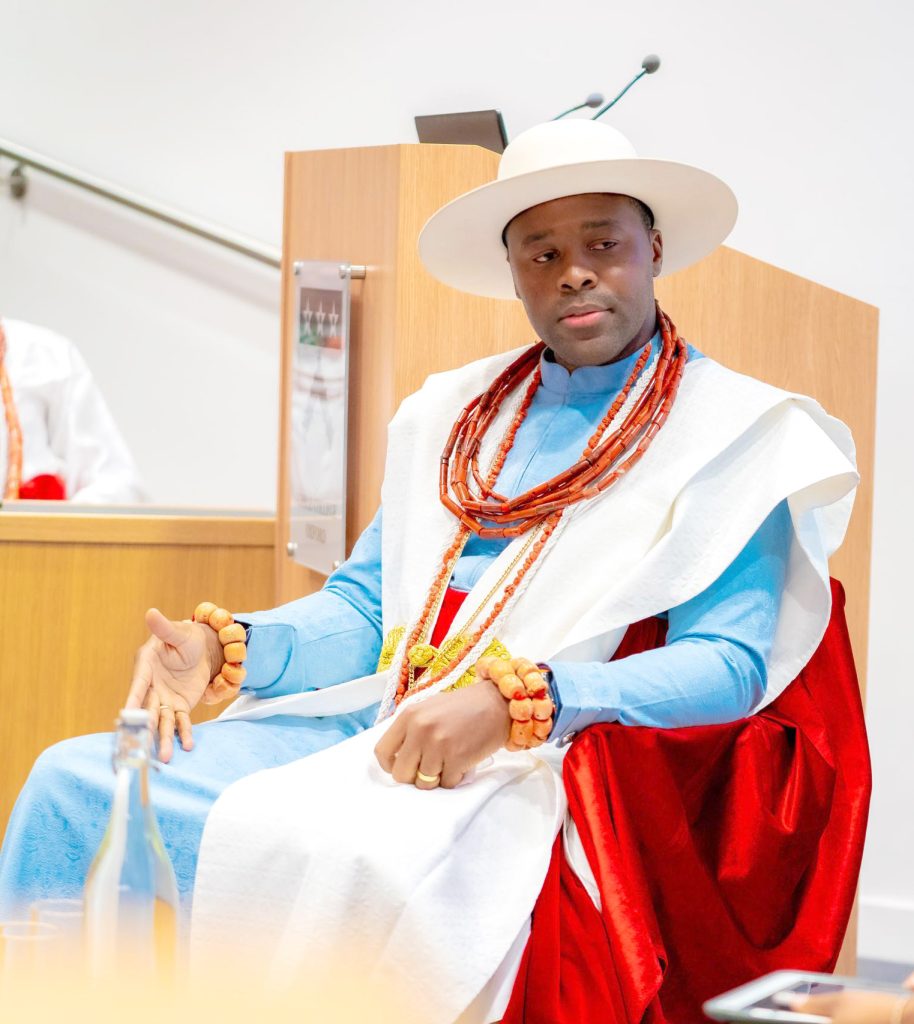
You’ve previously described yourself as a democratic king—a contrast to the traditional image of monarchs who rule by decree. How has this leadership style shaped your reign?
I don’t quite recall calling myself a ‘democratic king.’ Perhaps that was someone’s interpretation. What I have always said is that my model of leadership is inspired by heaven. As it is in heaven, so it should be on earth. God, in His sovereignty, gives us the freedom to think, choose, and even exercise our will. Yet, He remains sovereign. With all His power, He is not a tyrant, but a loving Father who rules with justice and mercy.
That is the example I follow. Authority must be exercised with compassion and with the well- being of the people at heart. There are times when the voice of the people is united and determined, and in those moments, I also listen and allow space. My reign is therefore not about imposing, but about stewarding with strength, fairness, and faith. I do not claim to be infallible or omniscient; I trust God to guide me toward what is best for the kingdom.
What values guide your reign, and how do you ensure they are passed on to the next generation?
The values that guide my reign are not values I invented; they are the values of God Himself. Righteousness, justice, equity, inclusion, and love. Righteousness and justice ensure that truth always prevails over falsehood. Equity and inclusion guarantee that no one is left behind, no matter their status or background. And love, because without love, power quickly turns to tyranny. I love my people and desire their growth.
I am also intentional about passing these values to the next generation through our schools, mentorship initiatives, and the daily culture of our kingdom. When children see fairness, experience inclusion, and are nurtured in communal love, they will naturally carry those values into adulthood. I hope that these principles will not only mark my reign, but will become part of the very DNA of the Itsekiri nation for generations to come.
The Itsekiri are known for their rich cultural heritage—fashion, language, and more. What steps are being taken under your reign to preserve the Itsekiri language, customs, and traditions?
All over the world, indigenous languages and traditions are under threat, and globalisation has made it even harder to swim against the tide. Yet, the Itsekiri nation has so much to offer the world. That is why we are intentional about modernising and reimagining the way our heritage is preserved, so that it is not just safeguarded, but also celebrated globally.
Our task is to take the best of innovation and apply it in the Itsekiri way. Our festivals, ceremonies, and oral traditions are being branded and presented in ways that inspire a world that is increasingly monotonous and hungry for authenticity. We are focusing on the arts – our dance, music, storytelling – and merging them with modern media so that our culture is not seen as relics of the past, but as living, dynamic, and relevant.
God has given our people creativity, charisma, and rich resources. By investing these into projecting our culture, we ensure that the Itsekiri identity not only endures but becomes a source of inspiration and pride for generations to come, both at home and abroad.
And God willing, the yield will be beautiful for all to see.
You recently advised all Itsekiris to return to their homeland to reside and host cultural events such as marriages and burial ceremonies. However, the lack of basic amenities— such as piped water and electricity—remains a major challenge. As the Olu, how are you addressing this, including the possible provision of solar power?
Yes, I have encouraged our people to come home, but I do not ignore the very real challenges of infrastructure. It is humbling because the world sees Warri as an ‘oil-rich kingdom,’ and the perception is that everything should already be perfect. But the reality on the ground is different.
At the same time, we do not wait for others to fix things for us. We invest all we can into innovative and sustainable alternatives, because we must look beyond traditional systems to create solutions that fit our unique context. The good thing is, when leaders are seen walking the talk and committing resources, it inspires others to follow and it accelerates the deployment of creative solutions.
So, as we have engaged in consistent advocacy and lobbying, drawing attention to these gaps and urging those with the resources and solutions to partner with us, it has so far provoked positive responses.
Our ultimate goal is to ensure that when our people return home – not just for ceremonies but to live and thrive – they find a homeland worthy of their pride.
Unlike your forebears, you have travelled extensively, even to distant lands. How can the networks and connections you’ve built benefit the Warri Kingdom and enhance its relevance in contemporary Nigeria?
Did you know that a travelling prince, Ginuwa, founded Warri Kingdom? So, in some ways, multi-cultural exposure has always been part of the Itsekiri story. In my own time, I have been privileged to travel widely and build relationships across nations and cultures. I believe this is part of God’s grace and favour, because what He opens through such connections often defies logic, convention, or even past limitations we once thought unchangeable.
These networks are not for personal gain, but to bring opportunities back home, whether in education, investment, innovation, or cultural exchange. The world is increasingly interconnected, and the Warri Kingdom cannot afford to be isolated. By leveraging these connections, I aim to position our people for relevance in contemporary Nigeria and beyond, ensuring that our heritage is not only preserved but also amplified on the global stage.
In many ways, I see this as continuing the legacy of Ginuwa.
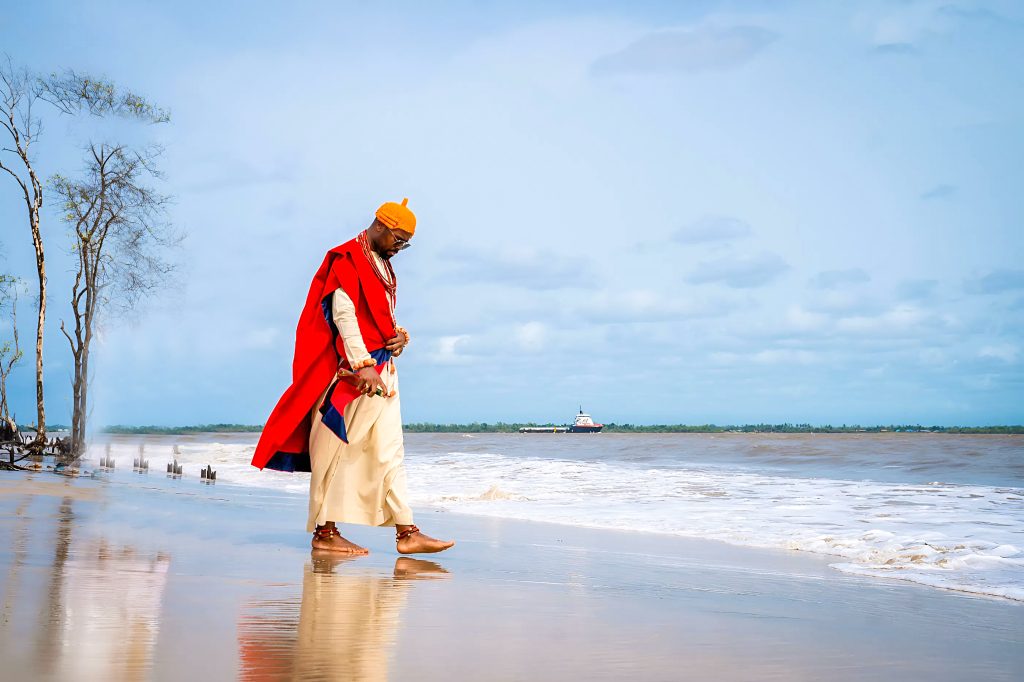
What is being done to develop Itsekiri waterfront areas into tourist destinations?
The Itsekiri waterfront is one of our greatest natural assets, and yes, the potential for tourism there is enormous. Yet, as exciting and tempting as this question is, some things are best nurtured carefully and quietly before they are unveiled. What I can say is that we are intentional about positioning Warri as not only an oil-rich kingdom, but also a cultural and tourist destination.
In time, these efforts will manifest for all to see.
Since the return to democracy, the Itsekiri have not produced political figures of the stature of Chief Festus Okotie-Eboh. How are you encouraging young Itsekiris to enter politics?
Fortunately or unfortunately, politics has become one of the largest ‘industries’ in Nigeria today. Almost everyone in the Niger Delta engages in it in one way or another. In a democracy, where numbers determine influence, the importance of political participation is obvious. But for me, it goes beyond ‘joining politics.’ It is about positioning ourselves in every sphere of society from the armed forces, to the civil service, police, banking, law, oil and gas, and the maritime sector. When young Itsekiris spread themselves across these spaces and add value, they become harder to ignore, and their influence multiplies.
Of course, it is not easy. The reality is that not everyone will welcome you with open arms — sometimes the resistance is silent, sometimes it is open. But that is why resilience, perseverance, and a commitment to excellence are critical. When our young people step into these spaces determined not only to participate but to improve them, they will be sought after, and in time, political leadership will naturally emerge among them.
What are your thoughts on the current relationship between traditional institutions and the political class?
There are times and seasons in life, so one form of leadership may be up today, another tomorrow. The important thing is that, whether in the ascendancy or not, leaders must cultivate a mindset that replenishes, respects, and builds society rather than tears it down.
Too often, politics and power are marked by division and suspicion, by a zero-sum approach where one wins only if the other loses. After more than six decades of our political journey, I believe it is time we embraced new habits that are not quick to ridicule, humiliate, or destroy, but rather to collaborate and uplift.
Traditional institutions and the political class both carry influence, but that influence must be exercised with humility and purpose. As the saying goes, when the love of power meets the power of love, the world, or in this case, Nigeria and our communities, will be a better place.
What role can traditional rulers play in healing national divisions and fostering unity?
Our role as traditional rulers is first to remain faithful to the trust God has placed in us on behalf of the people. It begins with knowing our identity and maintaining the right heart posture. From that point of equilibrium, everything else flows.
We are natural, cultural authorities. With our words and with our office, we can heal, bless, and stand for what is true and just, not only for the people but even for the land itself. We are not just custodians of culture; we are shapers of culture. Often, we are influencing the man at the grassroots without even realising it. One day, that man may rise to occupy the highest levels of leadership in this country. That is why we must always channel the right message, the right energy, and the right values. In doing so, we build from the ground up and shape the destiny of the nation.
I often say the land is alive. Like the womb of a woman, it multiplies what is sown into it, whether words, prayers, or intentions. If, as traditional rulers, we allow ourselves to be thermostats rather than thermometers, setting the temperature rather than simply reflecting it, God can use us as instruments of great transformation.
And when we walk in OUR identity with humility, not arrogance, heaven honours it, the earth honours it, and the people will honour it. It may feel almost mystical, but the results are very real.
You are known to be deeply spiritual. How does your faith influence your role as a monarch?
I believe many of my earlier answers already show how central my faith is but let me say it plainly: there is absolutely nothing I am today that God has not determined and graciously given to me. He placed me in a royal family in the birth order He chose. He granted me favour before men. He blessed me with a good wife and the gift of children. And in His own time and His own way, He placed me on this throne.
Time and again, God has shown Himself to be the author of my life. That is why I trust His guidance completely, because He has never failed me, and He never will. In everything I have committed into His hands, He has proved Himself able and faithful.
So, my faith does not just influence my role as monarch, it defines it. I look to God as the ultimate King and sovereign ruler. I see myself only as His representative here on earth.
What message would you like to leave with Nigerians?
My message to Nigerians is urgent but straightforward: we must stop the cycle of passing blame. Every time we point fingers, we lose time and we lose ground. The truth is that each of us is called to leadership in our families, communities, professions, and our nation because leadership is about taking responsibility for the space you occupy and leaving it better than you found it.
As Nigerians, we are naturally resilient, resourceful, and creative. We have weathered storms that would have broken lesser nations. But resilience alone is not enough. It is time to channel it into innovation and progress.
If we each rise to this challenge, refusing to wait for someone else to fix the problems, then together we will build the Nigeria of our dreams. The time for excuses has passed. The time for action is now. And I believe that with God’s help, this generation can be the one to turn the tide.