Michelle Dede: A Voice for Autism
Words by- Josephine Agbonkhese
A multi-talented creative, Michelle Dede gained recognition as co-host of the maiden edition of Big Brother Nigeria in 2006— an experience that marked the beginning of her career in the Nigerian entertainment industry.
Through the years, the German-born whose background as the daughter of a Diplomat saw her grow up in different countries including Australia, Brazil, Ethiopia and the UK, has since evolved into a highly sought-after TV host, event compere, voice artiste and actor who has starred in numerous TV series including Desperate Housewives Africa, feature films and stage plays.Last December, she was host for the grand finale of the 45th Miss Nigeria Pageant.
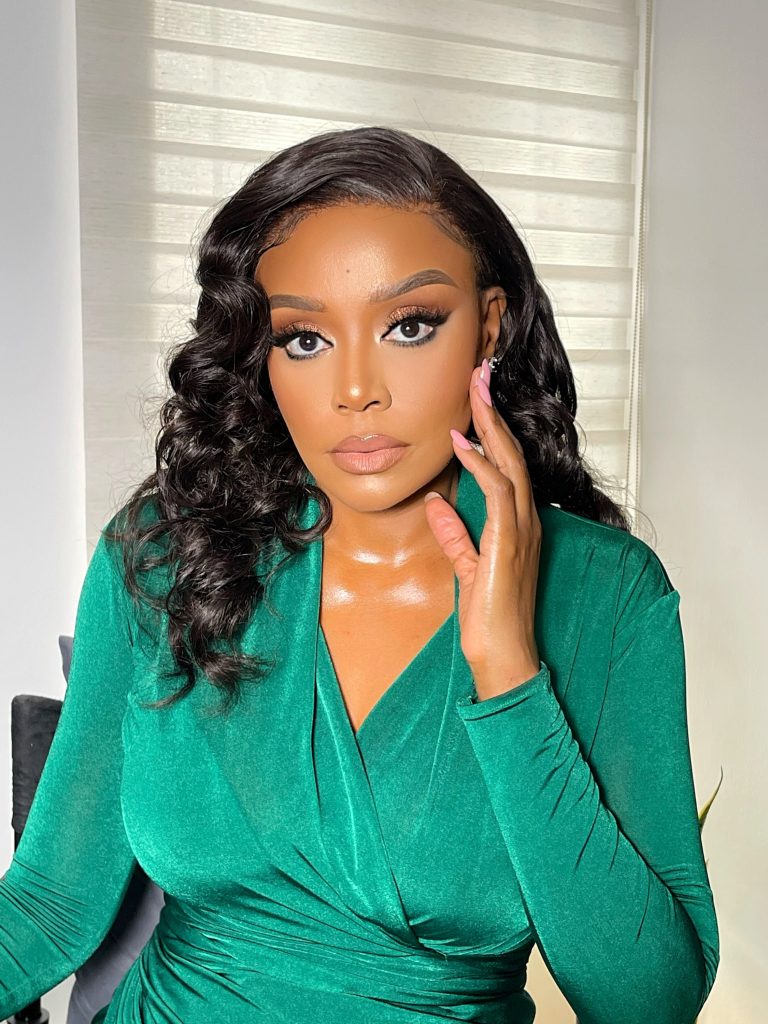
Michelle holds a degree in Fashion Design and Marketing from the American College in London, and a post-graduate degree in Communications and P.R from the same institution.
As the world shines the spotlight on the neuro-developmental disorder ‘Autism’ affecting millions globally, throughout this month of April as set aside by the United Nations, Allure speaks with Michelle who is closely affected by the disorder and has been one of the few celebrities lending their voice to the cause in Nigeria.
You were neither born nor raised here in Nigeria. What precisely drew you home to Nigeria when many of our people here would rather give up anything to travel out?
When I got the job as co-host of the maiden edition of Big Brother Nigeria in 2006, I was here in Nigeria on holiday. I returned to the U.K for a few months, then came back to Lagos for the show, and returned once the show ended. I returned to London and only came back to Nigeria for holidays, or when certain job hosting offers presented themselves. I eventually moved to Nigeria in 2010 because I wanted to pursue T.V presenting full time, as the opportunities for black presenters in London were limited.
But how did you land such a big hosting job as a beginner?
I believe it was God ordained, as I had no previous experience as a TV host. This was how it happened: Adebola Williams overheard me talking in a coffee shop, liked my voice and shortly after that, I was at Nike Art gallery, nervously filming an episode of a show he was working on with his partner, upon his request.
While at the gallery, Erika Klopper, one of the executives at Edemol South Africa, saw us filming and invited me to come audition for a show they were producing for MNet. I declined but later accepted after persistent phone calls. I eventually got the job even though I was inexperienced. I hosted afraid, unsure that I deserved it, unsure of myself or my abilities. To this day, I’m thankful for the opportunity and the people who supported me off camera, especially for the person who trained me on the job, Anton Burggraaf, one of the South African producers.
How natural was it to transition into acting and what movie gave you your first experience?
As in the case of co-hosting the first season of Big Brother Nigeria, transitioning into acting was something I never thought I would do, professionally or otherwise. Ebony Life’s ‘Desperate Housewives Africa’ was my first professional acting job. I always say it was my second baptism by fire, because I learnt on that job as well after a lengthy audition process that spanned months.
You’re one of the few celebrities raising a voice for autism. What sparked your interest?
I have always been passionate about speaking up for different causes. As a child, then teenager, I watched my father speak up for the rights of indigenous people in Australia when we lived there, and Afro Brazilians when we lived in Brazil. Later, I learnt and witnessed his support of different NGO’s and causes throughout his time serving as a diplomat in different countries, including Ethiopia. When you watch your primary care giver, use his position of power to support others, it teaches you a lot. You either grow up entitled or your humanity grows; my humanity and empathy grew. You also learn to understand that it is imperative to use your platform for something other than yourself. Advocating for autism awareness is one of the three causes I’m passionate about. The other two are GBV (gender-based violence) and human trafficking.
Through what means and activities have you championed autism awareness over the years?
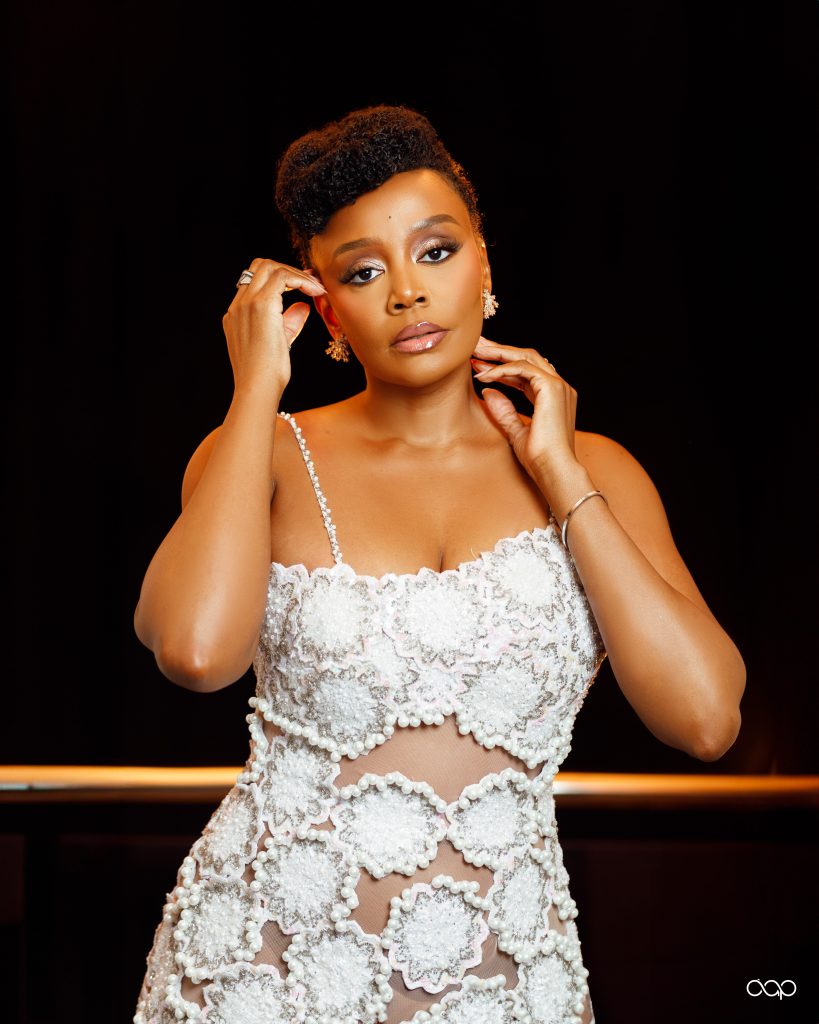
Aside from using my social media platforms to create more awareness, I have spoken openly on TV shows I’ve hosted, about my experiences having a sibling on the spectrum. I’ve over the years been speaker and panel moderator at autism-focused events including the annual GTB Autism Conference. I’ve volunteered my time, voice, platform to Patricks Speech and Language Centre, PSLC, which is the first centre for autism in Nigeria; NGO’s like Shades of Life Foundation and Pure Souls Learning Foundation in Lagos (an arm of PSLC) as well as Blazing Heart Autism Centre in Port Harcourt. I have also made donations, and participated in fundraising events, walks, sit outs, art for autism fairs, live sessions online and will be participating in my first #Ride4Autism this April being organised by Shades of Life Foundation, to raise money for children on the spectrum.
How would you explain autism to a layman and what signs should parents look out for?
Autism, or Autism Spectrum Disorder, ASD, is a developmental disorder that affects how a person communicates, interacts with others, and experiences the world. It’s called a “spectrum” because the symptoms and their severity can vary widely from person to person. Some people with autism might need significant support in their daily lives, while others may live completely independently. In simpler terms, Autism is a developmental condition that affects how people communicate, interact, and learn, often resulting in challenges with social interaction and communication, as well as repetitive behaviours or interests. People with autism often have unique strengths and may excel in areas like mathematics, music, or art, but they might also have difficulties with things that come naturally to others, such as making eye contact or understanding jokes.
According to experts like Mrs. Dotun Akande of PSLC, parents should look out for the following signs, especially if they notice multiple signs or if these are pronounced: Social interaction difficulties, communication challenges, delayed speech and language skills, repetitive use of language, or difficulty starting and maintaining conversations, repetitive behaviours, sensitivity to sensory input, unusual interests or focus, as well as developmental delays.
Would you say social stigma is still a problem faced by persons with autism in Africa?
Social stigma against persons with ASD haven’t changed significantly enough in Nigeria or Africa due to misinformation, religious superstitions, lack of education and a lack of empathy. The best way to implement changes is through education, sensitisation within the grass roots and amongst all other socio-economic strata. Perceptions can only change when collective tolerance and acceptance becomes the norm.
We’ve heard stories of people with autism overseas who have evolved into giants in various specialties. Are these also possible or happening in Nigeria?
Yes, there are children and young teens including Ziza Okeugo and Kanyeyachukwu Tagbo Okeke, who are making great strides in the art world. Ziza has had his art work sell out at exhibitions. Just recently on April 2nd, 2025, which was World Autism Day, Kanyeyachukwu attempted a Guinness World Record for the largest painting by an individual artist. Aside from the two teens mentioned above, Remi Olutimayin is a pioneering Nigerian voice actor and director, celebrated as West Africa’s first animation voice director and an award-winning personality. He is a self advocate for high-functioning autism awareness. Morénike Giwa Onaiwu, PhD, is a global self-advocate, educator, author and speaker. In the West, there are countless examples, including Sir Isaac Newton, Leonardo Da Vinci, and Steven Spielberg the director.
What’s your experience with your loved one on the spectrum?
She’s my eldest sister, and I am the youngest of four children from my mother. I didn’t really understand how or why she was different. The first recollection of any differences was when at age 5/6, I asked why she was in a different school from my immediate older sister, and was informed she was in a school that was for older teens and young adults with disabilities, when we lived in Australia. It wasn’t until I was about 15 that I became more protective of her, when people laughed, starred at her, or asked what I considered to be obtuse questions. In my first year of university at 18, I began to research and educate myself on ASD. My sister, however, did excel in art as a child, and I remember her being very talented with needlework, making intricate designs on throw pillows, scarves and quilts. Unfortunately, what is available now thanks to advancements in that field, wasn’t available at the time she was younger.
How available are the needed interventions and therapy to begin with?
In Nigeria, autism interventions are primarily driven by grassroots efforts, with private practitioners providing essential therapies such as speech and occupational therapy, and community outreach.
However, systemic challenges persist, including limited government support, workforce shortages, financial barriers, and cultural stigma. Compared to global standards, Nigeria lacks autism-inclusive policies, early intervention access, and scalable funding.
What do you love to do when not working?
I spend time with family, friends, travel when I can, go hiking, love dinning out and trying different foods from different cultures. I’m also a cinephile. I love dancing and music too. I used to box and do pilates when I lived in the UK and have started both again. I recently began looking into learning new sporting skills, like archery and fencing which I’ve always wanted to do. As a swimmer who has competed in the past too, being in water, either the ocean or a swimming pool, is also my happy place.
How has your upbringing shaped the woman you are today both in personal and work life?I’m grateful for my upbringing because it taught me many things, including empathy, tolerance, the ability to understand, embrace and accept different people from different cultures. Professionally, what was instilled in me by my father, and what I learnt from living and working in the U.K, has resulted in my work ethic being 100%. Being professional and disciplined when it comes to my craft; be that in acting, mc’ing or as a TV host is non-negotiable for me.
Who would you name your global style icon and why?
I have more than one. In the West, it’s Tracee Ellis-Ross and Tilda Swinton. In Nigeria, it’s Ezinne Chinkata, Chalya Shagaya and Lisa Folawiyo. All of these women aren’t afraid to experiment with fashion. Their sense of style is distinct and they don’t conform to what others are wearing.
For autism, what should our collective goals be now and in future years?
Our collective goal as Nigerians and Africans should be to become more aware and tolerant of people living with ASD. We need to rid ourselves of ignorance, superstitious beliefs and discrimination against all people with disabilities. We also need to learn, ask questions and educate ourselves on what it means to be neurodivergent, not just things that pertain to you or your loved ones alone. Our governments, churches, schools, police, hospitals, teachers, and other institutions need to be trained to empathise and properly attend to people of different abilities and disabilities. We need to be open to and create more opportunities for those living on the spectrum to live, work, love and thrive just like anyone else, as is done in the Western world. We must understand that those on the spectrum are just like us, with different abilities, talents, and strengths.